
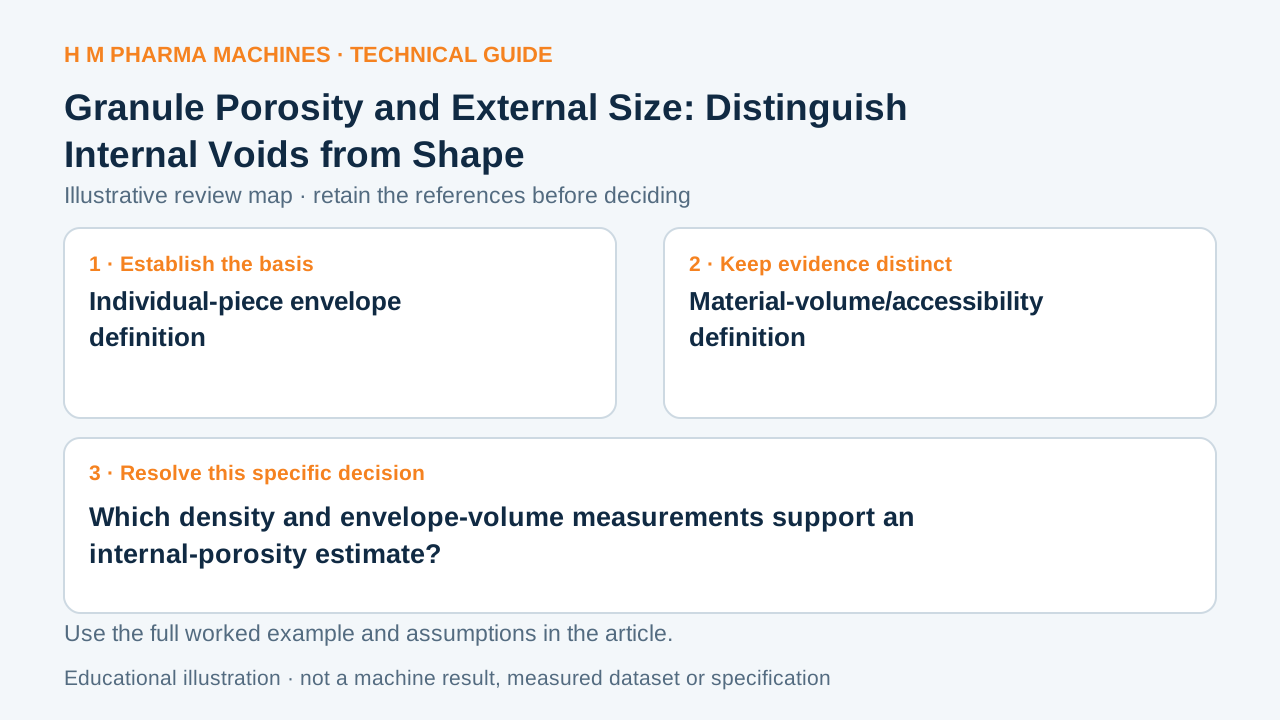
Use individual-piece envelope and material-volume evidence for a porosity estimate; loose powder-bed volume answers a different question.
Identify the Material Response
Micromeritics explains that envelope volume and density, combined with the corresponding material-density measurement, can describe pore volume in formed pieces. The method-defined volume boundaries matter. Primary reference: envelope density and porosity.
Review a Hypothetical Comparison
Suppose an invented granule has envelope volume 1.00 mL and material volume 0.70 mL under compatible definitions. The difference is 0.30 mL, or 30 percent of its envelope. Dividing a whole loose bed volume by mass would also include spaces between granules and would not reproduce this individual-piece calculation.
Keep the Evidence with the Decision
Identify which spaces the envelope method includes and which pores the material-volume method can access. Keep method identity and sample condition beside both measurements. State which porosity is inferred; do not call it every open and closed pore fraction if the measured boundaries do not support that claim.
An equal external particle-size label does not establish equal internal volume structure. Conversely, this simplified volume difference does not predict strength, liquid uptake or filling behaviour. Preserve the actual compatible density/volume evidence and use it only for the stated pore-volume question when discussing supplied powders or granules.
Which density and envelope-volume measurements support an internal-porosity estimate?
This blank worksheet is for your own project. It contains no H M machine trial result.
| Review field | Reference or result | Responsible person |
|---|---|---|
| Individual-piece envelope definition | To complete | To complete |
| Material-volume/accessibility definition | To complete | To complete |
| Compatible measured volumes or densities | To complete | To complete |
| Inferred porosity boundary | To complete | To complete |
Customer Questions
Does loose bed volume isolate internal granule pores?
No. It includes interparticle spaces.
What gives 30 percent in the example?
The 0.30 mL difference divided by 1.00 mL envelope volume.
Does the calculation establish granule strength?
No. Strength needs its own evidence.
Primary References
These references support the technical principles discussed in this guide. The worked examples and review questions are educational.
Discuss Your Machine Requirement
Share your product, container, required output and the evidence needed for your technical review.
Request a Technical Review