
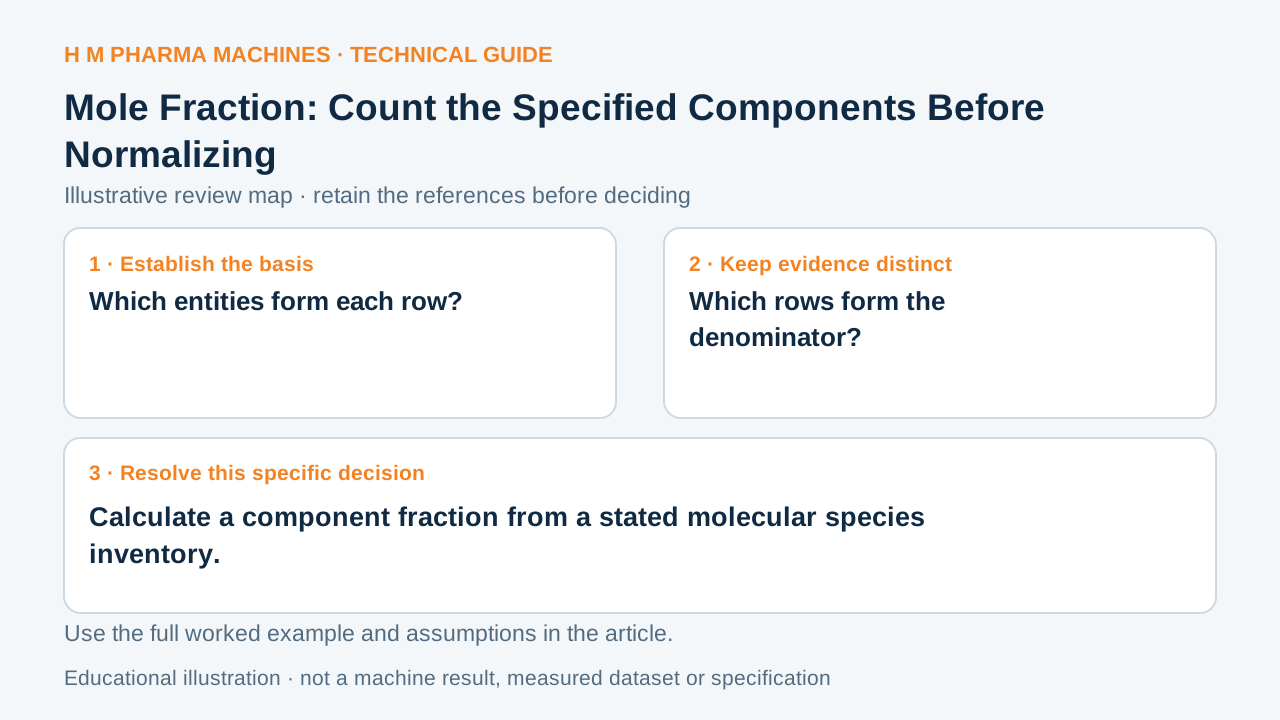
A component’s amount fraction depends on what is counted. Molecules, formula units and dissolved ionic species cannot be exchanged without redefining the mixture inventory.
Define the constituents being counted
Amount fraction divides the amount of one constituent by the total amount of the specified constituents. It is also called mole fraction. The definition requires a consistent entity basis, rather than an unexplained total of unlike counting conventions. Primary reference.
Normalize a fictional molecular mixture
Construct a nonreacting molecular mixture with 2 mol of A, 3 mol of B and 5 mol of C. The total is 10 mol, giving fractions 0.20, 0.30 and 0.50. Their sum is one. Counting only A and B would instead give A/(A+B) = 0.40, which describes a restricted two-component ratio.
The second number is not the fraction of A in the complete constructed mixture. If a separate model explicitly dissociates a component, build a new species inventory before normalizing; the component formula-unit record does not automatically become an ion-count record.
Keep species identity in the report
Prepare an original composition table with one row for each included constituent and a visible sum. Label exclusions such as a solvent-free or carrier-free basis. A partial report can be useful, provided the receiver knows which population forms its denominator.
Use that same constituent definition when comparing trial liquids or interpreting a later analytical record. This example provides no equilibrium prediction or actual recipe. Its decision is whether a reported fraction belongs to the complete material, a selected subset or a separately defined species model.
Solution review worksheet
This blank worksheet is for your own project. It contains no H M machine trial result.
| Question | Record to retain |
|---|---|
| Which entities form each row? | Molecular, formula-unit or species definition |
| Which rows form the denominator? | Complete included inventory |
| Is any basis restricted? | Explicit omitted constituents |
Customer Questions
What is A’s complete fictional fraction?
0.20.
What is A’s fraction within A and B only?
0.40, on that restricted basis.
Can an ionic species count be substituted silently?
No. It changes the defined inventory.
Primary References
These references support the technical principles discussed in this guide. The worked examples and review questions are educational.
Discuss Your Machine Requirement
Share your product, container, required output and the evidence needed for your technical review.
Request a Technical Review