
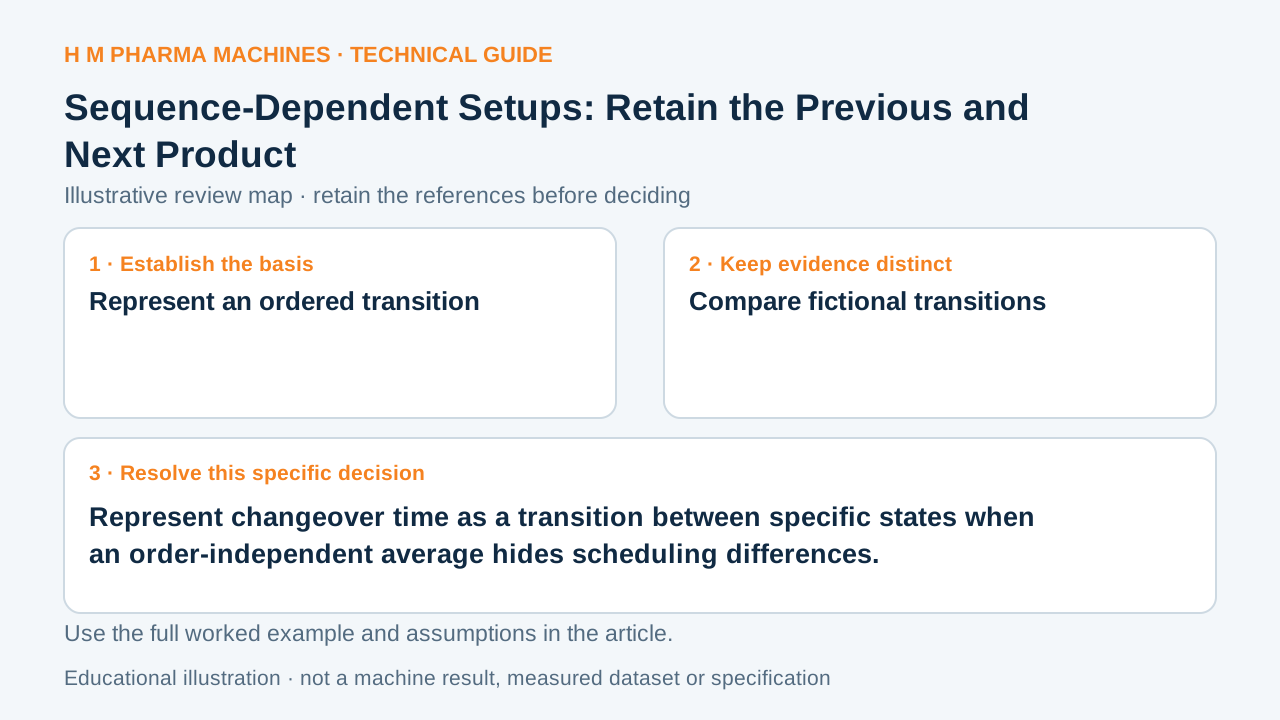
A setup duration can depend on both the state being left and the state being entered. A single averaged setup hides that direction.
Represent an ordered transition
Sequence-dependent setup modeling associates a required separation with the types of successive operations on a resource. A matrix can retain the transition from previous type i to next type j. The i-to-j entry need not equal the j-to-i entry; direction is part of the modeled requirement. Primary reference: IBM CP Optimizer: sequence-dependent setup times.
For a proposed schedule worksheet, label matrix rows as previous states and columns as next states. State whether setup applies only to immediate successors. A rule constraining all later successors would have another meaning. Keep any initial machine state visible rather than assigning the first job a silent zero setup.
Compare fictional transitions
Consider a hypothetical matrix with A→B taking 8 minutes, B→A taking 3, A→C taking 2 and C→B taking 2. After an initial A job, the direct A,B sequence requires an 8-minute transition. The A,C,B sequence contains transitions totaling 2 + 2 = 4 minutes.
That smaller transition total does not establish the better complete schedule: the additional C processing, due dates and other constraints remain relevant. It simply shows why replacing every change with one order-independent average can remove information needed to compare the defined transition paths.
Review the matrix’s meaning
Prepare an original transition inventory with each ordered pair, duration basis and whether other resources are occupied during setup. If a modeled change needs a shared crew as well as machine separation, a time gap alone may not represent that crew requirement. Add the missing resource logic explicitly.
Use separately authorized operational evidence to populate any actual matrix. The fictional entries here are neither HM changeover times nor prescribed cleaning durations. This guide checks how ordered state changes enter a scheduling model and does not approve a physical changeover procedure.
Customer Questions
Must A→B equal B→A?
No. Their durations can differ in a sequence-dependent matrix.
Does a shorter setup sum prove a better schedule?
No. Processing, deadlines and other model constraints still matter.
Why retain the initial resource state?
It determines the transition into the first scheduled operation.
Primary References
These references support the technical principles discussed in this guide. The worked examples and review questions are educational.
Discuss Your Machine Requirement
Share your product, container, required output and the evidence needed for your technical review.
Request a Technical Review