
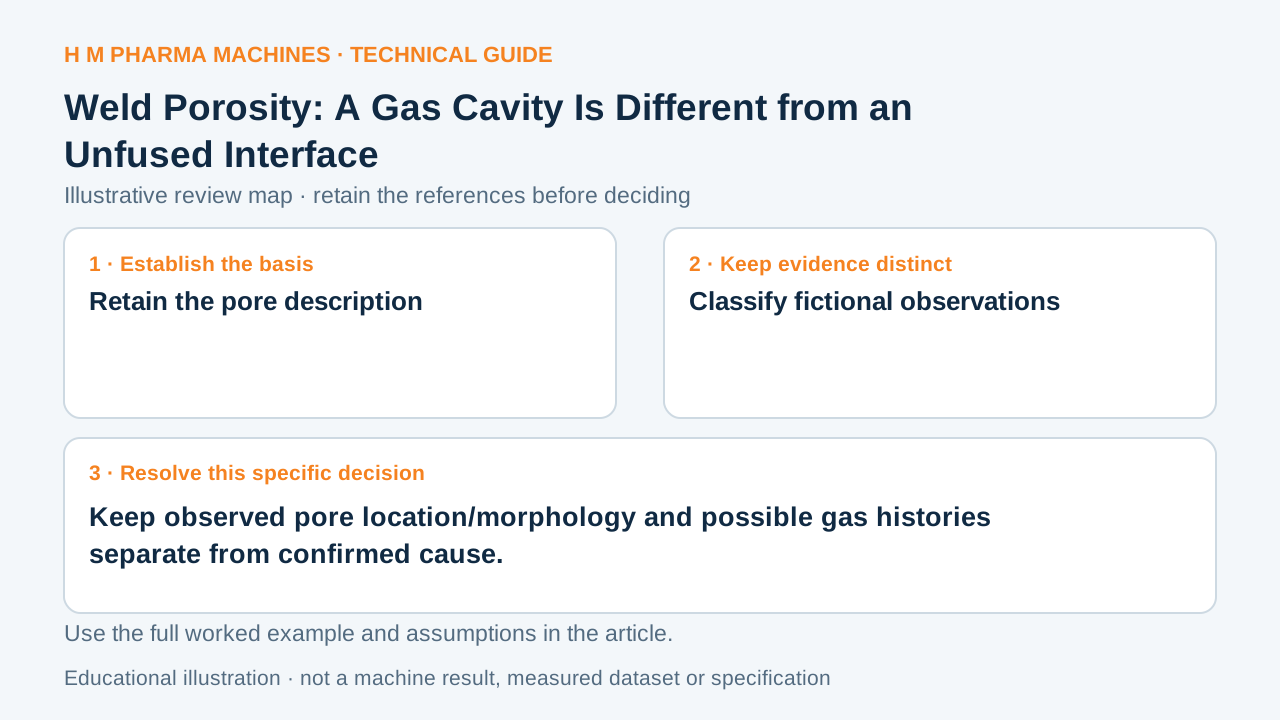
A cavity shape and a confirmed mechanism are different conclusions.
Retain the pore description
TWI describes weld porosity as gas trapped during solidification. A pore is therefore a different morphology from an unjoined fusion interface. Primary reference: TWI technical explanation.
The observation should preserve cavity shape, distribution and location. A photograph or section may identify voids without establishing which gas, contamination source or process event caused them. Keep the hypothesis separate from the recorded geometry.
Classify fictional observations
Imagine an invented section contains several approximately rounded internal cavities. Another shows a planar unjoined boundary following a sidewall. Reporting both simply as holes would discard information useful to the fabrication review.
For the first record, describe the cavity morphology and any independently supported porosity identification. For the second, preserve the interface location. These teaching observations are not diagnostic findings on real specimens and establish no allowable pore count or cavity size.
Make cause evidence a separate field
Prepare a morphology table containing specimen identity, location, observation method and the proposed imperfection category. Add the evidence supporting any gas-source or contamination explanation in another column.
Ask what connects the proposed cause to the actual process history. A classification can guide the next documentation request without certifying the cause or prescribing a remedy. Preserve unresolved explanations rather than selecting one merely because porosity has several familiar possible origins. The appropriate joint acceptance requirement remains separate from this taxonomy.
Customer Questions
What does the cited porosity mechanism involve?
Gas trapped during weld-metal solidification.
Is a planar unjoined sidewall the same morphology?
It identifies an interface rather than a gas-pore geometry.
Does cavity appearance identify the gas source?
That cause needs its corresponding evidence.
Primary References
These references support the technical principles discussed in this guide. The worked examples and review questions are educational.
Discuss Your Machine Requirement
Share your product, container, required output and the evidence needed for your technical review.
Request a Technical Review