
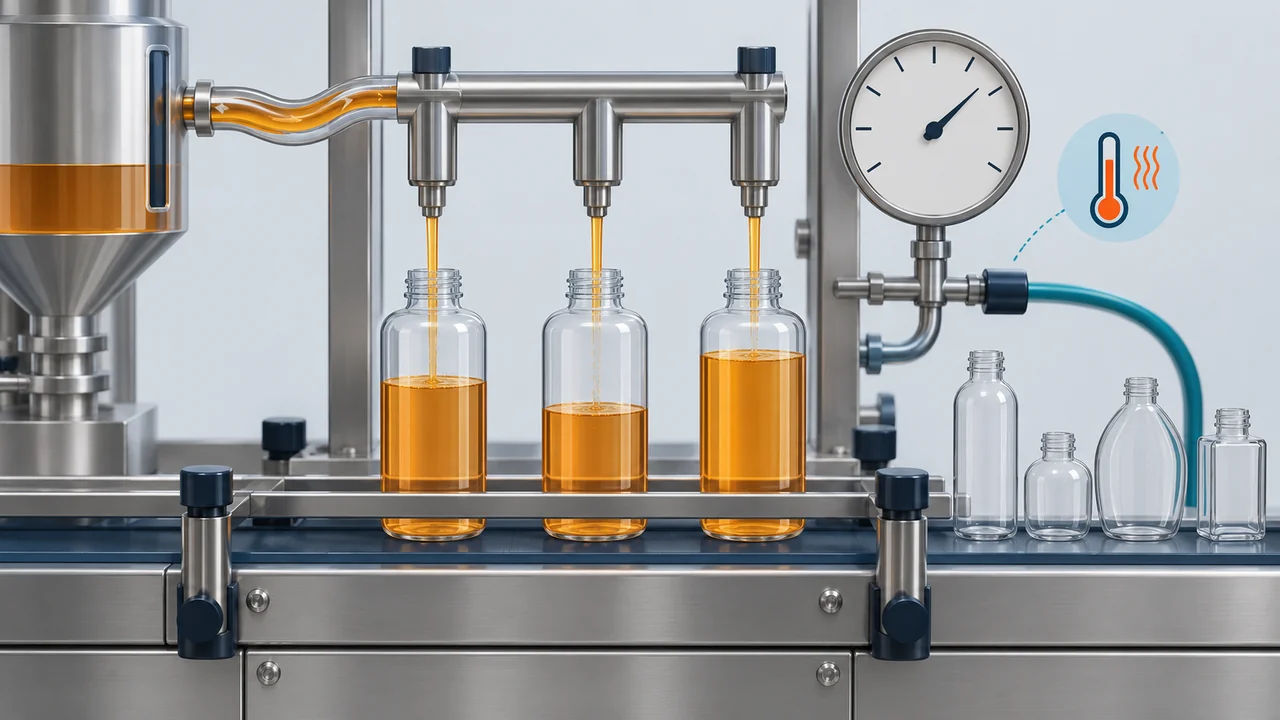
A bottle liquid filling machine can appear consistent at startup yet show changing levels later in the run. Raising a dose setting immediately may hide the original cause and create another problem. Start by separating the visual appearance of the filled bottle from the measured quantity, then connect each observation to the product, container, filling head and time in the run.
Confirm the approved measurement method, identify affected heads and compare the drift with product temperature, bottle lot and supply conditions. Change one authorized setting at a time only after the observation record points to a specific cause.
Distinguish a changing level from a changing quantity
A liquid level is influenced by the internal shape of the bottle as well as the amount inside it. Two containers with similar outer dimensions may present different visible levels. Foam and bubbles can also obscure the surface. Compare representative empty containers and use the agreed quantity check rather than judging the entire run from one shoulder line.
If quantity is assessed by mass, record the empty-container tare and the density basis used to interpret that mass. A taller visible fill is not, by itself, proof that the dosing system has delivered more product.
Find out whether every head behaves alike
Keep samples associated with their filling position. A change affecting all heads directs attention toward shared product feed, temperature or an operating change. A pattern confined to one position deserves a closer look at that channel, its outlet and the way its bottle is presented. This comparison narrows the investigation without declaring a component faulty.
Record occasional exceptions separately from a steady trend. Mixing them into one average can conceal intermittent container-positioning events or differences between channels that require different follow-up checks.
Connect the trend to the product supply
Note product-feed level, replenishment events, visible aeration and the route feeding the selected dosing system. Check whether the change begins after a supply container is exchanged or a feed interruption occurs. The H M bottle filler uses a selected dosing technology, so the significance of supply conditions must be interpreted for that actual arrangement.
Product temperature should be recorded at a meaningful point in the supply path. Room temperature alone does not describe the liquid entering the filler. Do not apply heating, pressure or agitation changes without the approved process and equipment instructions.
Use a run log that supports a decision
| Record | Useful comparison |
|---|---|
| Time and filling position | One channel versus a shared trend |
| Product lot and observed temperature | Stable product versus a changing supply condition |
| Bottle lot and tare or geometry checks | Quantity variation versus container appearance |
| Feed level and refill events | Drift before and after replenishment |
| Recipe and authorized adjustments | Original behavior versus changed setup |
| Quantity results and measurement method | Individual observations rather than an unexplained average |
Add the inspection status of sampled bottles and any linked line stoppage. Keep observation, suspected explanation and confirmed finding in separate columns so an assumption is not repeated later as a fact.
Protect the baseline while checking the cause
Retain the approved recipe and the last acceptable run record before making changes. An authorized operator can compare a controlled trial against that baseline using the same product and container combination. Changing dose, nozzle timing and conveyor behavior together makes it difficult to tell which adjustment influenced the result.
If inspection of valves, seals or product connections is required, stop and isolate the equipment under its maintenance procedure. Do not loosen fittings, reach through guards or wipe a working nozzle to investigate a running machine.
Send the supplier a focused evidence package
A useful support request identifies the machine, dosing method, recipe revision, affected heads and the point at which the trend appeared. Include the observation log, bottle drawings or samples, product information and safe recordings from outside the guarded area. Explain what changed since the last acceptable run.
Ask H M Pharma Machines to review this evidence against the supplied configuration. A general bottle filling specification describes an equipment family; the actual channel arrangement, product path and acceptance method determine the appropriate technical response.
Customer Questions
Should I increase the dose when the visible level falls?
First confirm the measured quantity and container geometry. A level change caused by bottle variation or foam does not necessarily require a dose adjustment.
Why should samples be identified by filling head?
Head identity separates channel-specific behavior from a shared product-feed or setup trend, making the support record more useful.
What information is most useful for technical support?
Provide the machine and recipe identity, individual quantity results, product and bottle lots, supply conditions and a timeline of the observed change.
Product References and Further Details
These pages describe published equipment arrangements. Review the supplied machine, actual materials and agreed operating requirements when applying the guide.
Discuss Your Machine Requirement
Share your product, container or closure samples, required output, process conditions and line layout with H M Pharma Machines for a technical review.
Request a Technical Review