
The supply-terminal voltage is not automatically the voltage at every load.
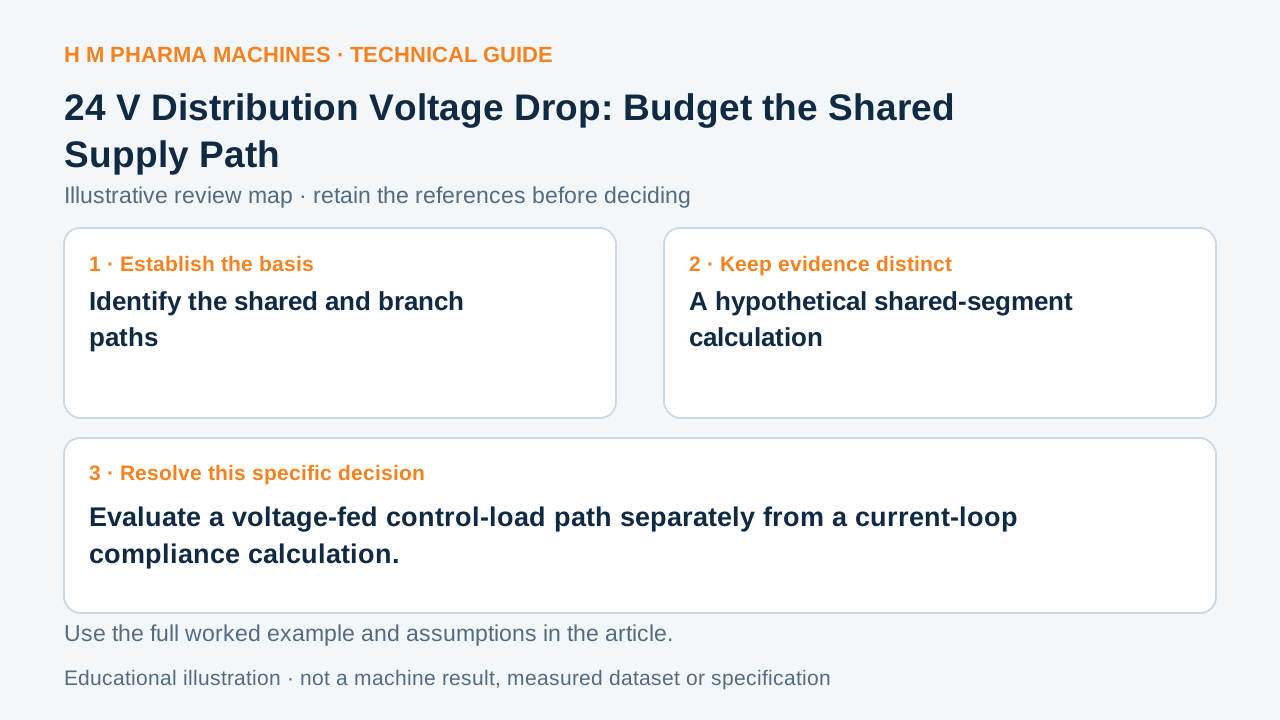
Identify the shared and branch paths
Phoenix Contact's distribution discussion identifies voltage drop as a relevant 24 V field-power consideration. Preserve the actual supply-to-load path in the review. Primary reference: Phoenix Contact field-power context.
For a simple resistive path model, drop equals current times the identified total path resistance. A shared section may carry several simultaneous loads. Keep that section distinct from individual branches rather than applying one current value to every part of the network.
A hypothetical shared-segment calculation
Assume a fictional 24 V source and a defined 0.5 Ω shared-path resistance. At 2 A total current, the simple drop is 1 V. If another simultaneous load increases the modeled shared current to 3 A, the drop becomes 1.5 V. Other branch drops and source variation are deliberately outside this short model.
Record source basis, shared current, path resistance, calculated drop and each load's documented input requirements. These teaching values select no wire, fuse, supply setting or HM load. A favorable arithmetic result cannot approve an actual distribution design by itself.
Keep the operating modes in the budget
Ask which load combinations and transients the real design must support. A change in accessories can affect a shared path even if the original device's own demand remains unchanged.
Retain the accepted network and load schedule with the relevant component evidence. This guide gives a buyer a defined voltage-budget question without prescribing conductor size, modifying installed wiring or treating a nominal 24 V label as proof of voltage at every receiver under all conditions. The actual network and designer's complete basis determine the resulting design.
Customer Questions
Does 24 V at the supply prove 24 V at every load?
No. The actual path and loading can create a difference.
Can a new branch affect an old load's shared path?
Yes. Relevant simultaneous current can change.
Does 0.5 Ω prescribe a cable resistance?
No. It is an invented model input.
Primary References
These references support the technical principles discussed in this guide. The worked examples and review questions are educational.
Discuss Your Machine Requirement
Share your product, container, required output and the evidence needed for your technical review.
Request a Technical Review