
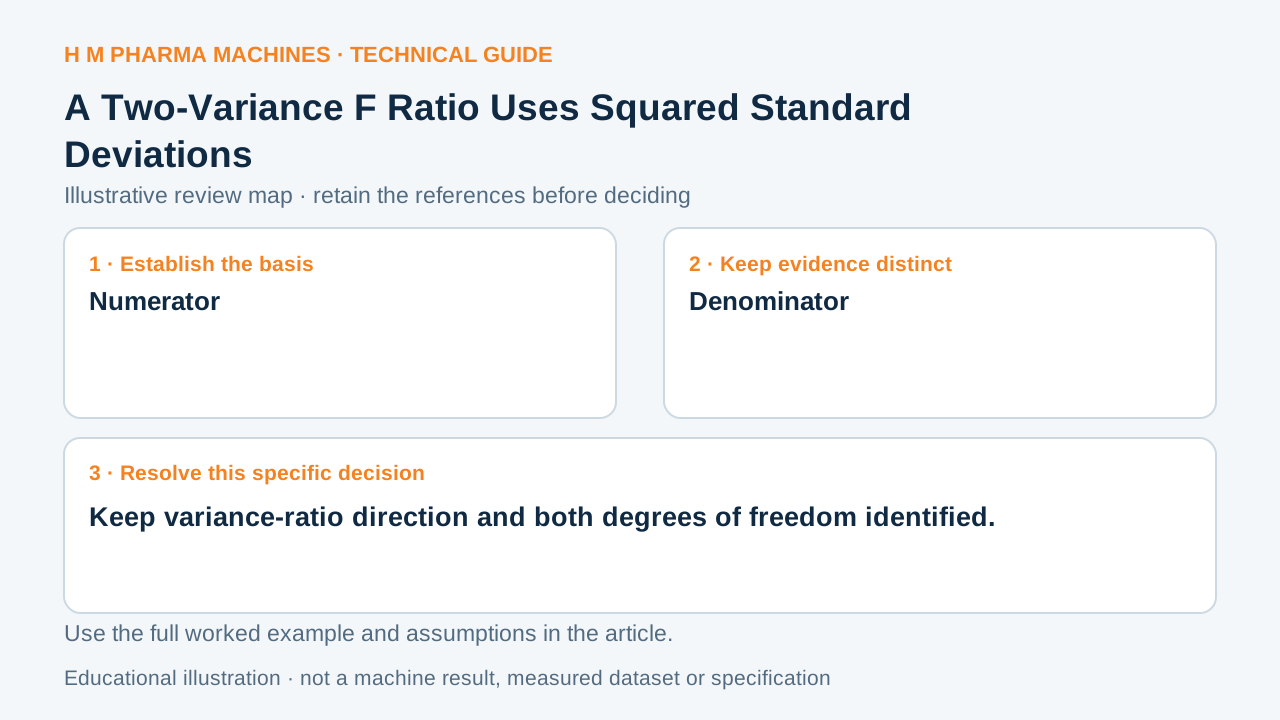
When comparing two spreads with an F ratio, retain squared units, numerator identity and the degrees of freedom associated with both samples.
The statistical question
A two-variance F statistic is a ratio of sample variances, not a ratio of standard deviations. The numerator and denominator have their own sample-based degrees of freedom. Direction matters for a one-sided question, and the reference critical-value convention must match the software. The classical comparison also needs appropriate independent sampling and distributional assumptions; the ratio alone is not a significance decision.
An illustrative review example
Suppose invented sample standard deviations are 0.6 g and 0.3 g. Their variance ratio is 0.36 divided by 0.09, giving four; the standard-deviation ratio is only two. If the first sample has 21 observations and the second 31, the corresponding degrees of freedom are 20 and 30. Swapping the groups gives ratio 0.25 and swaps those degrees of freedom. No critical value or pass decision has been assigned here.
Prepare the evidence for discussion
Place group identity, sample size, standard deviation, squared variance and ratio direction in the review file. Write whether the question concerns either difference in variability or improvement in one declared direction. Do not move the larger variance to the top merely to simplify presentation without adjusting the interpretation. Ask the analyst to provide the test convention and assumptions alongside any conclusion about a filling-trial comparison.
A variance ratio has two sample identities
This blank worksheet is for your own project. It contains no H M machine trial result.
| Question to resolve | Evidence to retain |
|---|---|
| Numerator | Named group and sample variance |
| Denominator | Named group and sample variance |
| Degrees of freedom | Both sample sizes minus one |
| Alternative | Declared direction and convention |
Customer Questions
Why is the ratio four when spreads differ by two?
The F statistic uses squared standard deviations, so a factor-two spread ratio becomes a factor-four variance ratio.
Do the two sample sizes matter separately?
Yes. The numerator and denominator each have their own degrees of freedom.
Does the ratio alone establish significance?
A decision also needs the applicable distributional assumptions, reference calculation and declared alternative.
Primary References
These references support the technical principles discussed in this guide. The worked examples and review questions are educational.
Discuss Your Machine Requirement
Share your product, container, required output and the evidence needed for your technical review.
Request a Technical Review