
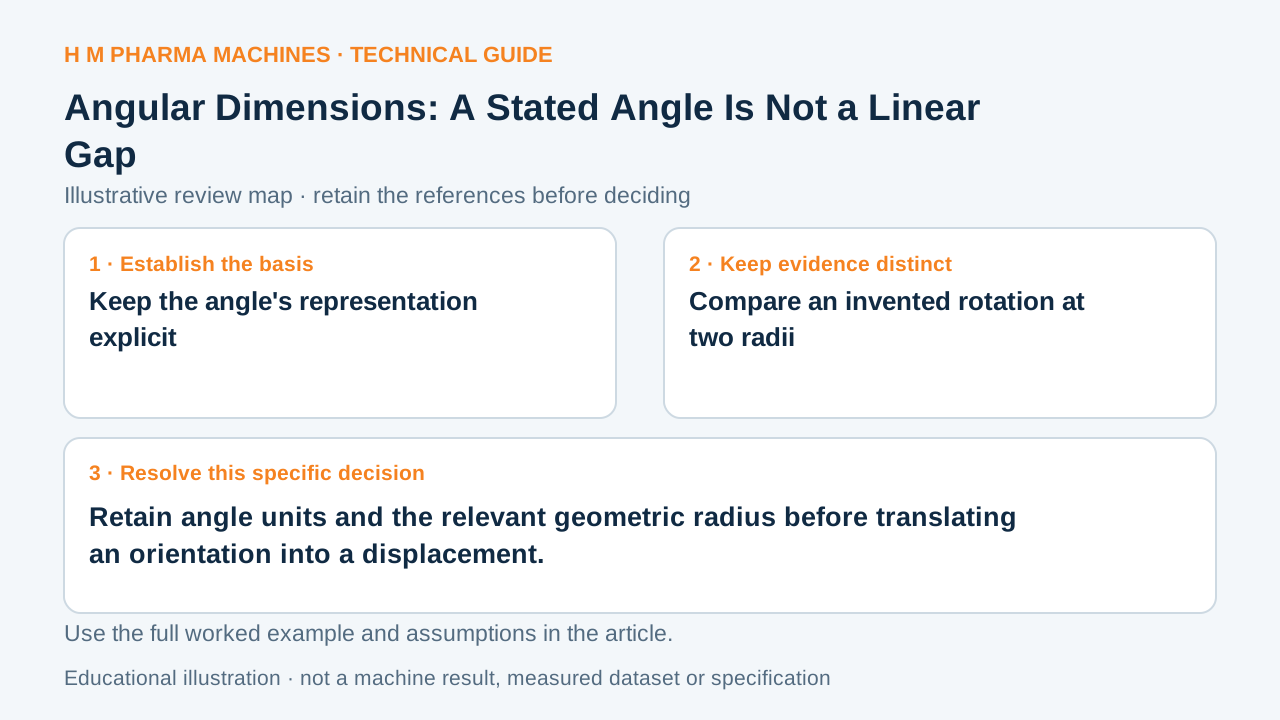
An angle is not a gap in millimetres. Turning the same angle at different radii produces different travelled distances.
Keep the angle's representation explicit
Angular dimensions can use formats such as decimal degrees, degrees with minutes and seconds, or radians. Retain the stated unit format rather than interpreting a bare number using a familiar default. The quantity describes angular separation, not linear distance. Primary reference: Autodesk: angular dimension unit formats.
A geometric conversion requires the relevant relationship. If the question concerns travel along a circular path, its radius is also needed. If it concerns a straight clearance, the applicable endpoints and direction require another model instead of treating arc travel as that gap.
Compare an invented rotation at two radii
Imagine a hypothetical one-degree rotation around a fixed axis. One degree equals pi/180 radians. Along an ideal circle of radius 10 mm, the arc travel is approximately 0.1745 mm. At radius 100 mm, the same rotation gives approximately 1.7453 mm.
The tenfold difference comes from radius, not a different angle. These values describe nominal arc travel and establish no positioning tolerance or actual mechanism response. Using the number 1 directly as radians would describe a different rotation and invalidate this comparison.
Preserve the intended geometric conversion
When a supplier translates an angular value into millimetres, identify the unit, reference axis, radius and quantity being calculated. Distinguish travel along the arc from straight endpoint movement or projected displacement. Keep the equation with the result so another reader can reproduce it.
Assess the real interface through its intended model and limits. A small angular number can correspond to different displacements across a large component. The drawing should state the relevant geometry rather than rely on a single converted distance that hides where it applies.
Customer Questions
Is one degree the same as one radian?
No. One degree is pi/180 radians.
Does the same angle imply the same arc travel at every radius?
No. Arc travel scales with radius.
Is calculated arc travel automatically a clearance?
No. Define the actual geometric quantity required.
Primary References
These references support the technical principles discussed in this guide. The worked examples and review questions are educational.
Discuss Your Machine Requirement
Share your product, container, required output and the evidence needed for your technical review.
Request a Technical Review