
The efficiency convention can change the meaning of an energy-per-length number.
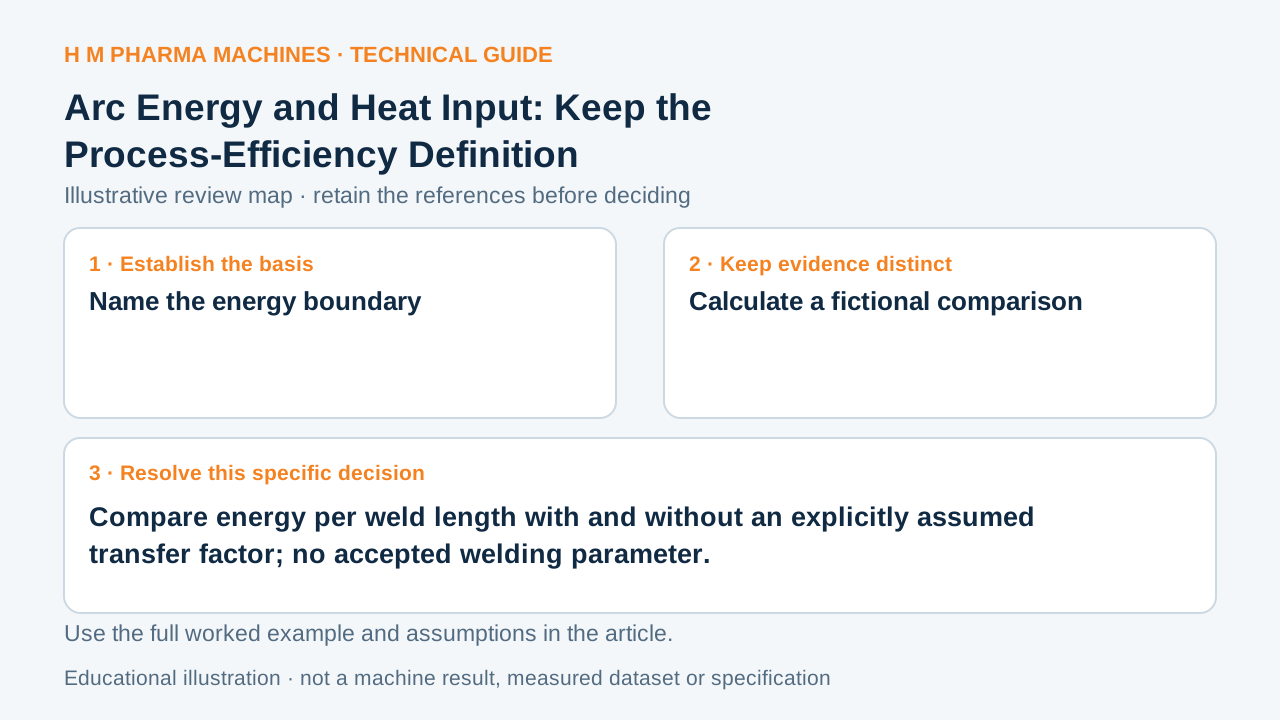
Name the energy boundary
TWI distinguishes arc energy from heat input incorporating a process-efficiency factor. Both use energy per weld length, but the transfer boundary differs. Primary reference: TWI technical explanation.
Keep the definition with a quoted number. Some documents use heat input for arc energy, so a label alone is insufficient. Identify whether the reported value includes the factor before comparing different records.
Calculate a fictional comparison
Assume hypothetical constant arc voltage 20 V, current 100 A and travel speed 5 mm/s. Electrical arc power is 2,000 W. Dividing by travel speed gives 400 J/mm, or 0.40 kJ/mm.
With an explicitly invented transfer factor of 0.70, the corresponding transferred-energy estimate is 0.28 kJ/mm. The factor is a teaching assumption rather than a listed efficiency for a named process. These calculations set no welding parameters or permissible thermal input.
Make the comparison traceable
Write voltage and current basis, travel-speed units, equation and transfer-factor origin in separate fields. A speed quoted per minute needs conversion before it is paired with watts.
Request the applicable definition in the actual procedure and preserve any pulsed-waveform treatment. Equal-looking energy figures can then be compared on the same boundary, without replacing material, joint or cooling evidence with one computed number.
Customer Questions
Are 0.40 and 0.28 contradictory here?
They refer to different explicitly defined transfer boundaries.
Which units must travel speed retain?
Its distance and time basis must match the energy calculation.
Is 0.70 a process recommendation?
It is an invented factor for the comparison.
Primary References
These references support the technical principles discussed in this guide. The worked examples and review questions are educational.
Discuss Your Machine Requirement
Share your product, container, required output and the evidence needed for your technical review.
Request a Technical Review