
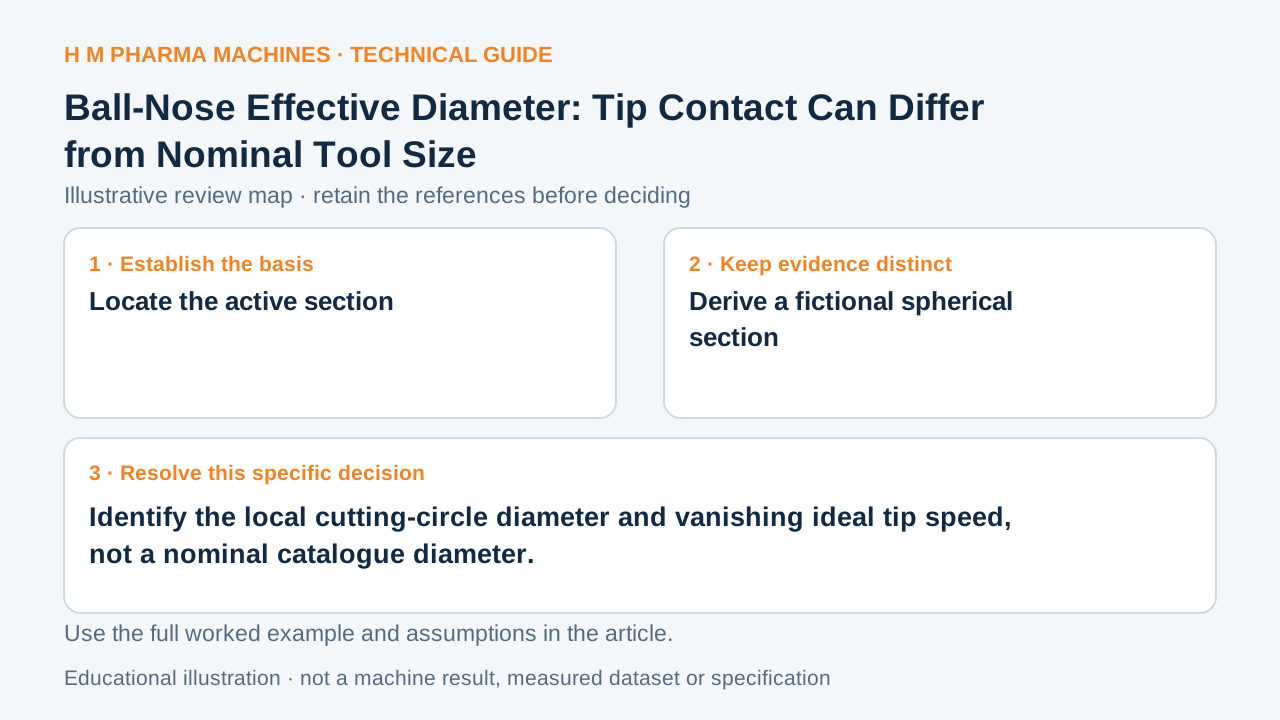
Near the tip of a ball-nose tool, nominal diameter can overstate the active cutting circle.
Locate the active section
Harvey explains that ball-nose effective cutting diameter differs from nominal diameter when axial depth is less than the ball radius. Primary reference: Harvey technical explanation.
Derive a fictional spherical section
Assume an ideal spherical tip of radius 6 mm and an axial section 2 mm above its lowest point, without tool tilt. The distance of that section from the sphere center is 4 mm. Its circular radius is √(6²−4²)=√20 mm, giving an effective diameter of about 8.944 mm.
The nominal diameter is 12 mm. At the same RPM, this section has about 74.5% of the nominal-diameter peripheral speed. At the exact ideal tip, the circular radius approaches zero. These are original sphere-geometry calculations, not a selected cutting speed or a vendor chart row.
Keep engagement geometry with speed claims
Record axial section location, tip radius and any tilt or surface-normal change before interpreting an effective diameter. A changing contour can involve a range of contact locations rather than one fixed circle.
Use the geometry to detect when a reported speed uses the wrong diameter basis. Do not infer a surface finish, tool life or permissible RPM from the ratio alone. Actual tool form, engagement and machine constraints belong to the machining assessment; the nominal tool label cannot substitute for the contact geometry in that assessment.
Customer Questions
What is the invented effective diameter?
Approximately 8.944 mm.
Does the ideal tip have full peripheral speed?
Its circular radius approaches zero.
Can tilt be omitted from every comparison?
Tilt changes the contact geometry.
Primary References
These references support the technical principles discussed in this guide. The worked examples and review questions are educational.
Discuss Your Machine Requirement
Share your product, container, required output and the evidence needed for your technical review.
Request a Technical Review