
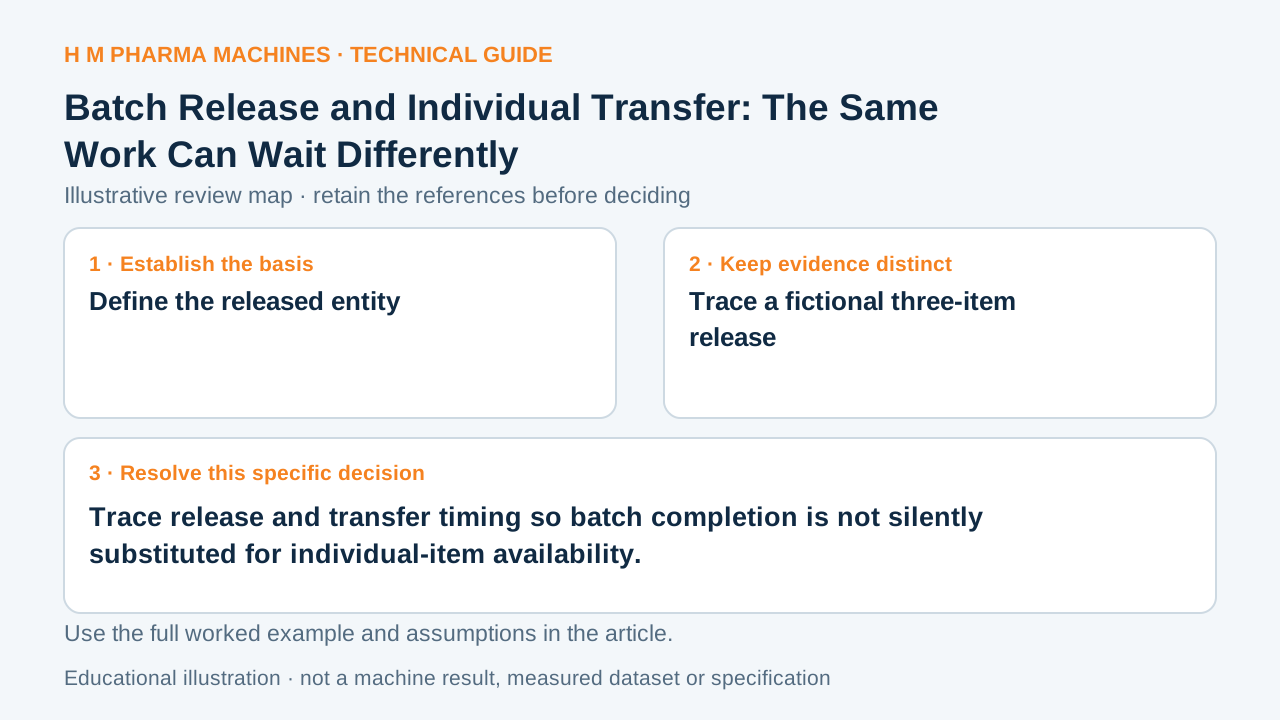
A batch can move as one unit even when its members finish upstream at different times. Define the transfer event before comparing waiting.
Define the released entity
A batching block can accumulate incoming agents until a specified count is reached and then release a batch. That release rule differs from transferring each member immediately when it becomes available. The modeled entity can also differ: a temporary group retains its members, whereas a permanent combination represents another definition. Primary reference: AnyLogic Batch: accumulation and batch release.
For an original process worksheet, state whether the batch is a transport group, a simultaneous processing requirement or merely a reporting total. List the members and the release trigger. Calling every group a batch without this definition can conceal waiting caused by accumulation rather than processing.
Trace a fictional three-item release
Suppose hypothetical items A, B and C finish an upstream step at minutes 1, 2 and 3. Under individual transfer, they become eligible downstream at those respective times. Under a three-item accumulation rule, the group cannot release before minute 3, assuming no other transfer delay.
Accumulation therefore adds 2 minutes for A, 1 for B and 0 for C, averaging 1 minute before release. This arithmetic excludes downstream service and assumes the three identified members are the complete group. It does not imply that every production batch has this transfer behavior.
Review an incomplete group
Build a trial ledger with member completion, group membership, target count and actual modeled release. If the observation ends with only two of three members available, record the group as unreleased unless an explicit timeout or partial-release policy permits departure. Do not invent its completion timestamp.
Then compare the intended transfer policy with handling constraints and measured events. Individual transfer may require different transport or processing logic; this guide does not recommend it universally. The decision is whether a reported batch endpoint has been substituted for the availability of each individual job.
Customer Questions
Does finishing one member always release the group?
No. Release depends on the defined group trigger.
What accumulation wait does item A have in the example?
Two minutes, from its completion at minute 1 to group release at minute 3.
Is the group’s release the same as downstream completion?
No. Any downstream service and transfer intervals are separate.
Primary References
These references support the technical principles discussed in this guide. The worked examples and review questions are educational.
Discuss Your Machine Requirement
Share your product, container, required output and the evidence needed for your technical review.
Request a Technical Review