
Some bearing damage questions include an electrical path. The motor, drive and connected system belong in that review.
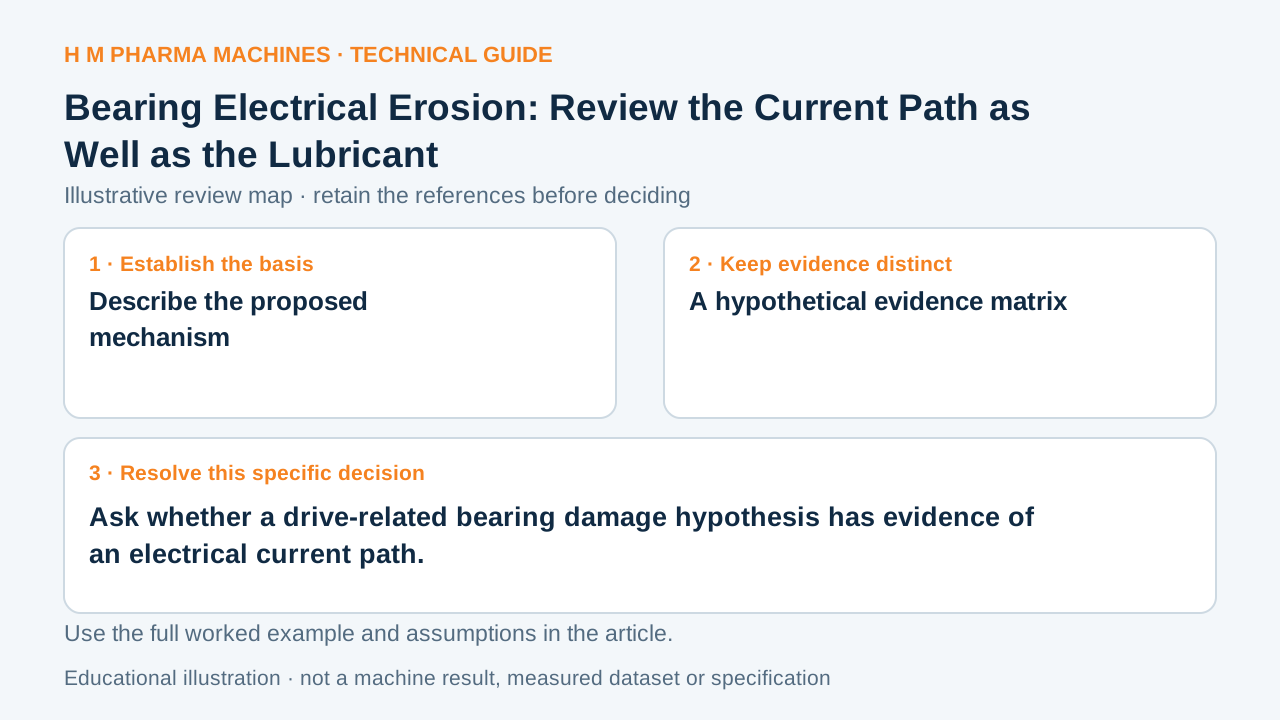
Describe the proposed mechanism
SKF describes electrical discharges through rolling-bearing interfaces as a possible damage mechanism in electrical machinery. Its discussion treats bearing currents as a drive-system question with several influences. Primary reference: SKF electric erosion in bearings.
This establishes a legitimate hypothesis, not a diagnosis from one photograph. Identify the motor, drive, connections and observed damage evidence. Keep competing mechanical, lubrication and contamination questions visible rather than choosing an electrical explanation because a frequency converter happens to be present.
A hypothetical evidence matrix
Imagine a fictional motor-bearing review with a returned bearing, the drive model and a dated record of symptoms. One explanation proposes electrical erosion; another proposes lubrication distress. Make rows for each explanation and the evidence it would require. The drive's existence is context, not proof of damaging current. The lubricant's identity is also context, not proof that it caused the failure.
Add source references for any specialist examination and distinguish observations from inferred mechanism. The example reports no current reading, bearing-failure result or installed drive on HM equipment. Its useful output is a review question that does not preselect the answer.
Review remedies at the same system boundary
If the responsible specialist identifies an electrical-path concern, ask how the proposed remedy addresses that path in the actual architecture. A component change should have a documented basis and any effects on the complete drive arrangement should be reviewed. Do not infer that one insulated part makes every possible path harmless.
Retain the original configuration and the accepted changes with their verification scope. This produces a traceable hypothesis-to-remedy record. It avoids treating an electrical mechanism as a reason to change motor wiring or protective bonding from a generic article, and avoids promising that a lubricant substitution resolves an unverified electrical condition.
Customer Questions
Does a VFD prove electrical erosion occurred?
No. It is relevant context; the mechanism needs suitable evidence.
Can a photograph alone settle every bearing-current question?
No. Preserve the component and system evidence for the responsible examination.
Should the proposed remedy identify its electrical boundary?
Yes. Its effect must be evaluated in the actual drive arrangement rather than assumed from one component label.
Primary References
These references support the technical principles discussed in this guide. The worked examples and review questions are educational.
Discuss Your Machine Requirement
Share your product, container, required output and the evidence needed for your technical review.
Request a Technical Review