
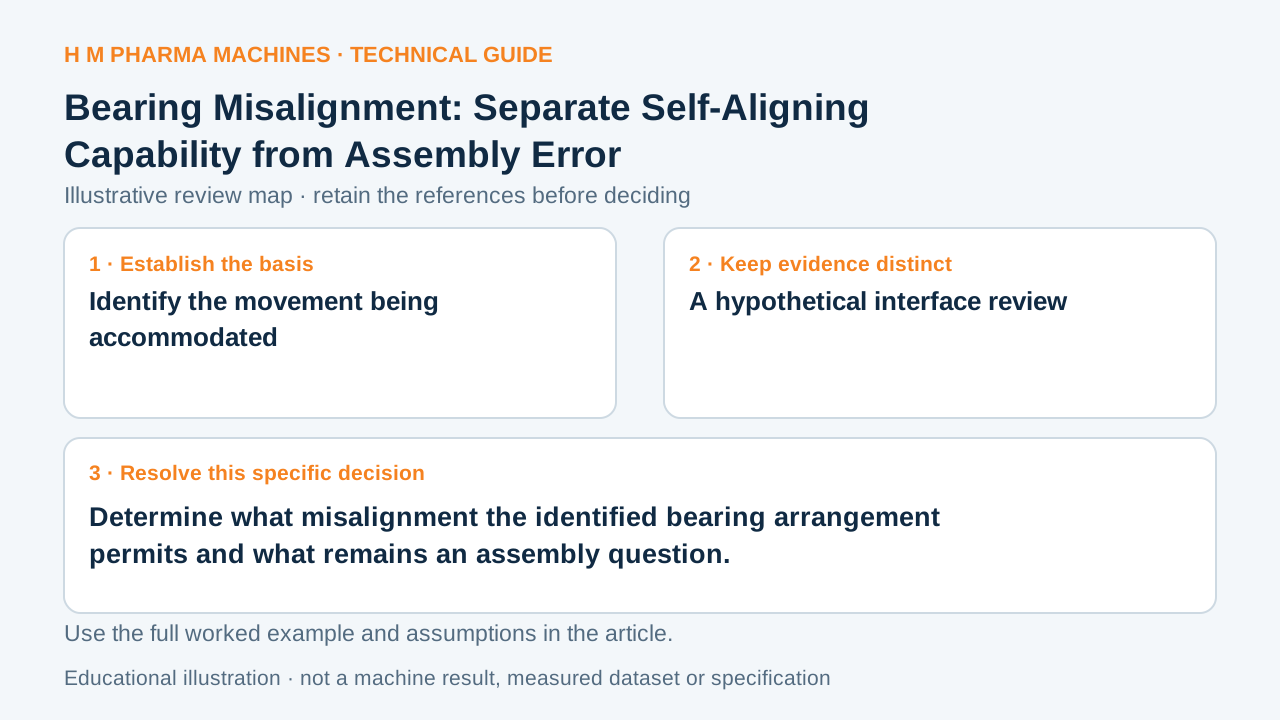
Self-aligning is a defined component capability, not a statement that every assembly error becomes harmless.
Identify the movement being accommodated
SKF's self-aligning arrangement discussion distinguishes misalignment accommodation from axial displacement and other arrangement requirements. Those capabilities should not be merged into a single flexible label. Primary reference: SKF self-aligning bearing system.
Describe whether the question concerns an angular difference between shaft and housing, an axial shift or an offset between connected shafts. Then identify which component is expected to accommodate it. A bearing's angular capability does not automatically answer the coupling, seal or housing-clearance question.
A hypothetical interface review
Imagine a fictional proposal naming self-aligning bearings on a shaft connected to a separate drive. The bearing selection reference describes angular accommodation, but the coupling's permitted offset is not supplied. Mark the bearing evidence as relevant to its stated angular question and the coupling interface as unresolved. Do not treat the bearing description as acceptance of the whole connection.
Add rows for bearing, shaft, housing, coupling and seal, with the relative movement and applicable reference for each. No angle or adjustment instruction is invented here. The example identifies no HM assembly and reports no measured misalignment.
Keep assembly evidence with the design basis
Ask which misalignment is anticipated by design and which condition is an assembly deviation to investigate. Preserve those distinctions in the final drawing and acceptance record. A supplier may need the actual combined operating case rather than separate maximum values copied from several catalogs.
For later service, retain the component and arrangement identities so a replacement does not remove the intended accommodation. Unexpected vibration or wear may justify an alignment review, but those symptoms alone do not determine its cause. The useful outcome is a movement-by-interface assessment, rather than the assumption that self-aligning means installation geometry no longer matters.
Customer Questions
Does self-aligning mean unlimited angular movement?
No. Use the identified component's stated capability and application conditions.
Does angular accommodation prove axial travel capability?
No. Those are separate movement questions.
Why review the coupling too?
The coupling can impose its own limits on the connected shafts even when a bearing accommodates an angle.
Primary References
These references support the technical principles discussed in this guide. The worked examples and review questions are educational.
Discuss Your Machine Requirement
Share your product, container, required output and the evidence needed for your technical review.
Request a Technical Review