
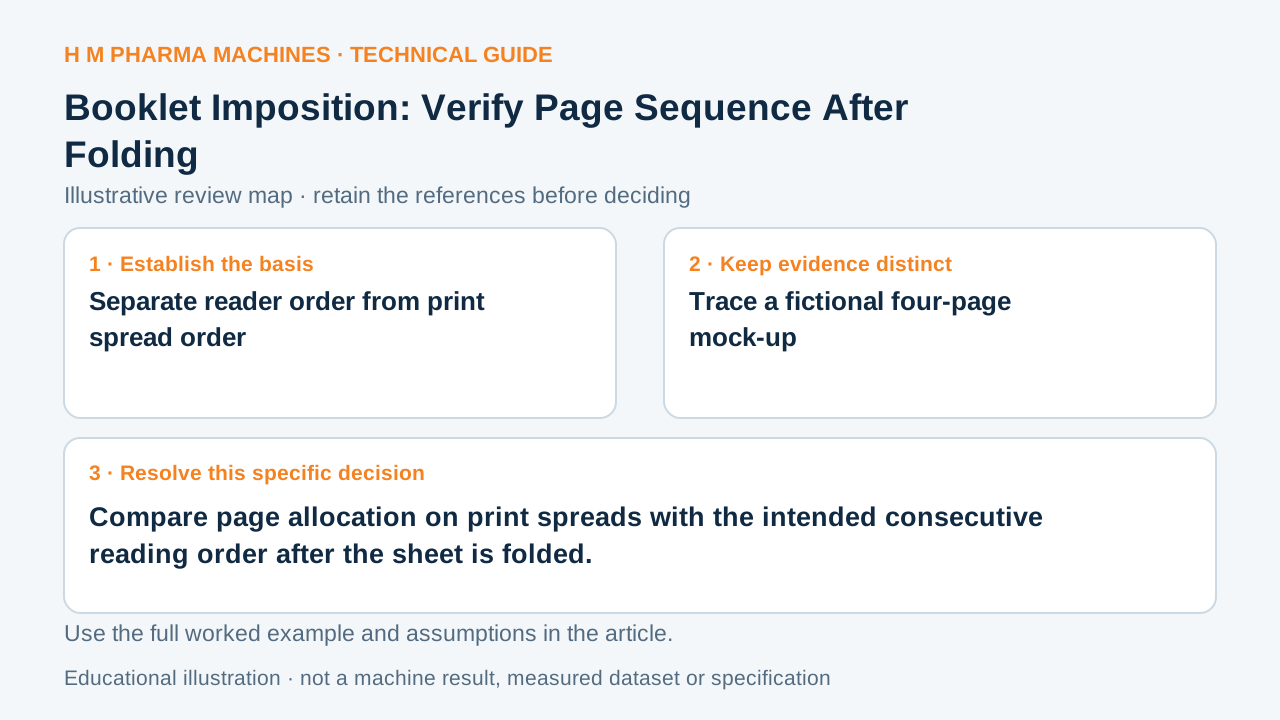
Pages can be individually upright yet appear in the wrong reading sequence after folding. Imposition needs its own page-allocation evidence.
Separate reader order from print spread order
Booklet imposition arranges pages into printer spreads for subsequent folding and binding. Those placements need not follow the consecutive order in which a reader encounters the finished pages. Keep the intended publication sequence separate from the output spread allocation. Primary reference: Adobe: booklet imposition and printer-spread page sequencing.
Correct orientation on each side is only one requirement. A page can be upright but placed next to the wrong page for the intended fold. Identify the folding structure and resulting page positions before approving a flat spread as the complete reading sequence.
Trace a fictional four-page mock-up
Imagine a single-sheet, single-fold booklet with four numbered pages. In its defined layout, the outside spread pairs page four with page one; the inside spread pairs page two with page three. Both logical pairs sum to five. This relationship is a check on that invented four-page arrangement, not a universal imposition rule.
Make a labelled paper mock-up with the intended top arrows and viewing convention, then fold it and read pages one through four. A simple allocation of consecutive pairs one-two and three-four on the two spreads would not reproduce the same booklet structure merely because each printed number is upright.
Verify the actual folded publication
Retain the reader-order master and a separate spread proof identifying sheet faces and page locations. Compare every finished page in sequence, including intentionally blank pages and the covers where applicable. Keep the folding and binding interpretation with the released artwork file.
If page count, format or finishing changes, reassess the allocation instead of extending a four-page pairing by memory. The printer must establish the actual imposed output and its orientation for the job. A folded proof supports the page-sequence decision; it does not certify the wording, print quality or physical feeding performance of a packaging leaflet.
Customer Questions
Is reader order necessarily the printer spread order?
No. Imposition places pages for the intended folding and binding.
Does upright duplex output guarantee the correct booklet sequence?
No. Verify which page occupies each folded position.
What should the fictional four-page mock-up show?
Its outside pair is four-one and its inside pair is two-three under the defined layout.
Primary References
These references support the technical principles discussed in this guide. The worked examples and review questions are educational.
Discuss Your Machine Requirement
Share your product, container, required output and the evidence needed for your technical review.
Request a Technical Review