
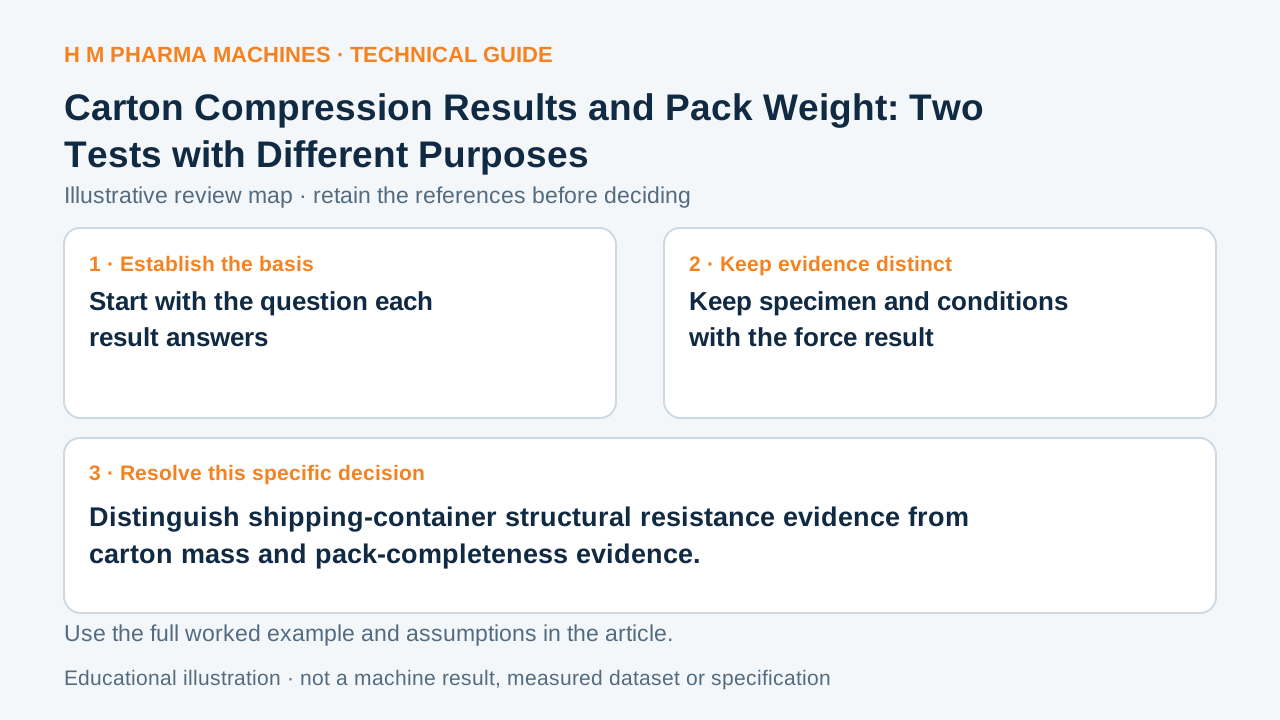
Distinguish shipping-container structural resistance evidence from carton mass and pack-completeness evidence.
Start with the question each result answers
ASTM D642's public description concerns compression resistance of shipping containers, components and unit loads. A carton weight check concerns a different quantity. A carton can have the expected mass while its structural resistance is unsuitable for a stated distribution situation. Conversely, a documented compression result does not prove that the right number of items is inside a pack. Keep structural and contents-related evidence as parallel requirements rather than treating either as a substitute for the other.
ASTM D642: compression resistance of shipping containers and components supports the technical principle above.
Keep specimen and conditions with the force result
For a structural comparison, record the container construction, dimensions, specimen state, conditioning and stated test configuration. Keep force units distinct from mass units. Preserve whether the test covered an empty container, a filled package or another defined assembly. A bare peak-force value is incomplete without its specimen and conditions.
For the weight-checking question, record the actual carton mass distribution and the pack-content requirement under its own evidence reference. Do not infer compression resistance from heavier board alone or infer complete contents from a passed compression test. The comparison table should say exactly which requirement each report supports and which remains unresolved.
Hypothetical two-axis acceptance worksheet
Imagine two fictional carton offers. A and B have the same nominal tare of 250 g, but their supplied compression reports describe different conditioning. Place nominal tare, measured tare evidence, structural report, conditioning and pack-content check in separate columns. The equal mass cannot establish equal structural behavior. Likewise, if B has a better-documented structural report, that says nothing about a missing item inside a future carton. Mark the structural comparison as unresolved until conditions are reconciled, while keeping any valid tare data usable for its own purpose. No invented force threshold or carton result in this exercise belongs to HM.
Define the line and distribution interfaces
The final packaging record should tie each accepted construction to its handling, contents and distribution requirements. Share representative cartons and packs when discussing a weight-checking or conveyor project, including relevant construction changes. A new board or flute arrangement may warrant review even if nominal tare stays unchanged. This article clarifies how to use two kinds of evidence without extending either beyond its purpose. It supplies no stack-height calculation, universal compression target or guarantee that a machine check establishes shipping durability, and it reproduces no paid test method.
Customer Questions
Does equal carton weight mean equal compression resistance?
No. Construction and test conditions need their own structural evidence.
Can a compression pass prove that a pack is complete?
No. Structural resistance and contents verification answer different questions.
Why identify the tested specimen?
An empty container, filled pack and other assemblies can represent different test questions and cannot be silently interchanged.
Related Equipment References
Review the actual offered equipment and application separately from this educational example.
Primary References
These references support the technical principles discussed in this guide. The worked examples and review questions are educational.
Discuss Your Machine Requirement
Share your product, container, required output and the evidence needed for your technical review.
Request a Technical Review