
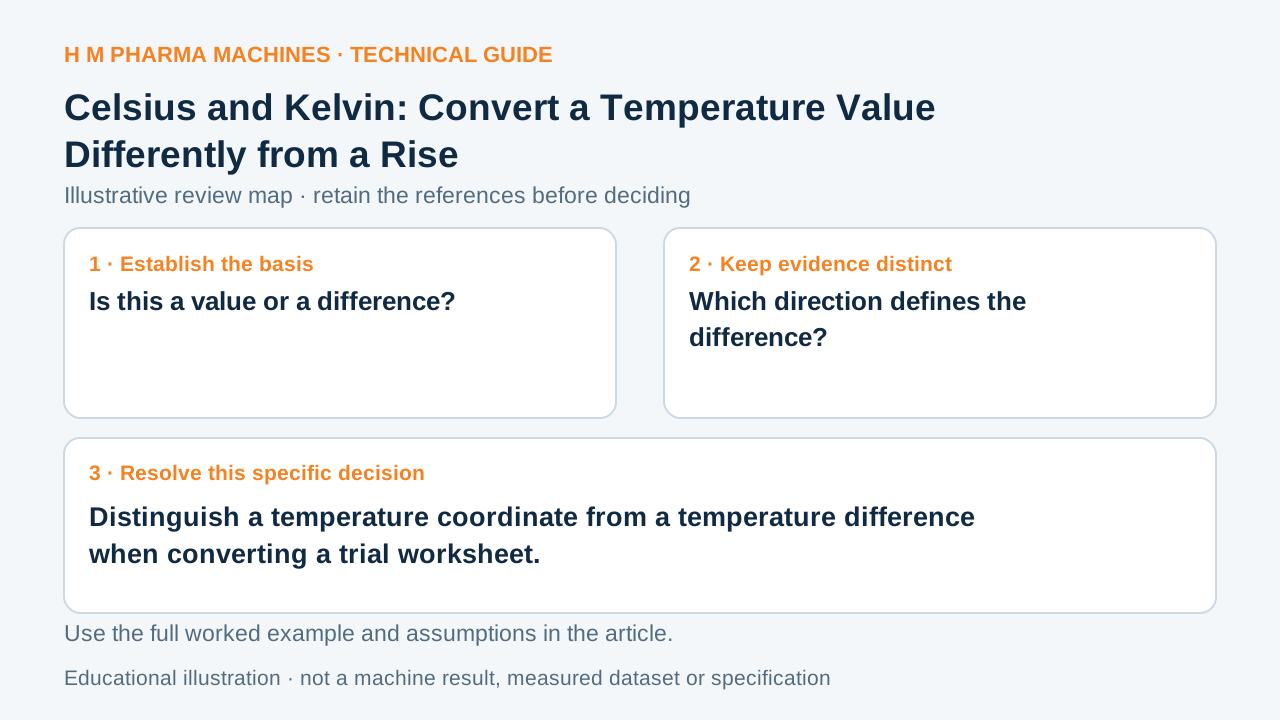
A temperature value and a temperature rise are different quantities in a calculation. The Celsius-to-kelvin offset applies to the value, not to the size of a rise.
Label the quantity before converting
Celsius and kelvin increments have equal magnitude, while their temperature-value origins differ by 273.15. Therefore a temperature value of 25 °C is 298.15 K, but a rise of 25 °C has a magnitude of 25 K. State whether the worksheet cell contains a value or a difference.
Check an invented two-point example
An illustrative process changes from 20 °C to 35 °C. The corresponding values are 293.15 K and 308.15 K. Their difference is 15 K, matching the 15 °C rise. Adding 273.15 to the rise would wrongly turn that difference into 288.15 K.
Use names such as inlet temperature, outlet temperature and outlet-minus-inlet rise rather than an unexplained “T”. Keep sign direction visible: cooling from 35 °C to 20 °C produces a negative outlet-minus-inlet change. These numbers teach unit handling, not a heating recipe.
Review equations at their point of use
Ask whether each equation requires absolute temperature or a temperature difference. Apply the appropriate conversion to the defined quantity and retain units in the calculation. Do not infer a requirement merely because another worksheet used kelvin; the physical model and variable definition determine the correct handling.
Primary references: NIST technical guidance, NIST technical guidance.
Instrument evidence worksheet
This blank worksheet is for your own project. It contains no H M machine trial result.
| Review question | Evidence to retain |
|---|---|
| Is this a value or a difference? | Quantity definition |
| Which direction defines the difference? | Explicit subtraction order |
| What does the equation require? | Absolute temperature or interval |
Customer Questions
Is a 1 °C rise the same magnitude as 1 K?
Yes.
Does 25 °C equal 25 K as a temperature value?
No. It corresponds to 298.15 K.
Should 273.15 be added to a Celsius temperature rise?
No. The offset cancels when taking a difference.
Primary References
These references support the technical principles discussed in this guide. The worked examples and review questions are educational.
Discuss Your Machine Requirement
Share your product, container, required output and the evidence needed for your technical review.
Request a Technical Review