
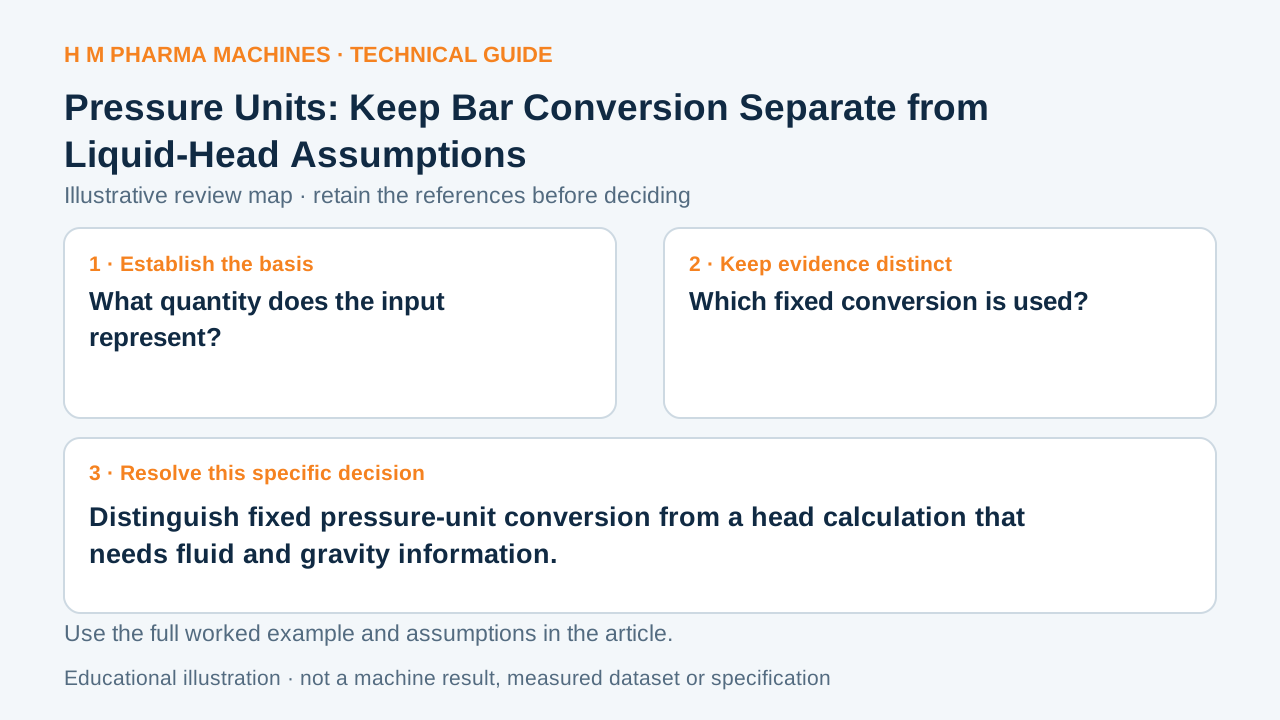
Converting bar to pascal is a fixed unit conversion. Expressing pressure as the height of a liquid column requires an applicable definition of that column.
Identify the kind of conversion
NIST’s unit-conversion table gives 1 bar = 100,000 Pa = 100 kPa. A physical liquid head instead follows the specified column relationship. If a unit uses a conventional reference column, retain that unit’s definition rather than silently substituting the process liquid density.
Compare invented calculation routes
An illustrative 0.25 bar converts to 25,000 Pa. For a physical column using invented density 1,000 kg/m³ and g = 9.81 m/s², h = p/(ρg) gives about 2.548 m. Changing the density to 800 kg/m³ gives about 3.186 m for the same pressure.
The pressure did not change when the hypothetical liquid changed; the corresponding physical height did. These numbers do not define a conventional water-column unit or an actual tank level. Keep the physical model separate from the fixed conversion table.
Prevent a hidden reference-fluid substitution
Retain pressure unit, datum and any head-unit definition in imported data. If the task is a physical level calculation, record fluid density, gravity assumption and geometry. Ask the reviewer whether the input represents pressure, a conventional head unit or an already converted level before performing another conversion.
Primary reference: NIST technical guidance.
Instrument evidence worksheet
This blank worksheet is for your own project. It contains no H M machine trial result.
| Review question | Evidence to retain |
|---|---|
| What quantity does the input represent? | Pressure, conventional head or level |
| Which fixed conversion is used? | Defined pressure-unit factor |
| What physical head model applies? | Fluid, gravity and geometry |
Customer Questions
Does 1 bar always equal 100 kPa?
Yes.
Does the same pressure give the same height for every liquid?
No. Density affects the physical column height.
Is the example a definition of a conventional head unit?
No. It is a hypothetical physical-column calculation.
Primary References
These references support the technical principles discussed in this guide. The worked examples and review questions are educational.
Discuss Your Machine Requirement
Share your product, container, required output and the evidence needed for your technical review.
Request a Technical Review