
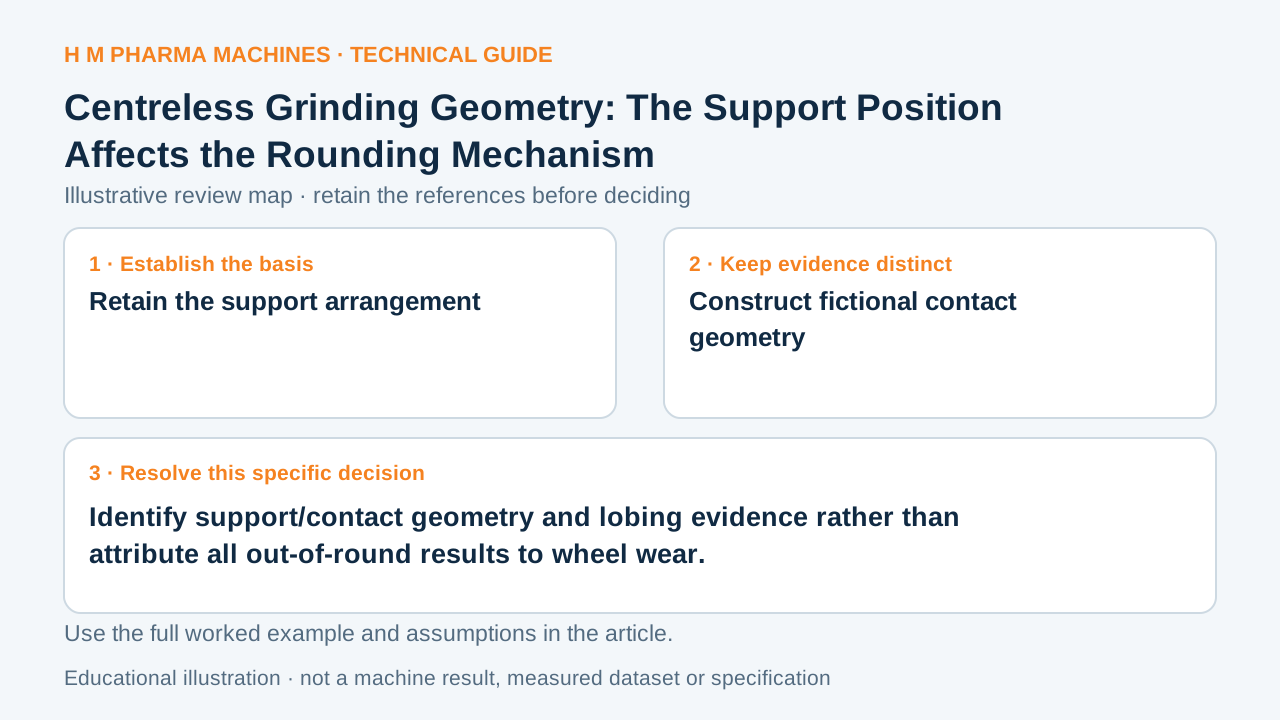
Centerless support locates the work through wheel and blade contacts rather than fixed part centers.
Retain the support arrangement
Norton describes through-feed centerless grinding with grinding and regulating wheels plus a workrest blade, and relates setup geometry to roundness behavior. Primary reference: Norton technical explanation.
Construct fictional contact geometry
In an ideal section, assign two equal wheel radii of 100 mm and a circular workpiece radius of 10 mm. With wheel centers 210 mm apart on one horizontal line, external tangency gives work-center height √(110²−105²), about 32.787 mm above that line.
Changing their separation to 216 mm gives height √(110²−108²), about 20.881 mm, despite unchanged work diameter. An ideal horizontal support would contact ten millimeters below each work center. These are original circle constructions, not actual wheel sizes or setup recommendations. Real blade slope, wheel form and working contacts require their own geometry.
Make the geometric history complete
Draw wheel centers, work center and blade contact in the same section. Preserve the actual support and regulating geometry beside roundness observations, rather than reporting only finished diameter. Keep process changes and measurement basis in time order.
A specified roundness requirement needs its own measurement, and a diameter reading cannot replace it. This worksheet identifies omitted contact geometry. It does not diagnose every lobe pattern, supply a centerless setup procedure or guarantee that a single geometry change restores circularity; actual machine and process evidence remain necessary.
Customer Questions
Does unchanged diameter fix contact-center height?
The fictional wheel-spacing comparison changes it.
What heights follow in the ideal section?
Approximately 32.787 and 20.881 millimeters.
Are those actual machine setup values?
They are circle-construction assumptions.
Primary References
These references support the technical principles discussed in this guide. The worked examples and review questions are educational.
Discuss Your Machine Requirement
Share your product, container, required output and the evidence needed for your technical review.
Request a Technical Review