
Two current-related labels can answer different questions even when both use amperes.
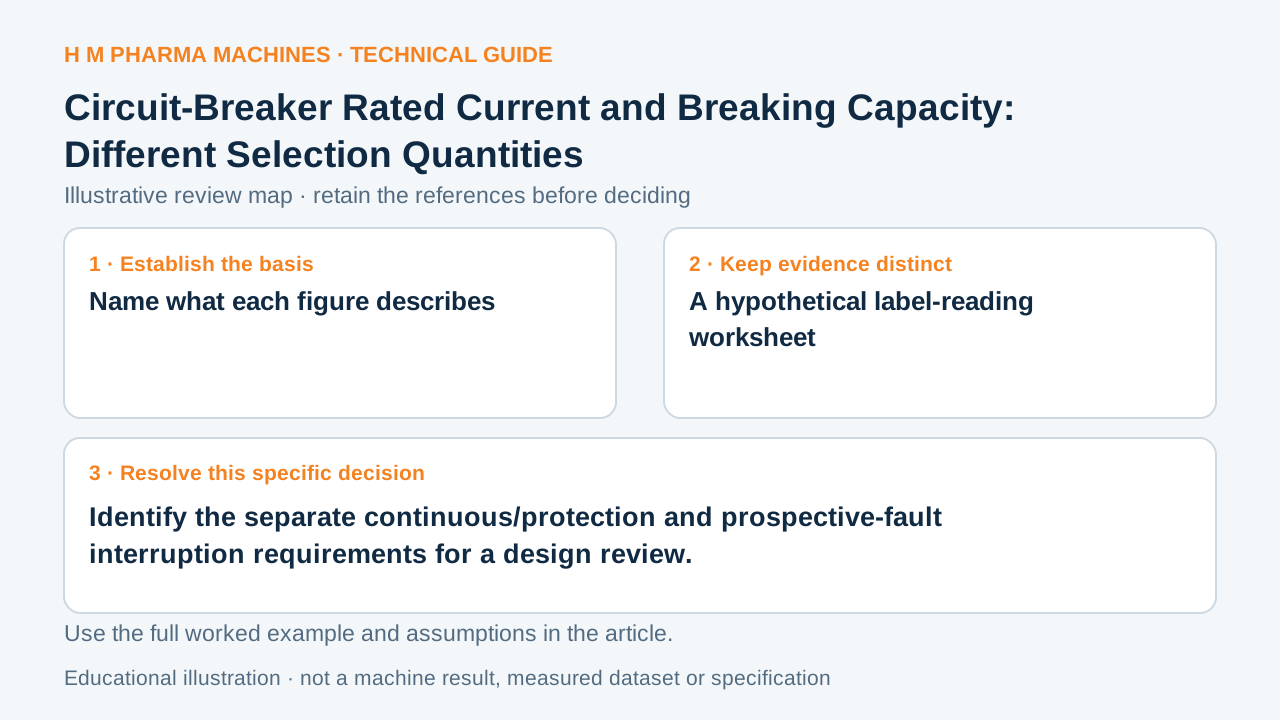
Name what each figure describes
Schneider Electric defines a breaker's interrupting rating at a stated voltage and standard test conditions. Keep that rating separate from the breaker's current-rating field. Primary reference: Schneider circuit-breaker ratings.
Record the actual component designation, current-rating definition, interruption designation and voltage basis. Keep their associated conditions rather than comparing the two numbers as competing versions of one property. Other protection and application requirements remain separate parts of the responsible electrical design.
A hypothetical label-reading worksheet
Imagine a fictional offer lists a 10 A current rating and a 6 kA interruption designation at an identified voltage. The 6 kA figure is not a claim that the breaker continuously supplies that current. Conversely, the 10 A figure does not describe the available fault current at its proposed location.
Place normal-duty information, available fault-current evidence, interruption designation and rated-voltage condition in separate rows. The numbers are invented for interpretation only. No breaker is selected and no trip setting, conductor size or permitted installation is established by this example.
Request the complete application basis
Ask the responsible designer to preserve the applicable system condition and component evidence when comparing proposals. A changed supply arrangement can require a fresh application assessment even if the nominal load current remains unchanged.
Keep unresolved information visible instead of using the largest printed number as an acceptance shortcut. This guide helps a buyer understand why the rating fields must remain distinct. It provides no protection-coordination calculation, field-testing procedure or instruction to alter installed protective devices; those decisions require the actual electrical system basis.
Customer Questions
Does interruption capacity describe continuous load current?
No. Keep the current-rating and interruption fields distinct.
Can interruption capacity be compared without its voltage basis?
No. Preserve the stated applicable conditions.
Does this worksheet select a breaker?
No. It organizes the information needed by the actual system design.
Primary References
These references support the technical principles discussed in this guide. The worked examples and review questions are educational.
Discuss Your Machine Requirement
Share your product, container, required output and the evidence needed for your technical review.
Request a Technical Review