
A drain needs to remove collected liquid without assuming every opening event has the same purpose or demand.
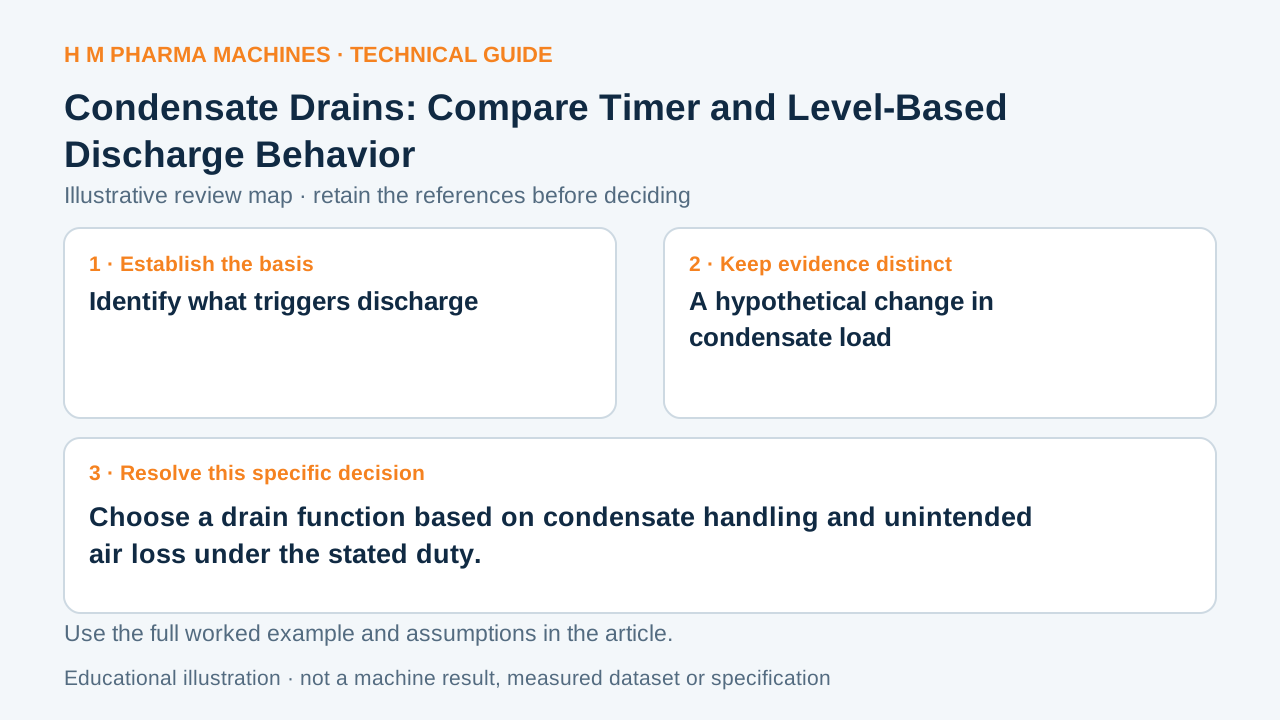
Identify what triggers discharge
DOE's condensate-drain guidance compares discharge arrangements in the context of effective liquid removal and unintended compressed-air loss. Preserve the actual drain function. Primary reference: DOE condensate-removal context.
A timer-driven function opens according to its configured schedule; a condensate-responsive arrangement uses its documented collection condition. Neither description alone states capacity, reliability or air loss for an unidentified installation. The actual drain and discharge path need applicable evidence.
A hypothetical change in condensate load
Imagine two operating periods have different condensate accumulation, while a timed drain retains the same opening schedule. One period may raise an insufficient-removal question; the other may raise an unnecessary-air-discharge question. Keep both outcomes unresolved until the actual duty and drain behavior are assessed.
Build rows for accumulation basis, trigger function, removal capacity, discharge destination and relevant observation. Compare a proposed level-responsive arrangement using its real conditions rather than assuming the label eliminates every possible air loss or blockage. The scenario reports no HM drain observation.
Preserve operation and maintenance evidence
Ask the supplier how the selected drain handles the intended condensate envelope and how its relevant failure indications and maintenance requirements are documented. Keep electrical or other utility needs separately identified with the chosen variant.
Retain the drain part and approved discharge arrangement through replacements. Changing a schedule or mechanism can require a fresh duty assessment. This guide helps a buyer compare function and evidence without supplying a timer interval, opening a live drain or copying one application's successful setting as a universal solution for every accumulation rate.
Customer Questions
Does one timed schedule represent every condensate load?
No. Compare the actual operating envelope.
Does a level-responsive label guarantee every drain outcome?
No. Review the selected component and conditions.
Does this guide provide a timer setting?
No. It defines a duty-based comparison.
Primary References
These references support the technical principles discussed in this guide. The worked examples and review questions are educational.
Discuss Your Machine Requirement
Share your product, container, required output and the evidence needed for your technical review.
Request a Technical Review