
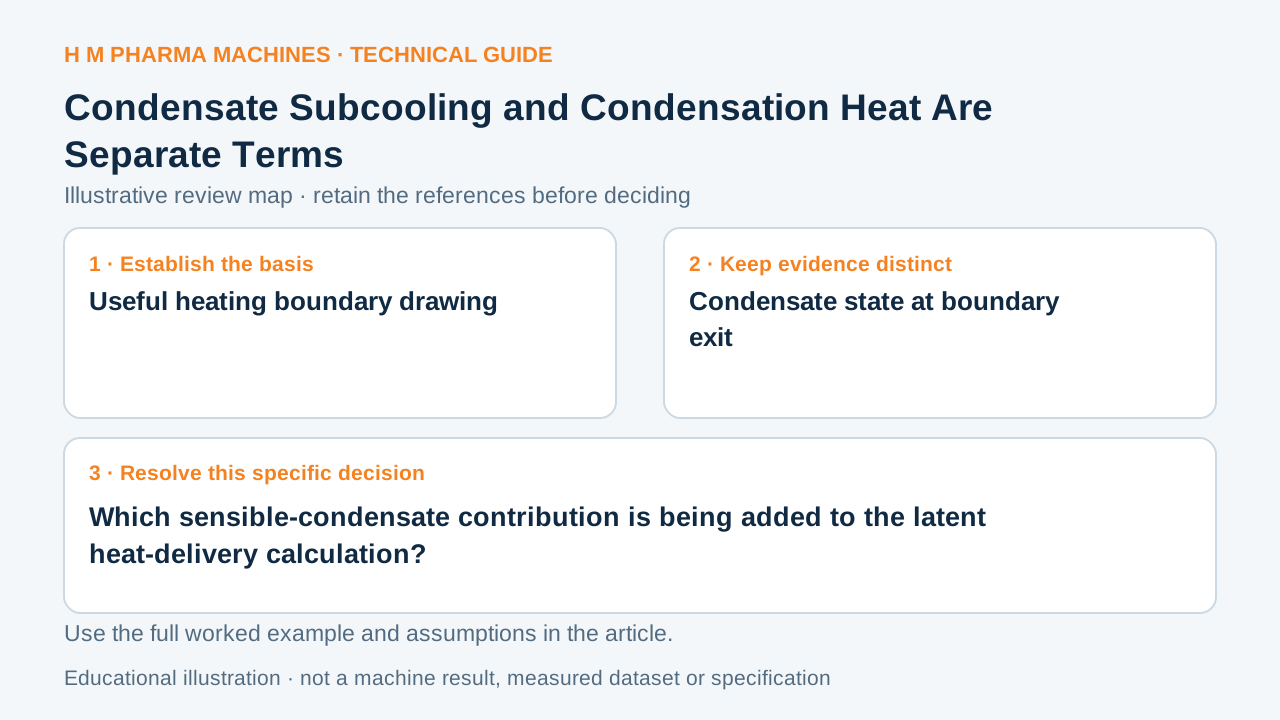
A steam-side heat balance should state whether the condensate merely forms or also cools before leaving the useful heating boundary.
Define the Thermal Model
Steam condensation releases latent energy while the newly formed saturated liquid retains sensible energy. TLV’s condensate-recovery explanation makes this distinction. Additional condensate cooling can release sensible heat, but it belongs in a process-duty credit only when that cooling occurs within the defined useful boundary.
Compare a Hypothetical Case
Assume an invented latent contribution of 2,000 kJ/kg and condensate heat capacity of 4 kJ/(kg·K). Cooling the condensate a further 40 K would release 160 kJ/kg. The possible total within a boundary containing both stages is 2,160 kJ/kg. If that cooling instead occurs in a remote return line, crediting it to the heated product misplaces the energy.
Complete the Engineering Review
Draw a boundary around the equipment receiving useful heat. Mark the condensate’s exit state at that boundary and record the separate return-system state. Ask whether drainage and control permit the claimed subcooling. Do not turn an assumed colder return temperature into evidence that the product received the extra sensible energy.
Use the processing-tank page to identify the proposed heating interface. The example is an accounting exercise, not an instruction to retain condensate in a jacket. Equipment and drainage specialists should confirm the actual arrangement before assigning an outlet-state credit.
Which sensible-condensate contribution is being added to the latent heat-delivery calculation?
This blank worksheet is for your own project. It contains no H M machine trial result.
| Review field | Reference or result | Responsible person |
|---|---|---|
| Useful heating boundary drawing | To complete | To complete |
| Condensate state at boundary exit | To complete | To complete |
| Latent and sensible contributions | To complete | To complete |
| Evidence supporting credited subcooling | To complete | To complete |
Customer Questions
Is fresh condensate cold?
At formation it can remain at saturation temperature.
Can all return cooling count as product heat?
Only cooling within the useful boundary belongs there.
Does this calculation choose a trap?
Trap and drainage behavior require separate review.
Related Equipment References
Review the actual offered equipment and application separately from this educational example.
Primary References
These references support the technical principles discussed in this guide. The worked examples and review questions are educational.
Discuss Your Machine Requirement
Share your product, container, required output and the evidence needed for your technical review.
Request a Technical Review