
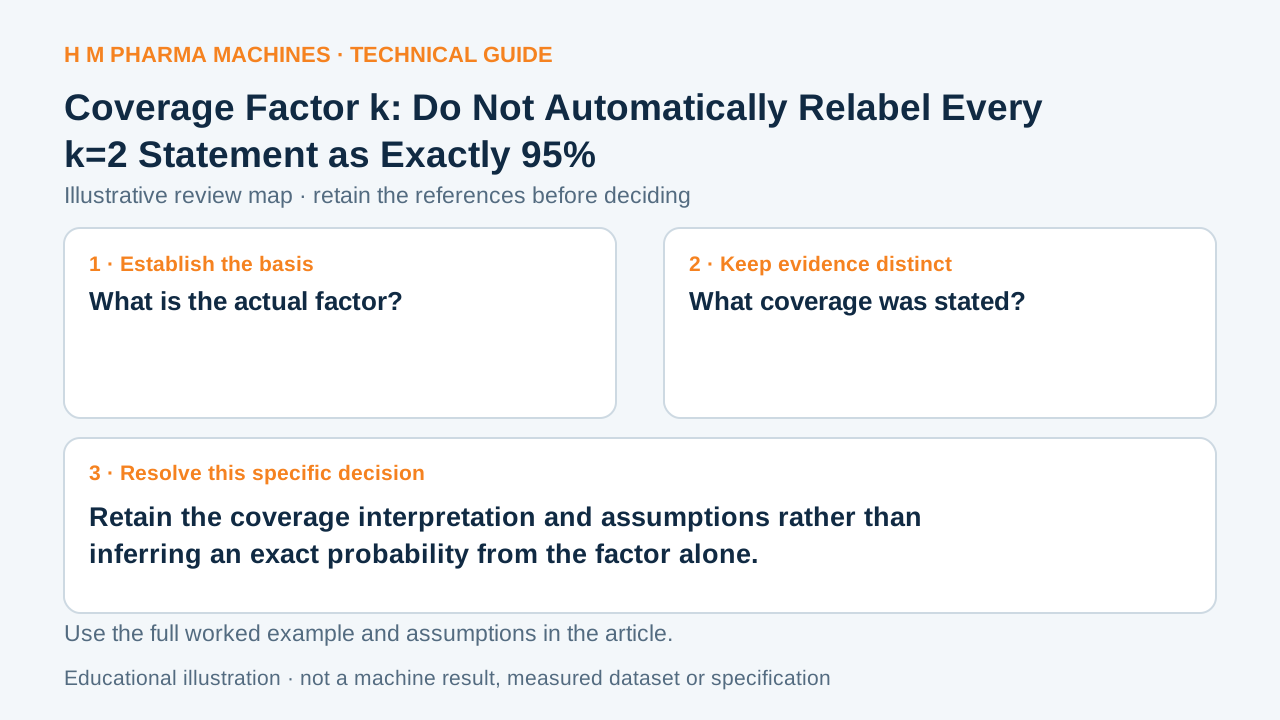
The coverage factor scales standard uncertainty. Its probability interpretation depends on the applicable distribution and evaluation.
Retain the statement as issued
Expanded uncertainty U equals k times combined standard uncertainty. A factor of two is often associated with an approximate coverage under appropriate conditions, but the factor alone does not establish an exact 95% probability for every result. Keep the accompanying coverage statement and method.
An invented reporting error
A certificate reports U=0.40 g and k=2 with its own stated interpretation. A spreadsheet converts this to u=0.20 g correctly, then rewrites the report as “guaranteed exact 95%.” The numerical conversion did not support that stronger wording. Copy the interpretation faithfully and ask the laboratory about uncertainty evaluation details.
When combining that contribution into another result, the new expanded uncertainty and coverage choice belong to the new evaluation. Reusing a certificate’s probability sentence for an unrelated budget can misstate the result.
Ask a specific follow-up
Retain the result, U, k, stated coverage and applicable conditions together. Ask which distribution or effective degrees-of-freedom treatment supports the factor where that matters. Avoid presenting an uncertainty interval as a guarantee about every future production outcome.
Primary references: JCGM international vocabulary, NIST measurement handbook.
Measurement review worksheet
This blank worksheet is for your own project. It contains no H M machine trial result.
| Question | Evidence to retain |
|---|---|
| What is the actual factor? | k with U and u definitions |
| What coverage was stated? | Original probability wording |
| Does it concern this result? | Applicable evaluation and conditions |
Customer Questions
Does k=2 always equal exactly 95%?
No. Its interpretation depends on the evaluation.
Can an uncertainty interval guarantee every future fill?
No. Measurement uncertainty and future process outcomes differ.
Can certificate coverage be copied to a new budget?
The new result needs its own applicable evaluation.
Primary References
These references support the technical principles discussed in this guide. The worked examples and review questions are educational.
Discuss Your Machine Requirement
Share your product, container, required output and the evidence needed for your technical review.
Request a Technical Review