
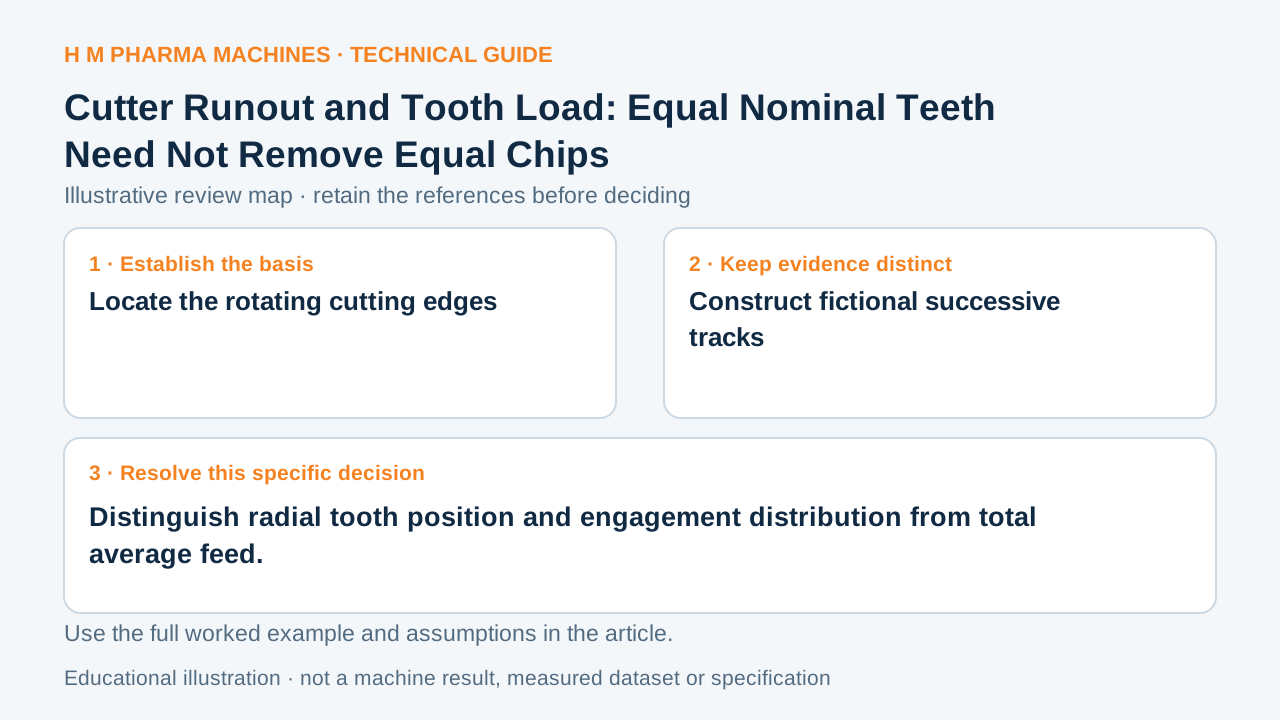
An average advance does not establish equal cutting work at every tooth.
Locate the rotating cutting edges
Harvey defines tool runout as departure from the true rotation axis. Cutting-edge positions belong to the actual assembled tool, holder and spindle. Primary reference: Harvey technical explanation.
Construct fictional successive tracks
Use an expressly simplified one-dimensional track model with two alternating edges. Assign nominal advance 0.05 mm between edges and alternating radial offsets +0.008 and −0.008 mm. With the chosen sign convention, successive increments are 0.05+0.016=0.066 mm and 0.05−0.016=0.034 mm.
They sum to 0.10 mm, so the unchanged average hides a 1.94 ratio between these model increments. This illustration is not a full milling chip-thickness model, a runout tolerance or an actual cutter measurement. Contact geometry can require a more complete model.
Collect edge-resolved evidence
Number the edges and retain the relevant radial position and measurement location for each one. Pair that evidence with tooth sequence, feed and engagement. Keep static diameter measurements separate from assembled rotational observations.
Inspect each edge when uneven loading is proposed rather than comparing only average spindle power or table feed. The worksheet identifies how positional differences can be hidden by an average. It does not infer a vibration cause, choose a holder or establish that the invented model gives the actual peak force at an HM machining operation.
Customer Questions
What are the invented alternating increments?
0.066 and 0.034 mm.
Does their average establish equal loading?
It hides their difference.
Is this a full chip-thickness prediction?
The one-dimensional model is deliberately simplified.
Primary References
These references support the technical principles discussed in this guide. The worked examples and review questions are educational.
Discuss Your Machine Requirement
Share your product, container, required output and the evidence needed for your technical review.
Request a Technical Review