
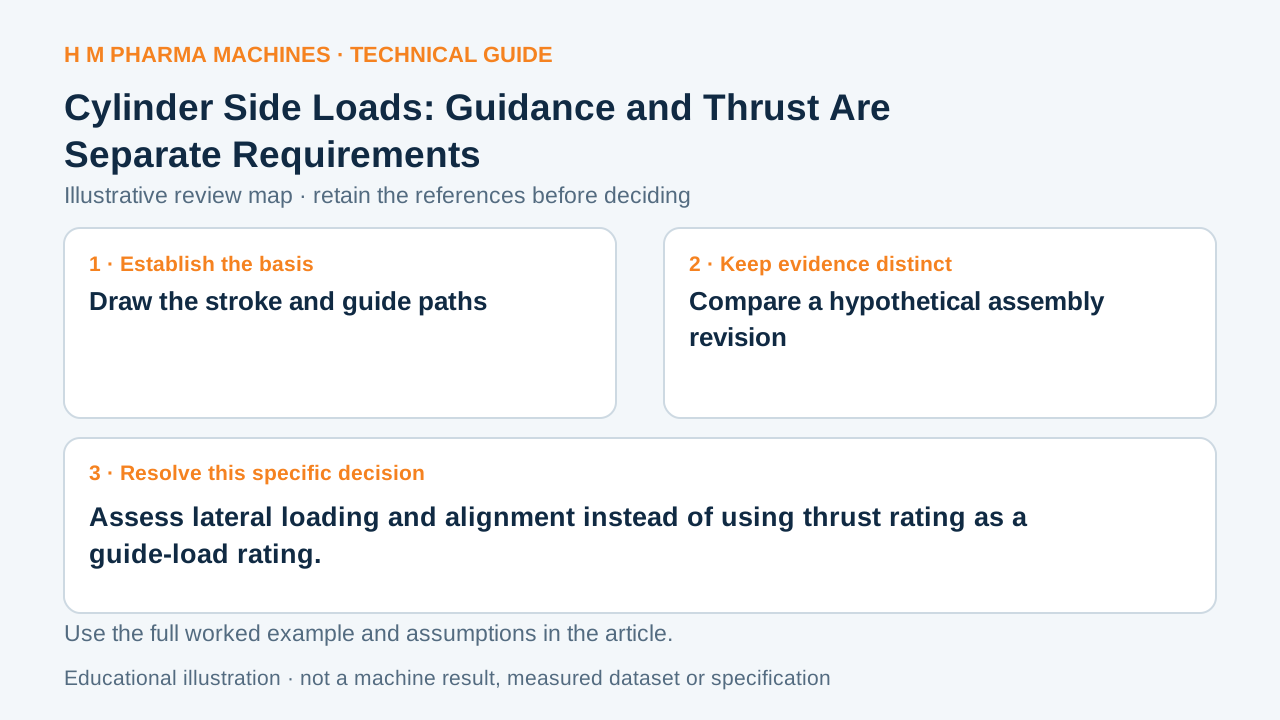
A force along the stroke and a load across the stroke require different evidence.
Draw the stroke and guide paths
SMC's identified cylinder instructions discuss load-centre misalignment and an appropriate joint arrangement. Keep alignment evidence with the actual actuator connection. Primary reference: SMC cylinder-to-load alignment.
An external guide defines a load path while the cylinder transmits its axial drive. The actual connecting arrangement must accommodate its intended relationships rather than silently assigning incompatible constraints to both paths. A cylinder thrust number does not demonstrate alignment between the rod and the externally guided mechanism.
Compare a hypothetical assembly revision
Imagine the tooling and cylinder part numbers remain unchanged, but an external guide is relocated in a new drawing. The old record confirms axial demand only. Compare rod-axis references, guide path, mounting and connecting-joint freedoms between revisions before assuming that the unchanged thrust evidence establishes the new assembly relationship.
Build rows for component datum, supported movement, constrained direction, connecting arrangement and applicable alignment evidence. Keep missing references visible. This worksheet supplies no permissible offset, selected floating joint or HM binding diagnosis; it exposes a specific assembly question rather than calculating a guide block's moment capacity.
Preserve support and drive responsibilities
Ask the designer which part supports lateral load and how the cylinder connection remains compatible with the guided path over the intended stroke. Retain the actual joint and mounting conditions; a generic flexible label does not prove that every required freedom or load capacity is included.
When tooling or guidance changes, update the constraint-path review as well as the axial-force comparison. This guide helps a buyer distinguish drive demand from assembled alignment evidence without prescribing a field correction, selecting an allowable side load or promising that one joint resolves every mechanical restriction.
Customer Questions
Does unchanged thrust prove a relocated guide remains aligned?
No. Review the actual rod/guide connection relationship.
Does a flexible-joint label establish every required freedom?
No. Preserve the selected joint's conditions.
Does this guide calculate guide-block moment capacity?
No. It reviews competing constraint paths in the assembled drive.
Primary References
These references support the technical principles discussed in this guide. The worked examples and review questions are educational.
Discuss Your Machine Requirement
Share your product, container, required output and the evidence needed for your technical review.
Request a Technical Review