
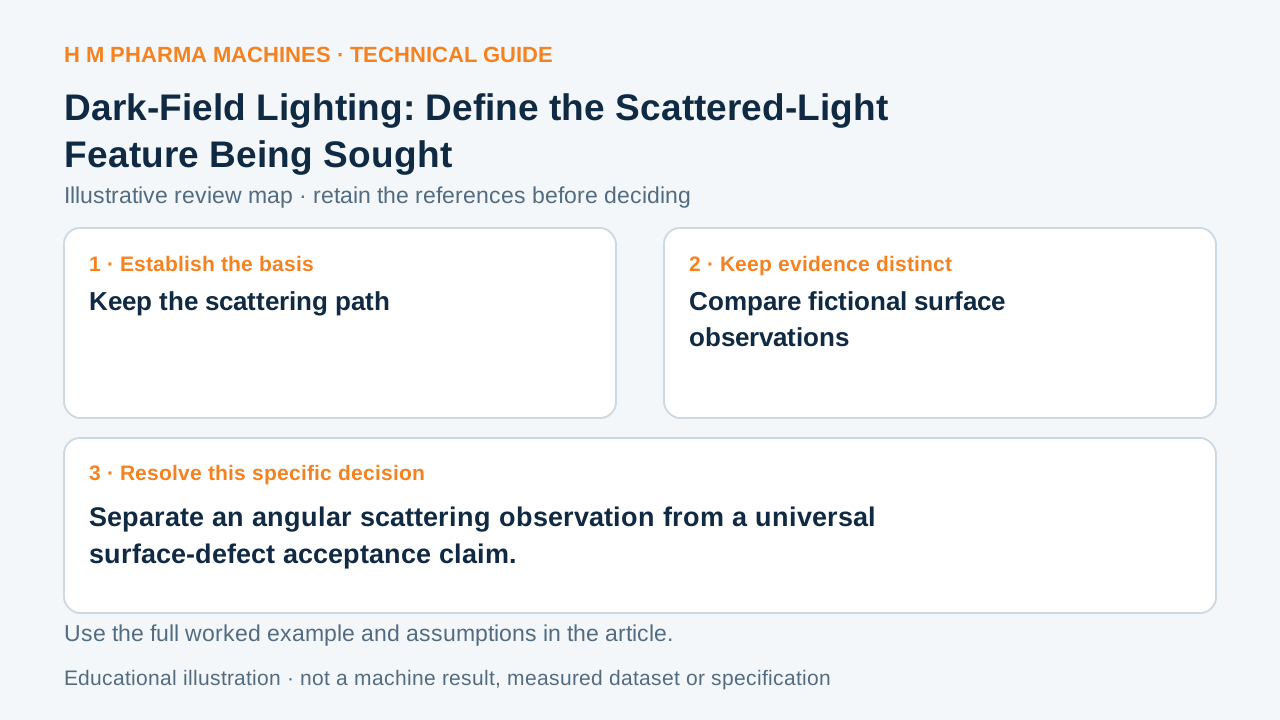
A bright mark against a dark field describes an optical observation. Its physical identity and acceptance meaning still need to be established.
Keep the scattering path
Low-angle dark-field illumination can make features that scatter light into the imaging path stand out while smoother regions remain dark. The result depends on surface geometry and the relative directions of the light and camera. Primary reference: Edmund Optics: dark-field ring-light geometry.
Describe the intended observation before calling it a defect detector. An edge, texture, engraving or contaminant can each produce scattering under some arrangement. Their appearance may overlap, even though the product's acceptance decision treats them differently. Retain the feature identity separately from its image brightness.
Compare fictional surface observations
Imagine a trial includes a known engraved line, an allowed surface texture and a candidate scratch. Under one hypothetical low-angle arrangement, all three produce bright regions. Brightness alone therefore cannot establish which region belongs to the rejected class.
Rotate the samples within their expected presentation range and record the corresponding observations. This proposed trial structure supplies no actual contrast values, lighting distance or rejection threshold. It illustrates why the physical feature and its orientation must accompany a dark-field example before a classification claim is made.
Review visibility and decision separately
Request original images of relevant acceptable and unacceptable examples with their identities documented. Keep illumination direction, camera viewpoint and object presentation consistent enough to interpret changes. If a region appears only at one orientation, record that limitation instead of selecting its clearest picture as general evidence.
Check whether edges or allowed texture create competing signals at the decision location. The final evidence should explain both the visibility of the sought feature and how it is distinguished from legitimate surface observations. A darker background can improve presentation while leaving that distinction unresolved; retain the task's agreed criteria with the image set.
Customer Questions
Is every bright dark-field region a defect?
No. Accepted geometry or texture can also scatter light.
Why compare orientations?
The optical observation depends on the surface and light directions.
Which two questions require evidence?
Whether the feature is visible and whether the task can distinguish its physical class.
Primary References
These references support the technical principles discussed in this guide. The worked examples and review questions are educational.
Discuss Your Machine Requirement
Share your product, container, required output and the evidence needed for your technical review.
Request a Technical Review