
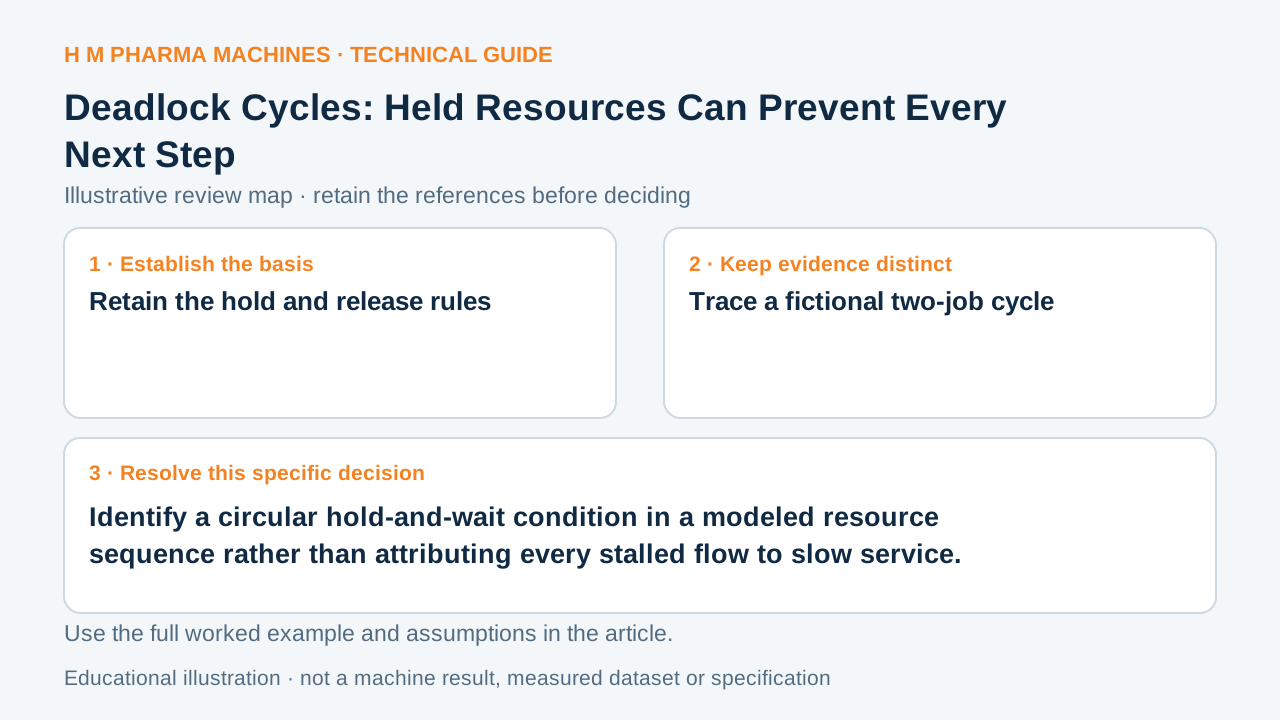
Some stalled resource models cannot progress through their own release logic. A held-resource cycle exposes that condition separately from long service duration.
Retain the hold and release rules
Deadlock analysis considers processes waiting for resources held by other processes that cannot release them until they progress. Exclusive resources, hold-and-wait, no permitted preemption and a circular wait are relevant conditions. A resource cycle must be interpreted with its instance counts and release rules; a graph alone is not a universal diagnosis. Primary reference: University of Illinois Chicago: deadlock and circular hold-and-wait.
For an original small model, choose two exclusive single-unit resources and state that jobs retain their first resource while waiting for the second. They release only after obtaining both and finishing. These assumptions make the following constructed cycle specific rather than a claim about every slow production process.
Trace a fictional two-job cycle
Job A holds resource R1 and requests R2. Job B holds R2 and requests R1. Neither request can be granted because the other job retains the needed unit. Under the stated no-preemption and release rules, neither job can reach its completion event to free the unit.
Increasing the modeled processing speed after acquisition cannot resolve this state: acquisition itself cannot finish. An original state table should show holders, requested resources and the event required for release. A job simply processing slowly would have a future completion event instead of this closed wait.
Review permitted recovery separately
Build a trial hold-and-request ledger and inspect whether any modeled release, cancellation, extra instance or permitted preemption breaks the cycle. If the model changes resource acquisition order, record the new rule explicitly rather than reporting the old cycle as repaired by faster service.
This logical example provides no physical fault recovery, machine safety procedure or controller change. Actual stalled equipment requires its own diagnosis. The reader decision is whether a simulated wait has become a closed resource dependency under stated rules instead of a duration that merely has not elapsed yet.
Customer Questions
Would faster post-acquisition service resolve the example?
No. Neither job can acquire its second required resource.
Does every resource-allocation cycle prove deadlock?
No. Instance counts, release rules and permitted preemption must be considered.
Is this an actual machine recovery procedure?
No. It analyzes a defined logical resource model.
Primary References
These references support the technical principles discussed in this guide. The worked examples and review questions are educational.
Discuss Your Machine Requirement
Share your product, container, required output and the evidence needed for your technical review.
Request a Technical Review