
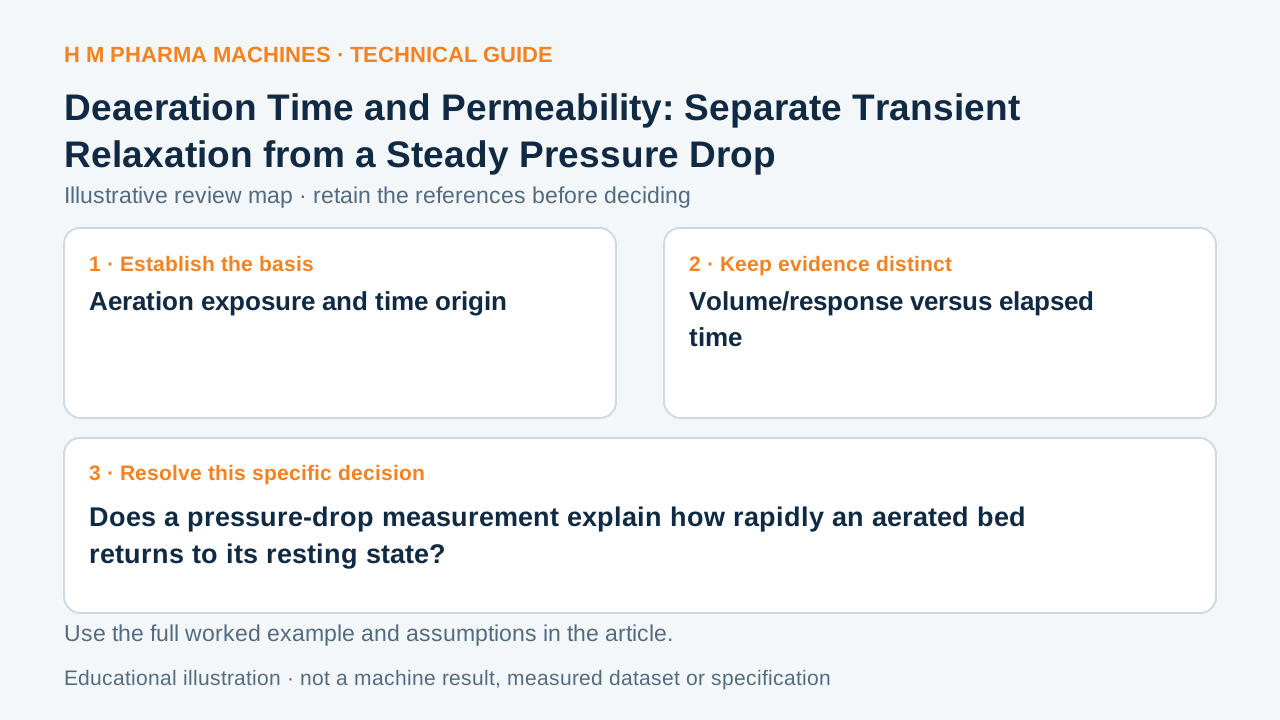
Compare the time taken after aeration ends with the process waiting interval; steady gas permeability and transient settling answer different questions.
Identify the Material Response
The primary Freeman study notes that powder can entrain or lose air and that conditioning can change its state through deaeration and particle rearrangement. An elapsed response therefore needs its preparation history. Primary reference: deaeration and powder conditioning.
Review a Hypothetical Comparison
Suppose a fictional bed has expanded volume 120 mL just after an identified aeration exposure, then 110 mL after 10 s and 102 mL after 60 s. These observations describe a volume history. A separate pressure-drop result under continuing gas flow does not by itself supply that time history or prove every volume change was air release.
Keep the Evidence with the Decision
Record the time origin, airflow cessation, bed geometry and chosen observation. Define the repeatable endpoint needed for the process rather than calling the first smaller volume “fully settled.” Keep tapping, vibration or other rearrangement apart from the untreated rest record. Compare the actual waiting interval with the observed approach to the stated endpoint.
No exponential relaxation law is inferred from the three fictional points. State what permeability test was performed if it is offered as supporting evidence, including imposed flow and bed conditions. The useful output is a transient state record and its process timing boundary. These observations specify neither an HM dwell setting nor a universal delay that cures variable powder doses.
Does a pressure-drop measurement explain how rapidly an aerated bed returns to its resting state?
This blank worksheet is for your own project. It contains no H M machine trial result.
| Review field | Reference or result | Responsible person |
|---|---|---|
| Aeration exposure and time origin | To complete | To complete |
| Volume/response versus elapsed time | To complete | To complete |
| Rearrangement and bed conditions | To complete | To complete |
| Endpoint versus available process wait | To complete | To complete |
Customer Questions
Does a steady pressure-drop value give a settling time?
No. The transient history needs its own evidence.
Must all bed-volume change be air release?
No. Rearrangement can also contribute.
Do the three points define an exponential law?
No. They are only the stated observations.
Primary References
These references support the technical principles discussed in this guide. The worked examples and review questions are educational.
Discuss Your Machine Requirement
Share your product, container, required output and the evidence needed for your technical review.
Request a Technical Review