
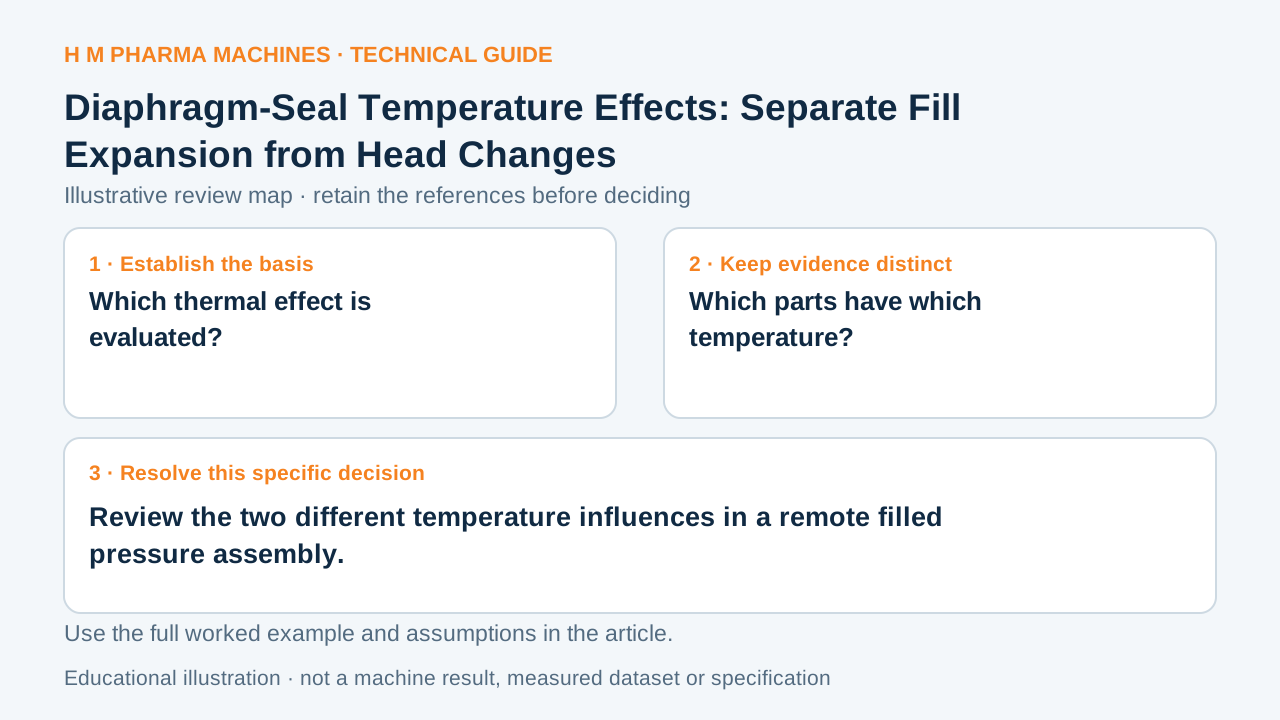
Temperature changes in a filled remote pressure assembly can affect more than one part of the measurement model. Separate fluid expansion from changes in a vertical column’s head.
Name the two influences
WIKA’s capillary guidance discusses temperature-related fill-fluid expansion and density-dependent head effects. Expansion interacts with the filled assembly; a density change alters hydrostatic head where an elevation column exists. They should not be treated as the same correction merely because both arise when temperature changes.
Create an invented influence map
Imagine a remote seal with a vertical filled path. Divide the application worksheet into two rows: assembly thermal-volume behavior and elevation-head behavior. For the second row, retain height and applicable density; for the first, request the manufacturer’s assembled-system thermal assessment.
A single ambient temperature entered into a spreadsheet may not represent different seal, tube and instrument surroundings. Record which portions experience the stated temperatures. Do not sum unidentified headline errors or infer a universal correction from the capillary length alone.
Request assembly-level evidence
Provide the supplier with the seal, fill fluid, capillary geometry, instrument, elevations and temperature envelope. Ask how the complete assembly’s performance has been assessed. Preserve that assessment against the actual assembly revision. This article does not prescribe a fill fluid or authorize adjustment of a remote-seal system.
Primary reference: Manufacturer technical reference.
Instrument evidence worksheet
This blank worksheet is for your own project. It contains no H M machine trial result.
| Review question | Evidence to retain |
|---|---|
| Which thermal effect is evaluated? | Volume behavior or density/head |
| Which parts have which temperature? | Assembly temperature envelope |
| What assembly was assessed? | Seal, fluid, path and instrument revision |
Customer Questions
Are expansion and head-density change the same effect?
No.
Does capillary length alone define the correction?
No. Assembly and conditions matter.
Can a component statement rate the complete assembly?
Obtain applicable assembled-system evidence.
Primary References
These references support the technical principles discussed in this guide. The worked examples and review questions are educational.
Discuss Your Machine Requirement
Share your product, container, required output and the evidence needed for your technical review.
Request a Technical Review