
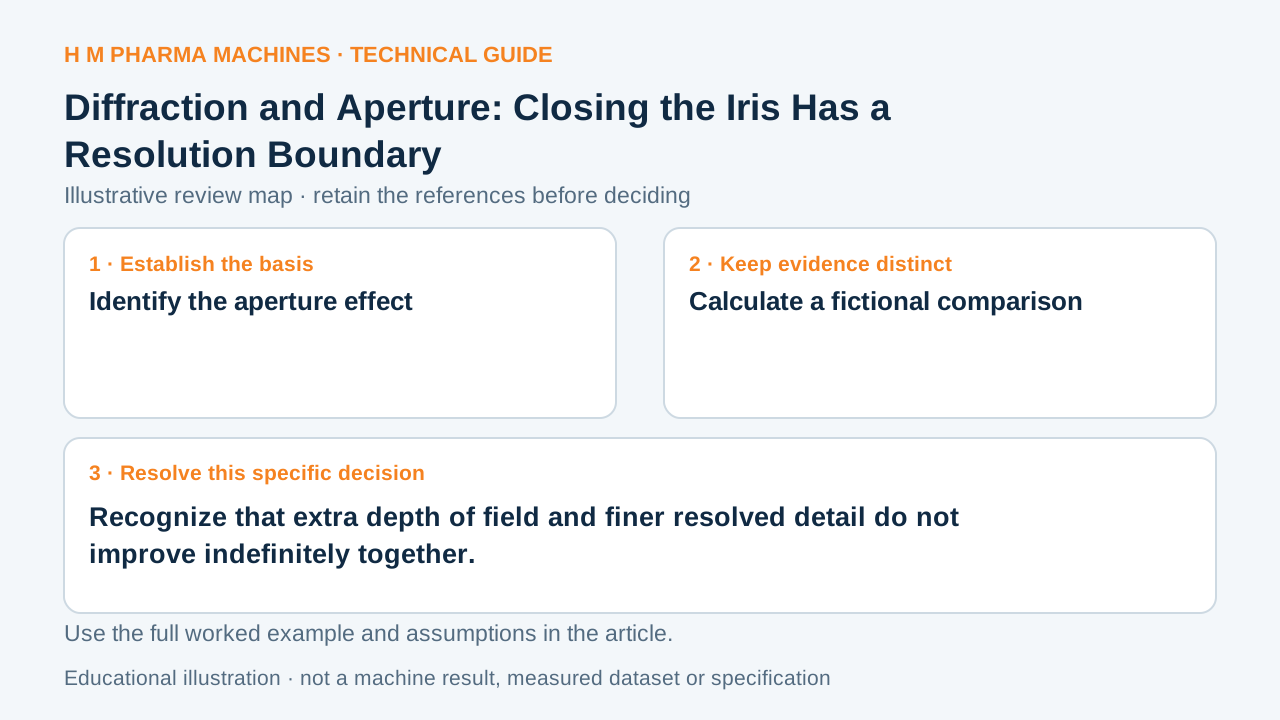
An iris adjustment can make more object depths appear acceptable while reducing contrast in fine detail. Keep those two observations separate during a camera trial.
Identify the aperture effect
Diffraction spreads the image of a point through a finite aperture. For an ideal circular aperture, the approximate Airy-disk diameter is 2.44 times wavelength times f-number. Increasing the f-number increases this theoretical diameter. Primary reference: Edmund Optics: the Airy disk and diffraction limit.
The relationship concerns an optical limit, rather than a camera's software sharpness setting. A trial may show that closing the iris improves an out-of-plane label edge while making a closely spaced printed pattern less distinct. Calling the whole image sharper hides those different tasks.
Calculate a fictional comparison
Take an invented wavelength of 0.55 micrometres. The approximate diameter is 2.44 × 0.55 × 4 = 5.368 micrometres at f/4, and 10.736 micrometres at f/8. These are image-plane theoretical values using the same wavelength, not measured results from an HM machine or a particular lens.
Do not turn either diameter into a universal minimum detectable defect. Real lens aberrations, contrast, sensor sampling and illumination also affect the task. The calculation explains the direction of the trade; it does not select an aperture for production.
Retain two evidence rows
Put the allowed object-height range and the relevant fine-detail pattern on separate rows of the review. For each aperture used, retain the original image and record which locations were examined. A single resized picture of an easy central feature is insufficient to compare both requirements.
If additional illumination or exposure accompanies the aperture change, record those changes alongside it. Reviewers should be able to identify whether a better result followed a depth trade, a signal change or a different test object. Agree the actual acceptance evidence before freezing the setting.
Customer Questions
Does a higher f-number always reveal smaller detail?
No. The theoretical diffraction spot grows as the f-number increases.
Are the calculated diameters a machine specification?
No. They are fictional calculations under an ideal-aperture model.
What should accompany the aperture record?
Retain the depth requirement, detail requirement and actual comparison images.
Primary References
These references support the technical principles discussed in this guide. The worked examples and review questions are educational.
Discuss Your Machine Requirement
Share your product, container, required output and the evidence needed for your technical review.
Request a Technical Review