
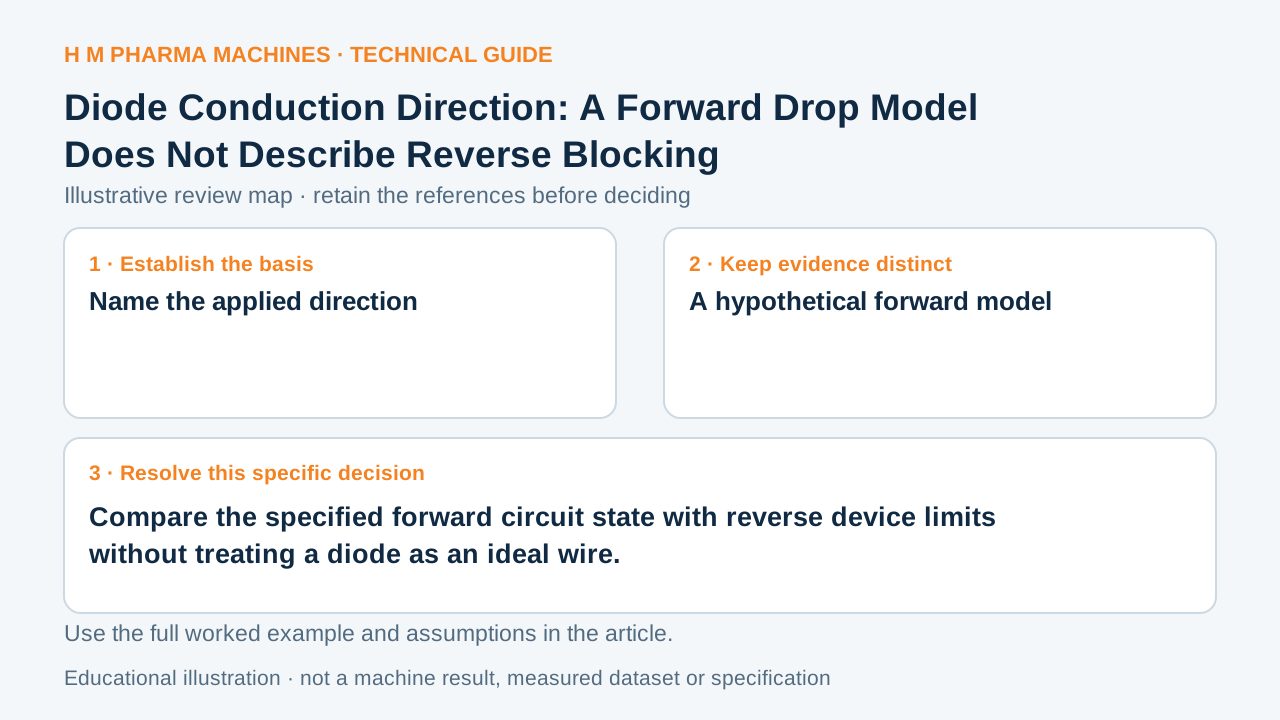
Keep a diode’s forward conduction model distinct from its reverse-voltage limits.
Name the applied direction
ROHM explains forward conduction from anode to cathode and reverse blocking with leakage. Actual device characteristics govern the applicable conditions. Primary reference: diode operation.
A circuit diagram should identify anode, cathode and the voltage reference. An ideal one-direction switch or fixed forward-drop approximation can help a teaching calculation, but neither substitutes for the complete device characteristics or reverse breakdown limits.
A hypothetical forward model
Imagine a fictional 5 V source feeding a 100 Ω resistor and a forward-oriented diode. Assume a fixed 0.60 V diode drop only for this model. Current is (5−0.60)/100 =0.044 A, and modeled diode dissipation is 0.60×0.044 =0.0264 W.
Reversing the diode does not justify continuing to use the same 0.60 V conduction drop with a negative sign. Reverse leakage and blocking capability require a different device-state assessment. The original calculation specifies no acceptable component, operating temperature or installed circuit.
Keep the model review explicit
Prepare fields for orientation, applied voltage, assumed forward behavior, series path and calculated current. List the actual reverse condition separately.
Ask which characteristic data supports the proposed operating point and how temperature or current changes its interpretation. A useful component discussion keeps normal conduction, reverse blocking and permitted stresses from being compressed into the vague description of a diode that passes current.
Customer Questions
Is a forward diode an ideal wire?
A chosen model must account for its relevant behavior.
Can the forward drop describe reverse blocking?
Reverse conditions require their own device data.
Are 0.60 V and 100 Ω recommended values?
They are fictional calculation inputs.
Primary References
These references support the technical principles discussed in this guide. The worked examples and review questions are educational.
Discuss Your Machine Requirement
Share your product, container, required output and the evidence needed for your technical review.
Request a Technical Review