
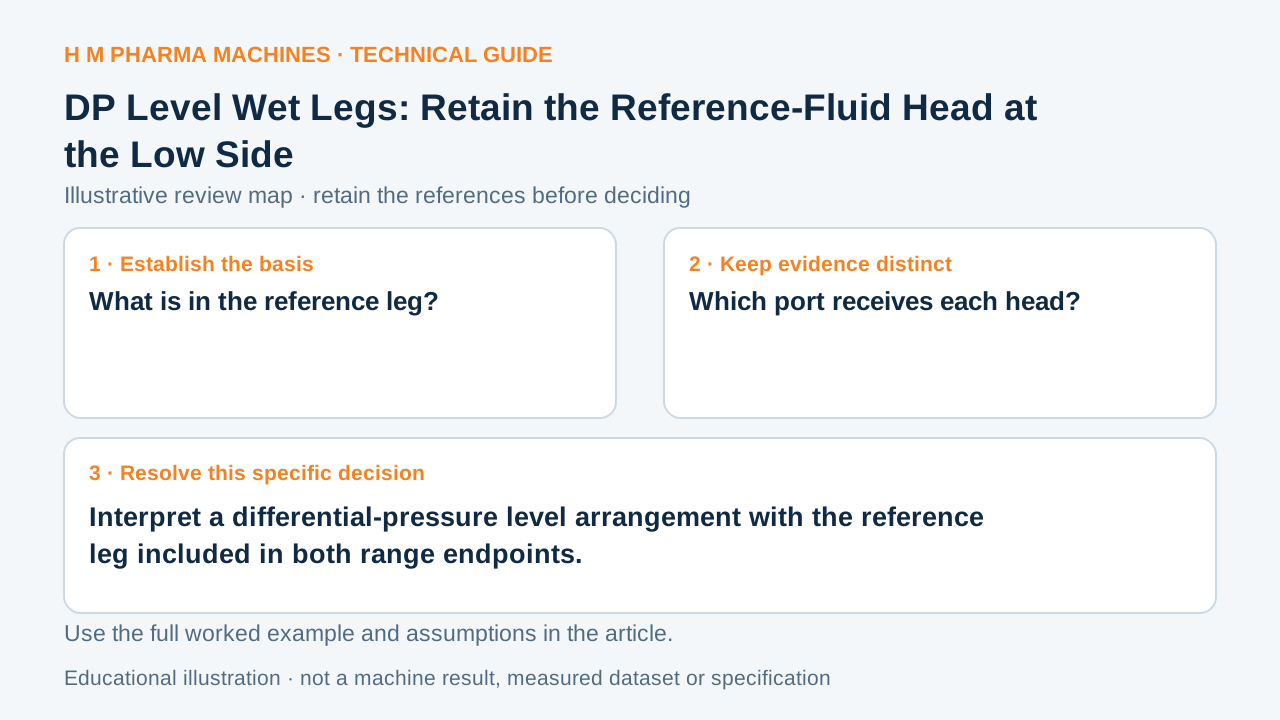
A wet reference leg contributes pressure to the low side of a DP instrument. Its head belongs in the level relationship rather than being mistaken for an unexplained sensor offset.
Identify the purpose of the reference leg
The Rosemount 2051 manual describes a wet leg as a deliberately liquid-filled reference path, avoiding a changing contribution as vapour condenses in an otherwise dry path. Its fluid head acts on the low side. The resulting DP is therefore not simply the vessel liquid head alone.
Review an invented head balance
Suppose the high-side liquid contribution varies from 0 to 20 kPa while an illustrative reference leg contributes a constant 30 kPa to the low side. For DP defined as high minus low, the corresponding values are −30 to −10 kPa. Negative values here follow the declared balance; they are not automatically evidence of a fault.
The real arrangement can include additional elevations, densities and vessel connections. Create a separate term for each head and identify which terms change with level. Do not adjust a transmitter from this simplified example.
Preserve the range derivation
Obtain the approved arrangement drawing, reference-fluid identity, maintained reference condition and endpoint calculation. Check the sign convention against high- and low-side port identities. Preserve the physical model with any configured range so that later fluid or geometry changes trigger an evidence review rather than a blind reuse of settings.
Primary reference: Manufacturer technical reference.
Instrument evidence worksheet
This blank worksheet is for your own project. It contains no H M machine trial result.
| Review question | Evidence to retain |
|---|---|
| What is in the reference leg? | Fluid and maintained condition |
| Which port receives each head? | High/low connection drawing |
| How were endpoints derived? | Signed pressure balance |
Customer Questions
Can a wet leg produce negative DP endpoints?
Yes, depending on the defined pressure balance.
Is reference-fluid density relevant?
Yes. It affects the reference head.
Does this guide provide a commissioning sequence?
No. Follow the approved arrangement and device procedure.
Primary References
These references support the technical principles discussed in this guide. The worked examples and review questions are educational.
Discuss Your Machine Requirement
Share your product, container, required output and the evidence needed for your technical review.
Request a Technical Review