
Equal outer diameter can hide different point geometry.
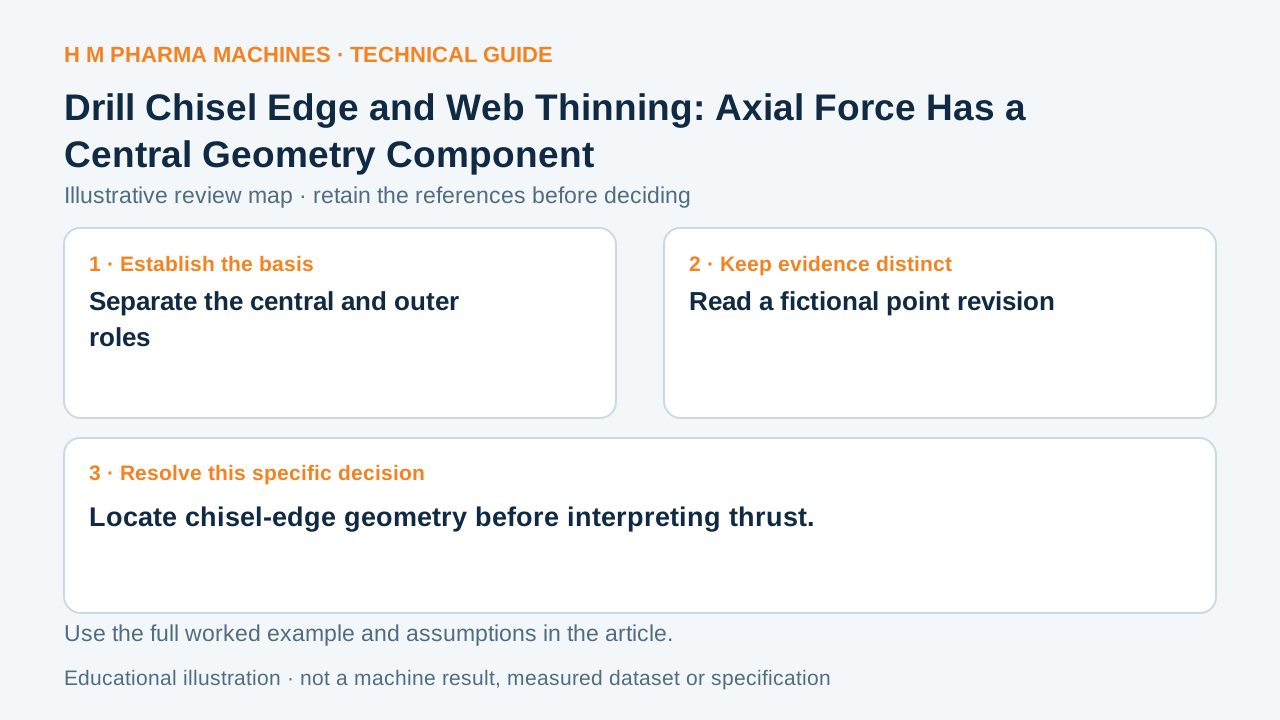
Separate the central and outer roles
Harvey distinguishes the chisel region that extrudes material from cutting edges that produce chips, and separately identifies the drill web as its core. Primary reference: Harvey technical explanation.
Read a fictional point revision
Imagine two point drawings with the same 10 mm outer diameter. In the specified viewing plane, drawing A labels a central chisel extent of 1.2 mm and B labels 0.6 mm. The displayed extent halved, but the outer cutting diameter did not.
That ratio alone cannot prove a 50% reduction in thrust. The cutting lips, web and local point form also need their own identities, and the drawings are not force measurements. These invented dimensions illustrate an evidence distinction; they are not a web-thinning specification or a tool-grinding instruction.
Keep geometry and force evidence separate
Annotate the chisel extent, web section, lips and reference view on each actual drawing. Check whether a reported revision changes the drill body core, the point grind or both instead of treating every central feature as the same diameter.
If reduced thrust is claimed, request comparable force evidence with material and contacting conditions. Preserve chip transport and tool integrity questions separately. This worksheet helps identify what the geometry revision actually changed and what performance claim remains untested, without assigning a force law from a simple length ratio or making a supplier-specific point design universal.
Customer Questions
Did the fictional outer diameter change?
It remained ten millimeters.
Does half the chisel extent prove half the thrust?
Comparable force evidence is still required.
Are web and chisel extent identical quantities?
Keep their separate geometric definitions.
Primary References
These references support the technical principles discussed in this guide. The worked examples and review questions are educational.
Discuss Your Machine Requirement
Share your product, container, required output and the evidence needed for your technical review.
Request a Technical Review