
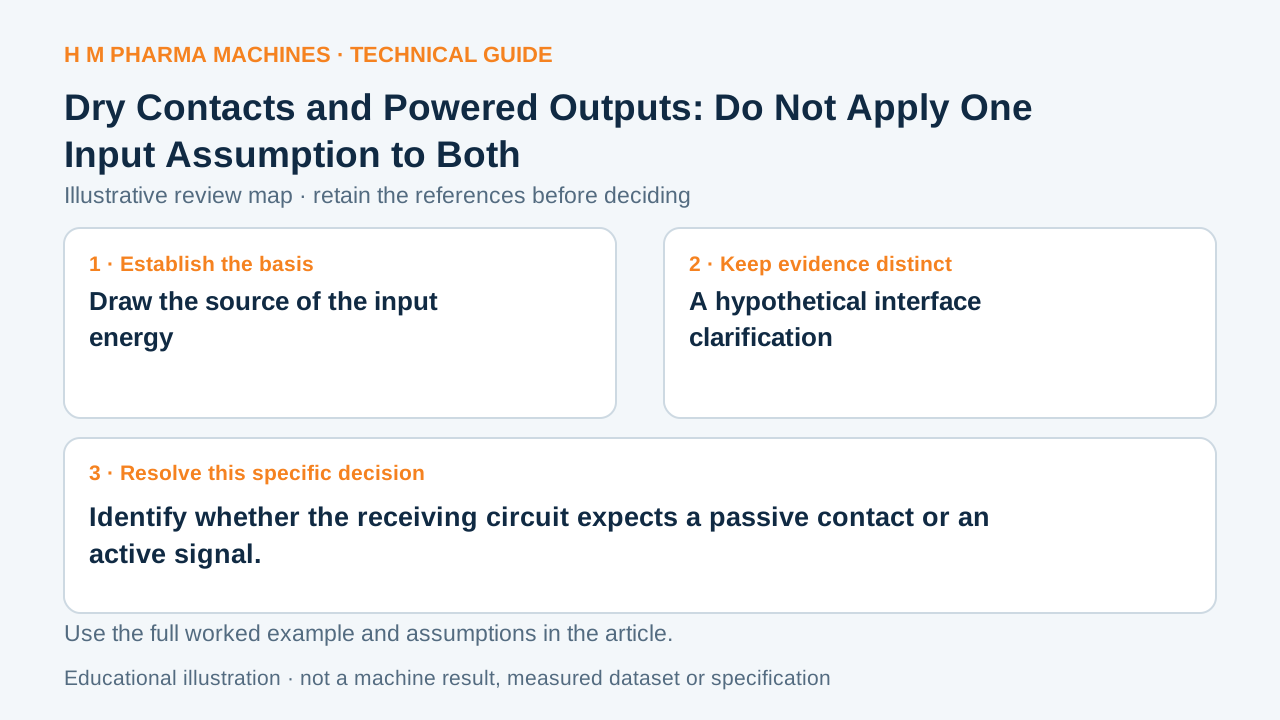
A binary state can be represented by different electrical architectures.
Draw the source of the input energy
Advantech's cited manual shows separate wet-contact and dry-contact input arrangements for identified channels. The actual receiver configuration determines the applicable interface. Primary reference: Advantech input architectures.
A potential-free contact provides a contact state, while an active signal has its own powered-output basis. Record what the selected input expects rather than assuming that every terminal called digital input accepts both in the same way. The complete drawing is more informative than a binary label alone.
A hypothetical interface clarification
Imagine a fictional receiver request explicitly identifying a contact-closure input. A proposed device instead offers an active voltage output. Mark the two architectures and ask for a documented compatible interface, rather than applying the active signal to the contact input by assumption. A matching on/off description does not settle the electrical relationship.
Build rows for sender architecture, receiver mode, energy source, state definition and accepted drawing reference. This example supplies no HM terminal assignment or adapter design. It does not copy a manufacturer's wiring diagram or instruct altering the actual receiver.
Keep state meaning and compatibility together
The agreed record should identify both the physical interface and what each state means in the application. NO/NC logic and fault interpretation are separate questions that remain relevant after the architecture is matched.
For replacement proposals, preserve the actual mode and complete component references. The guide helps a buyer identify an incomplete interface assumption without treating contact closure, PNP/NPN and active-voltage output as interchangeable labels. It supplies no universal voltage limit, contact current or field connection method; those values belong to the selected components and responsible electrical design.
Customer Questions
Does digital input mean every signal architecture is accepted?
No. Read the actual receiver mode and specification.
Is an active voltage output the same as contact closure?
No. The electrical architectures differ.
Does a binary label provide a complete interface?
No. Preserve the sender, receiver and accepted relationship.
Primary References
These references support the technical principles discussed in this guide. The worked examples and review questions are educational.
Discuss Your Machine Requirement
Share your product, container, required output and the evidence needed for your technical review.
Request a Technical Review