
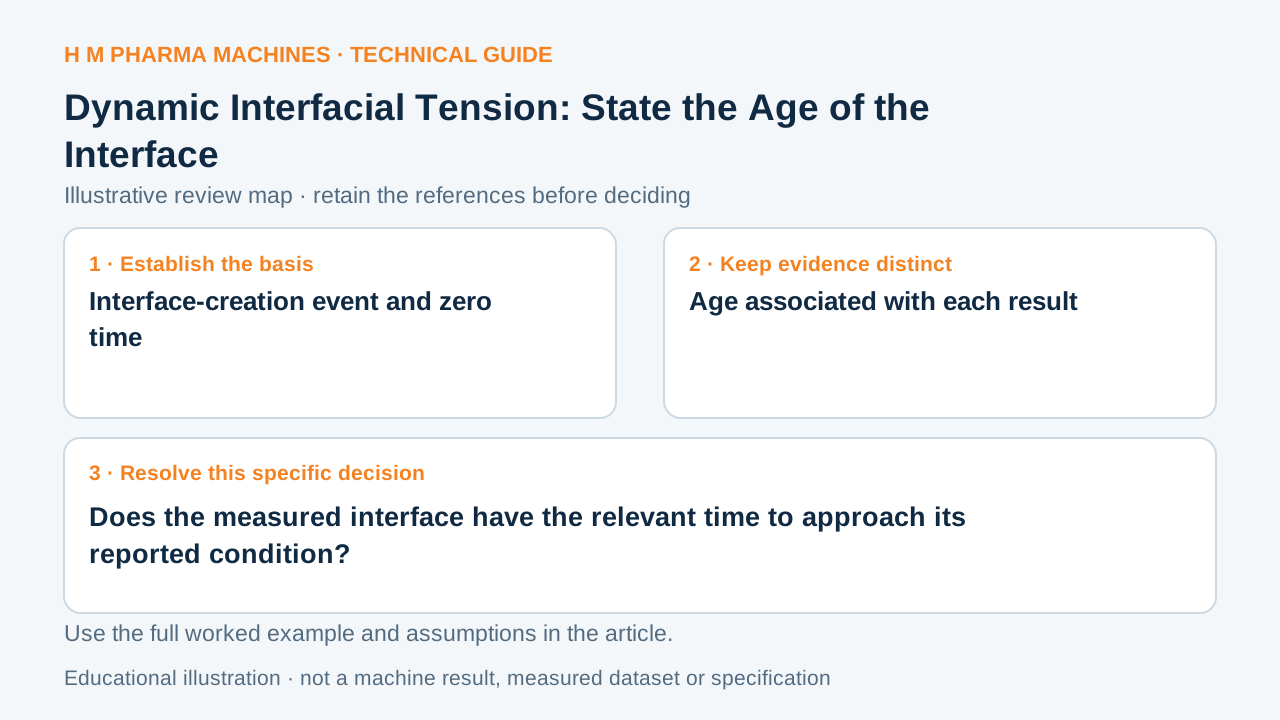
A tension result needs the time since its interface was created, especially when newly formed surfaces matter in processing.
Define the Interface or Transport Basis
KRÜSS defines surface age as the interval between forming a surface or interface and observing it. Adsorption can make tension depend on that interval. A value at equilibrium and a value on a young interface therefore describe different states even when their temperature and bulk composition match.
Review a Hypothetical Comparison
Imagine two fictional liquid samples tested at one temperature. Their interfacial tensions at an age of 0.2 seconds are 22 and 29 mN/m; after 60 seconds they are 18 and 17 mN/m. Sample A is lower on the young interface, while B is lower later. Ranking only the late readings reverses the early comparison. These invented observations do not establish how quickly either sample adsorbs in an actual production flow.
Keep the Evidence with the Decision
Before comparing trials, identify the event that creates the relevant interface: a drop breaking up, a bubble forming or two liquids first meeting. Ask whether the test observes a comparable interval after that event. Keep both the time trace and the selected comparison point. Record how the method defines zero time rather than treating a nominal instrument setting as the actual interface age.
The useful output is a time-qualified comparison. Matching age does not remove differences in deformation history, temperature or contamination, and it does not by itself predict mixing performance.
Does the measured interface have the relevant time to approach its reported condition?
This blank worksheet is for your own project. It contains no H M machine trial result.
| Review field | Reference or result | Responsible person |
|---|---|---|
| Interface-creation event and zero time | To complete | To complete |
| Age associated with each result | To complete | To complete |
| Temperature and phase identities | To complete | To complete |
| Time trace and chosen comparison point | To complete | To complete |
Customer Questions
Can the lower equilibrium tension rank a fast process?
Only after checking whether the process interface approaches that state during its relevant lifetime.
Is elapsed sample storage time the interface age?
No. State the time since the particular measured interface was formed.
Should I keep the whole tension trace?
Yes, when the comparison changes with age; a single selected value can hide that reversal.
Primary References
These references support the technical principles discussed in this guide. The worked examples and review questions are educational.
Discuss Your Machine Requirement
Share your product, container, required output and the evidence needed for your technical review.
Request a Technical Review