
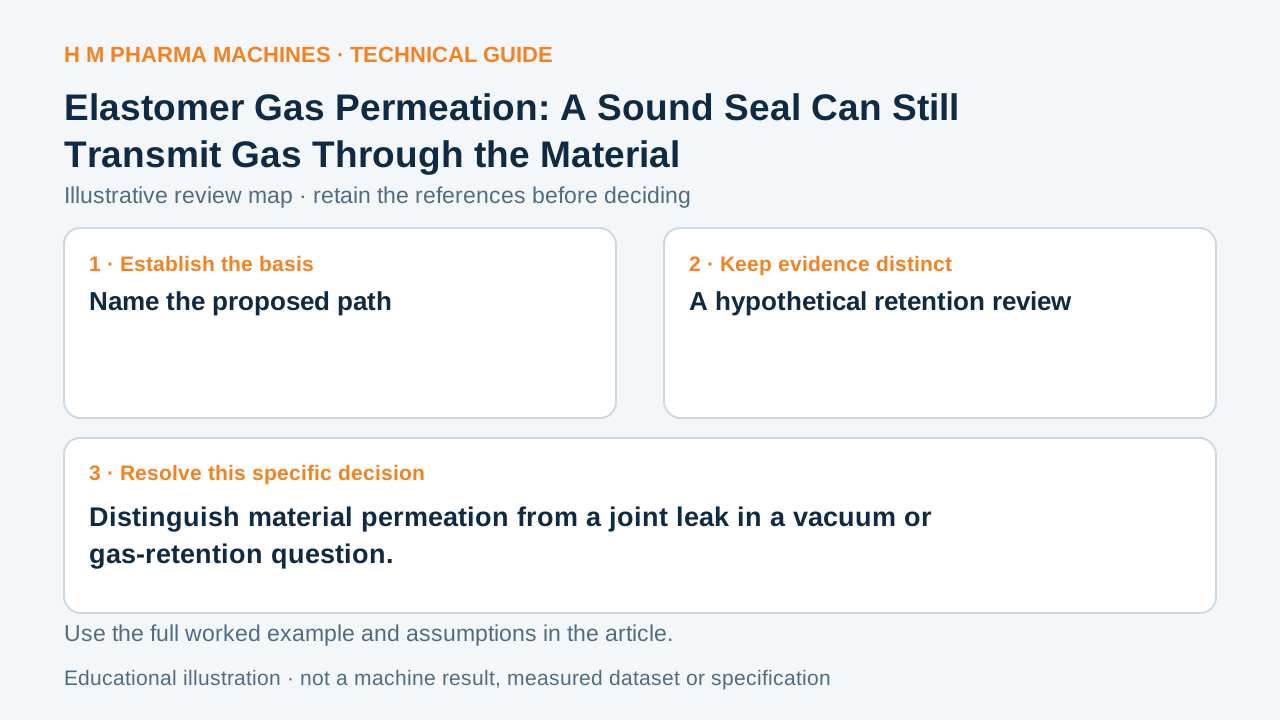
A retention question may involve material permeation as well as an interface leak.
Name the proposed path
Parker distinguishes leakage around a seal from permeation through the material. The two mechanisms should not be merged into one unexplained leak description. Primary reference: Parker leakage types.
Identify gas, seal compound, geometry, temperature and observation duration when reviewing a retention requirement. A short interface observation can be useful without establishing every longer-duration material-transfer question. Keep the actual test and application boundary visible.
A hypothetical retention review
Imagine a fictional enclosure with an identified elastomer seal and a pressure-retention observation over a long stated period. One hypothesis concerns the mating joint; another concerns material permeation. Make separate rows for those paths and the evidence needed to examine each, instead of assuming that a visibly sound joint rules out all transfer.
Record the compound and gas identities, test conditions, duration and specialist assessment reference. No permeation coefficient, allowed pressure change or HM enclosure result is invented here. The teaching example does not select a material or diagnose the cause of an actual pressure trend.
Compare alternatives by the actual requirement
A material change can influence the permeation question while also changing other properties. Preserve chemical, mechanical and application requirements rather than accepting an alternative solely because a catalog calls it low permeability.
Ask how the offered compound's evidence applies to the intended gas and conditions. Keep any remaining interface question separate from a material-property statement. This guide provides a mechanism-by-path review method without promising zero leakage, prescribing a universal vacuum seal or treating one polymer-family advantage as proof of suitability for the complete assembled system.
Customer Questions
Is all gas transfer necessarily a gap around the seal?
No. Material permeation can be a separate path.
Does low permeability answer every seal requirement?
No. The complete compound and application requirements remain relevant.
Can this article diagnose a pressure trend?
No. It identifies distinct hypotheses for an actual assessment.
Primary References
These references support the technical principles discussed in this guide. The worked examples and review questions are educational.
Discuss Your Machine Requirement
Share your product, container, required output and the evidence needed for your technical review.
Request a Technical Review