
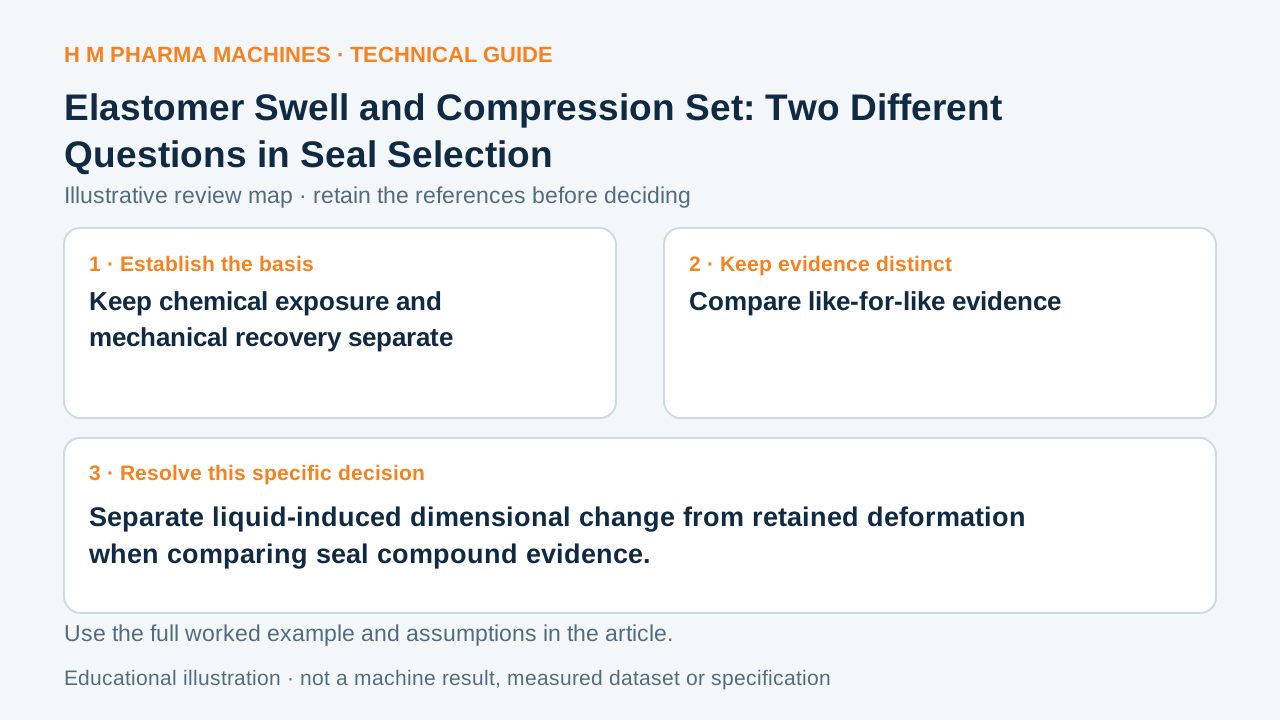
Separate liquid-induced dimensional change from retained deformation when comparing seal compound evidence.
Keep chemical exposure and mechanical recovery separate
An elastomer exposed to a liquid may change volume or other properties. Compression set concerns deformation that remains after specified compression and recovery conditions. Parker's O-Ring Handbook treats these as separate properties within application-specific compound selection. Two seals bearing the same polymer-family label can therefore need different evidence. Neither a low swell result nor a low compression-set result alone answers the complete sealing question, particularly when the test conditions differ from the intended temperature or liquid exposure.
Parker O-Ring Handbook ORD 5700 supports the technical principle above.
Compare like-for-like evidence
Build two test columns. For liquid exposure, capture compound identifier, liquid identity, concentration, temperature, duration and reported property change. For compression-set evidence, capture the stated method, temperature, duration, compression and recovery conditions. Retain the units and the definition used by the report. Do not average these two results into a homemade overall seal score: they represent different mechanisms and may support different parts of the design decision.
Add a third column for the proposed application: static or moving contact, pressure and temperature range, cleaning exposure and replacement access. The application column tells the seal specialist which test differences matter. It also exposes gaps that a family name such as EPDM or FKM cannot resolve by itself.
Hypothetical compound comparison
For an invented worksheet, Compound A has a liquid-exposure result at 23 °C and a compression-set result at 100 °C. Compound B has liquid data at 60 °C but a compression-set report with an unstated recovery period. The intended service includes a warm cleaning stage. Label A's warm-liquid evidence as missing and B's recovery definition as unresolved. Do not declare B better merely because its liquid test was warmer, or A better because its reported set percentage was lower. The useful output is a matched request for the missing conditions and the supplier's assessment of the proposed compound. No values here describe an HM seal or actual qualification test.
Document the accepted compound, not just the family
Once selection is resolved, retain the exact compound designation and the evidence used to evaluate it. If a replacement is proposed later, compare that designation and the relevant test basis again. A visually similar ring or a matching nominal size does not establish equivalent behavior. Use this worksheet when discussing a product and cleaning regime for filling or process equipment. It supports technical selection while avoiding a universal compatibility claim, a guessed service interval or an unsupported installed-material statement.
Customer Questions
Does low swell imply low compression set?
No. They describe different behaviors and need their own test context.
Can all EPDM compounds be treated as equivalent?
No. Use the exact compound and its application-specific evidence rather than only the polymer-family name.
What if two reports use different conditions?
Keep the differences visible and request a comparable basis or an explanation of their relevance to the application.
Related Equipment References
Review the actual offered equipment and application separately from this educational example.
Primary References
These references support the technical principles discussed in this guide. The worked examples and review questions are educational.
Discuss Your Machine Requirement
Share your product, container, required output and the evidence needed for your technical review.
Request a Technical Review