
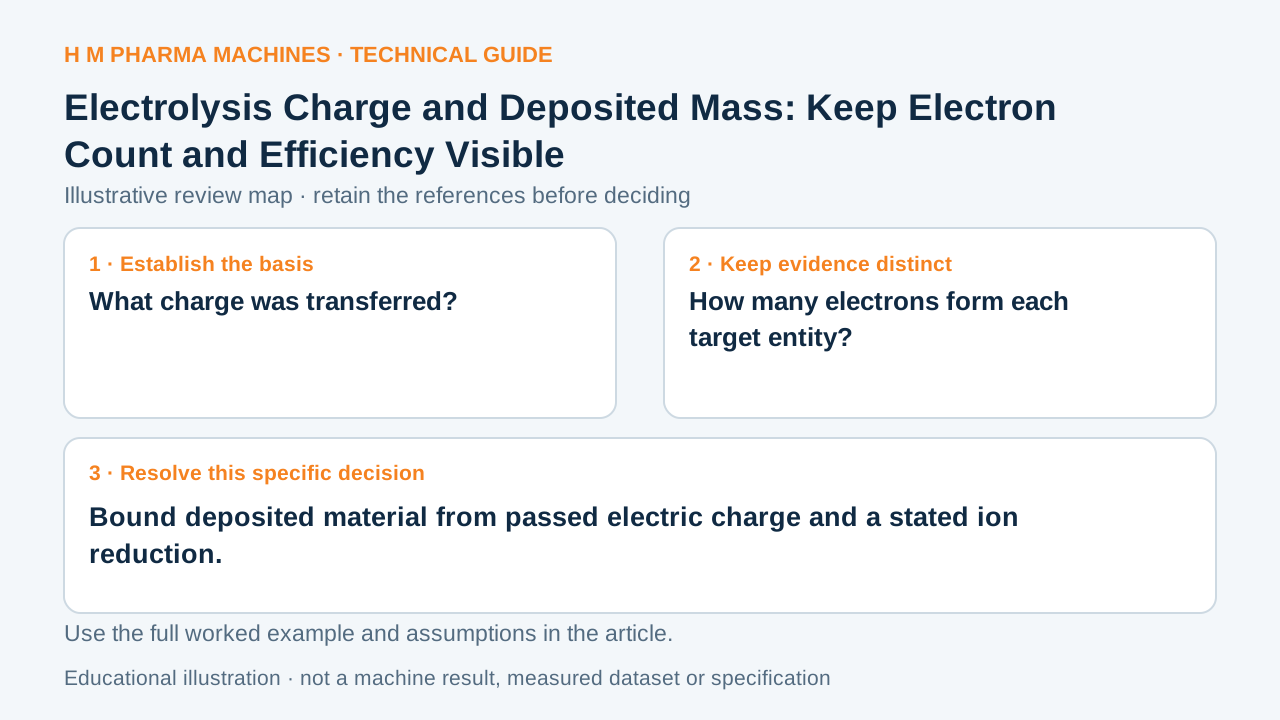
Electrical charge supplies an electron inventory. Predicting a deposited amount also requires the reduction stoichiometry and the fraction of charge assigned to that reaction.
Convert current history into charge
For constant current I over time t, transferred charge is Q = It. Faraday’s constant converts charge to an electron amount. A reduction requiring n electrons per target entity then converts that electron inventory to the target amount, provided the assigned charge follows that reaction. Primary reference.
Compute an invented stoichiometric mass
Define a fictional M²⁺ reduction with two electrons per M and a teaching molar mass of 60.0 g/mol. A constant 2.00 A over 1,000 s transfers 2,000 C. With F = 96,485 C/mol, the ideal target mass is 2,000/(2 × 96,485) × 60.0 ≈ 0.6219 g.
If an expressly supplied 90.0% of the charge contributes to the target reaction, the corresponding mass is approximately 0.5597 g. That fraction is an invented input, not a measured efficiency. Charge consumed by other reactions cannot be reassigned to the target merely because total current was recorded.
Retain the current-efficiency boundary
Create an original charge-to-amount ledger with current history, time units, electron stoichiometry, molar mass and applicable efficiency evidence. When current varies, retain its time integral rather than multiplying one unqualified reading by the full duration. Keep actual collected mass independently recorded.
This example supplies no plating procedure, real material selection, cell voltage or HM electrochemical capability. Its decision is whether an amount prediction follows the correct electron balance and charge allocation. A mass calculation alone does not establish coating quality, recovery or process compatibility.
Solution review worksheet
This blank worksheet is for your own project. It contains no H M machine trial result.
| Question | Record to retain |
|---|---|
| What charge was transferred? | Current history and elapsed time |
| How many electrons form each target entity? | Reduction stoichiometry |
| What charge fraction formed the target? | Documented efficiency input or explicit ideal assumption |
Customer Questions
What ideal mass follows from the fictional charge?
Approximately 0.6219 g.
What follows from the supplied 90% fraction?
Approximately 0.5597 g.
Does the example establish coating quality?
No.
Primary References
These references support the technical principles discussed in this guide. The worked examples and review questions are educational.
Discuss Your Machine Requirement
Share your product, container, required output and the evidence needed for your technical review.
Request a Technical Review