
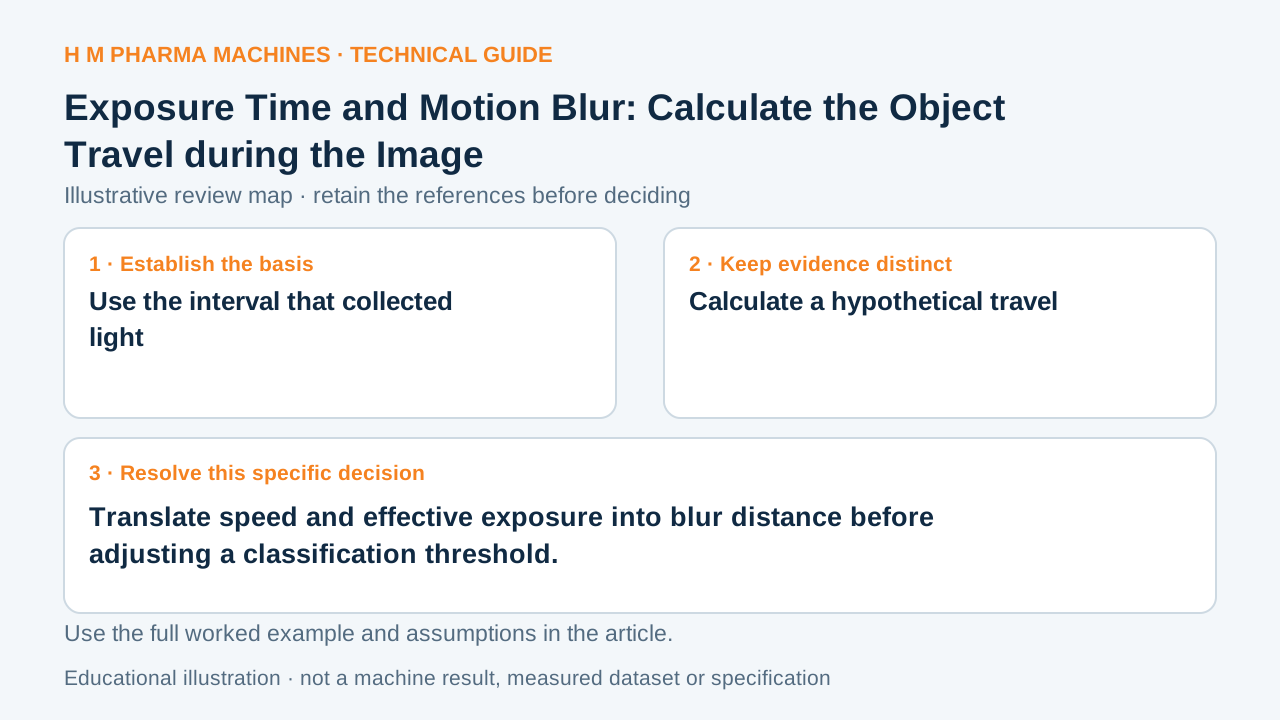
Before changing an image threshold, check how far the relevant feature moves while the camera collects light. Exposure duration gives that question a physical basis.
Use the interval that collected light
Exposure time describes the duration over which the sensor collects the image signal. Where a camera distinguishes configured and effective exposure, retain the applicable effective duration rather than assuming a setting label is the complete timing record. Primary reference: Basler: exposure time and effective exposure.
For a simple constant motion projected into the image plane, travel during exposure is speed multiplied by duration. Record which component of motion is used. A conveyor's overall speed does not automatically describe the image motion of a rotating or angled feature.
Calculate a hypothetical travel
Imagine a feature moving at a projected 1.0 m/s during an effective exposure of 0.20 milliseconds. Its travel is 0.20 mm. At an invented object sampling distance of 0.05 mm per pixel, that travel corresponds to four sampling intervals along the direction considered.
These calculations do not establish that an image has exactly four pixels of visually uniform smear. Light distribution, object contrast and acquisition architecture still matter. They provide a scale for the motion question and contain no actual HM operating limit or universal blur acceptance value.
Review the signal and motion together
Ask for original frames at the expected motion condition, with effective exposure, illumination state and projected speed recorded. Identify the feature whose decision may be affected. A bright stationary label does not establish what the moving label will look like during that interval.
If shorter exposure is proposed, retain the resulting signal evidence as well as the travel calculation. A lower calculated travel can accompany a darker or noisier image. The final review should judge the actual task with its agreed criteria, rather than treating a smaller exposure number as sufficient proof of improvement.
Customer Questions
Which speed enters the simple calculation?
Use the feature's motion component projected into the image direction being assessed.
Is four intervals a rejection threshold?
No. It is the result of a fictional scale calculation.
What should accompany a shorter exposure trial?
Retain both motion-detail and acquired-signal evidence.
Primary References
These references support the technical principles discussed in this guide. The worked examples and review questions are educational.
Discuss Your Machine Requirement
Share your product, container, required output and the evidence needed for your technical review.
Request a Technical Review