
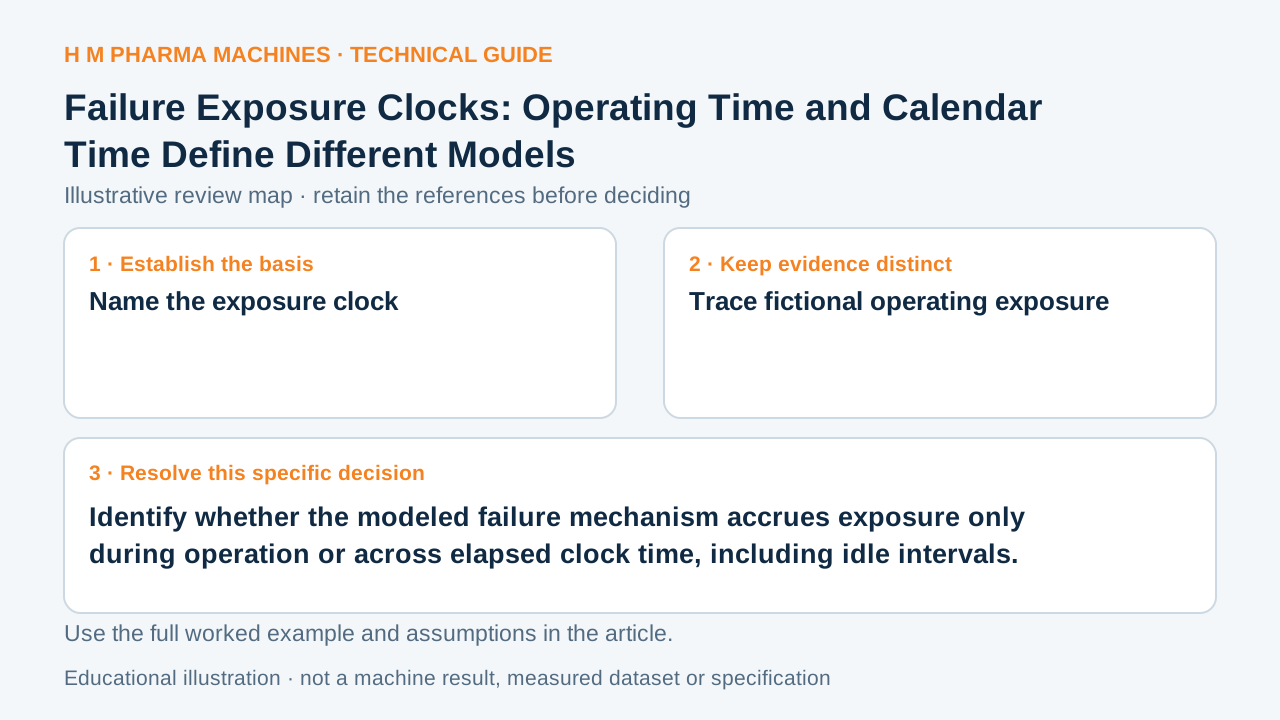
A model can accumulate failure exposure only while a machine operates or across all elapsed time. Idle intervals then affect the two clocks differently.
Name the exposure clock
An operation-dependent failure model permits failures while a machine is working; a time-dependent mechanism can use elapsed time instead. The chosen exposure basis must therefore retain operating and idle intervals. Equal numerical failure inputs do not automatically represent equal mechanisms when their underlying clocks differ. Primary reference: MIT transfer-line analysis: operation-dependent failures.
For an original modeling sheet, state which conditions advance exposure and which pause it. Keep the exposure clock separate from a display timestamp and from repair duration. A clock-basis choice describes a model; it does not establish that actual equipment ages only during production.
Trace fictional operating exposure
Suppose a hypothetical machine works from minute 0 to 3, idles from 3 to 8, then works from 8 onward. Choose an invented exposure threshold of 5 minutes solely to demonstrate clock accounting. The operating-time clock has accumulated 3 minutes when idle begins and remains at 3 through minute 8.
It reaches 5 operating minutes at calendar minute 10. An elapsed-time clock reaches the same numerical threshold at minute 5, during the idle interval. The threshold is a deterministic teaching construction, not the stochastic distribution in the referenced transfer-line model or an actual failure prediction.
Review pauses and resets
Prepare a trial ledger with machine state, elapsed interval, accumulated operating exposure and accumulated calendar exposure. Document any reset after a modeled repair and the failure mechanism that uses each value. A rate per operating hour cannot be copied unchanged into a calendar-hour exposure without justification.
This guide calculates no mission-survival probability, availability ratio or actual failure interval. Its decision is which time basis advances a modeled failure mechanism and how an idle interval enters that basis. Real reliability analysis needs its own failure data and model applicability evidence.
Customer Questions
Does operating exposure advance through the stated idle interval?
No, under the explicitly defined operating-only clock.
When is the five-minute operating threshold reached?
At calendar minute 10 in the fictional timeline.
Is the threshold an actual reliability prediction?
No. It illustrates exposure accounting and is not a stochastic failure result.
Primary References
These references support the technical principles discussed in this guide. The worked examples and review questions are educational.
Discuss Your Machine Requirement
Share your product, container, required output and the evidence needed for your technical review.
Request a Technical Review