
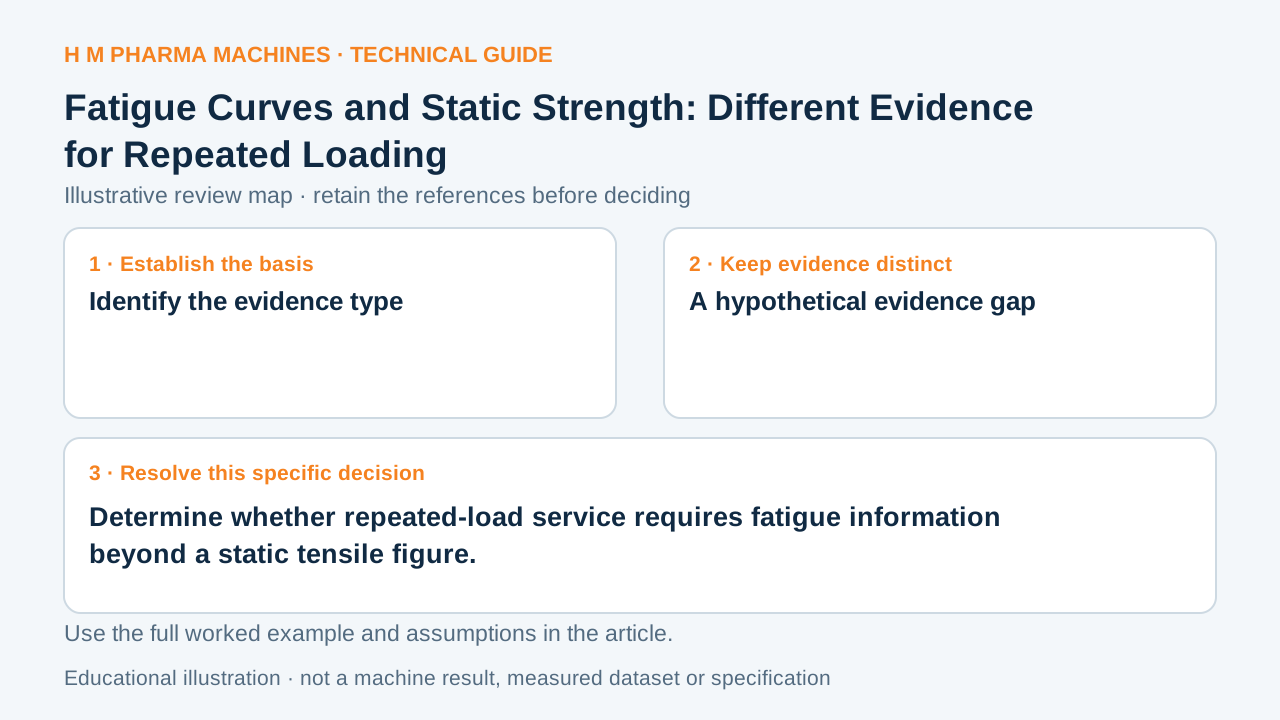
A static strength result and a repeated-load result describe different tests.
Identify the evidence type
Instron describes fatigue tests as repeated loading, often reported through stress–cycle information. That differs from a single static tensile-property result. Primary reference: Instron fatigue testing.
Preserve stress description, specimen condition, loading pattern and test endpoint with fatigue evidence. A material's ultimate tensile figure does not supply all of those inputs. Conversely, a fatigue plot should not be treated as a universal component-life chart without an application-specific interpretation.
A hypothetical evidence gap
Imagine a fictional moving bracket proposal supported by a static material certificate. The intended duty involves repeated loading, but the offer gives no relevant cyclic assessment. Mark the static information as useful for its stated property and keep the repeated-load requirement open. Do not invent a cycle life by multiplying the static strength by a convenient factor.
List the load cycle, geometry, surface condition, environment and intended life question. Ask which applicable evidence addresses that combination. This scenario describes no HM bracket, test outcome or guaranteed service count and reproduces no supplier fatigue curve.
Preserve limits when comparing alternatives
A change in geometry, surface condition or duty can affect whether earlier fatigue information still applies. Keep those conditions in the comparison instead of ranking alternatives solely by their maximum tensile values.
The completed engineering record should identify the fatigue model or evidence and its limitations. If the test ended without a failure, retain that actual endpoint rather than silently calling it an observed failure life. The guide helps a buyer distinguish the evidence needed for repeated loading without prescribing a fatigue limit, replacement interval or universal design-life guarantee.
Customer Questions
Does static tensile strength supply a fatigue-life curve?
No. Repeated-load evidence has its own conditions.
Is a fatigue plot a universal component-life guarantee?
No. Assess its application basis and limitations.
What if a test ends without failure?
Retain that endpoint rather than inventing an observed failure cycle.
Primary References
These references support the technical principles discussed in this guide. The worked examples and review questions are educational.
Discuss Your Machine Requirement
Share your product, container, required output and the evidence needed for your technical review.
Request a Technical Review