
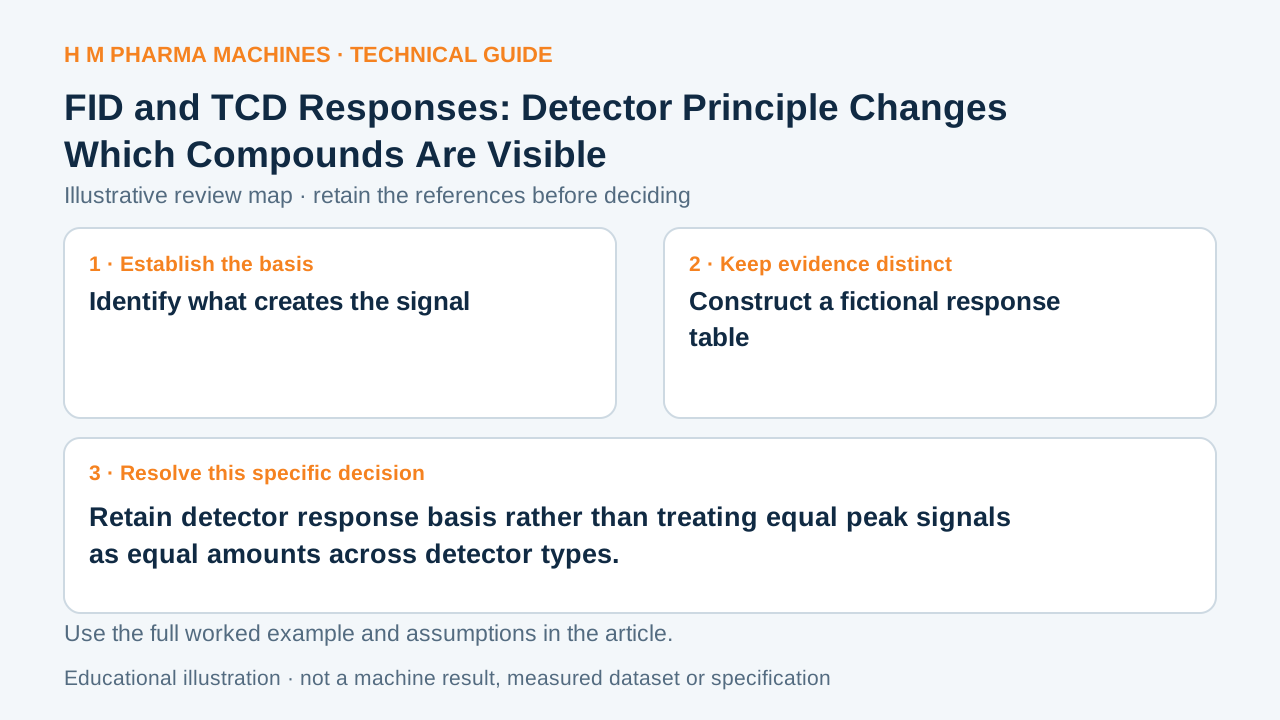
Equal sample amounts need not generate interchangeable signals from detectors operating on different physical principles.
Identify what creates the signal
A flame ionization detector measures current associated with ionized products in a hydrogen-air flame and responds to most organic compounds. A thermal conductivity detector compares effluent thermal behavior with the carrier-gas reference, responding to a conductivity difference. Those principles do not create an identical response basis. Primary reference: Agilent: gas chromatography detector principles.
The term universal for a TCD still depends on the analyte differing from the carrier gas in thermal conductivity. Neither detector label establishes a common response factor for every compound. Before comparing peak areas, identify the detector, analyte and method basis.
Construct a fictional response table
For an original bookkeeping exercise, define detector D response factors for compounds X and Y as 2 and 0.5 signal units per amount unit. Equal amounts of 10 give signals 20 and 5. Detector E is assigned different fictional factors of 1 and 3, giving signals 10 and 30.
These numbers are deliberately unnamed toy responses, not predicted FID or TCD sensitivities. They demonstrate why an equal amount cannot be read from equal or unequal peak areas without the relevant response relation. Changing a detector can also change that relation without changing the injected amount.
Check the compound-response evidence
Make fields for detector type, physical response principle, carrier or flame conditions, compound identity and the calibration relation actually established. Keep a zero or weak signal linked to those conditions rather than declaring the compound absent solely because another detector detected it.
An actual quantitative comparison requires applicable calibration and method evidence. The toy table cannot choose a detector, estimate a detection limit or convert a real peak area to mass. Its purpose is to prevent the detector principle from disappearing when two chromatograms are placed beside each other for review.
Customer Questions
Are the fictional factors FID specifications?
They are unnamed toy response factors.
Does equal amount imply equal signal?
That depends on the response relation.
What matters to TCD response?
A thermal-conductivity difference from its carrier reference.
Primary References
These references support the technical principles discussed in this guide. The worked examples and review questions are educational.
Discuss Your Machine Requirement
Share your product, container, required output and the evidence needed for your technical review.
Request a Technical Review