
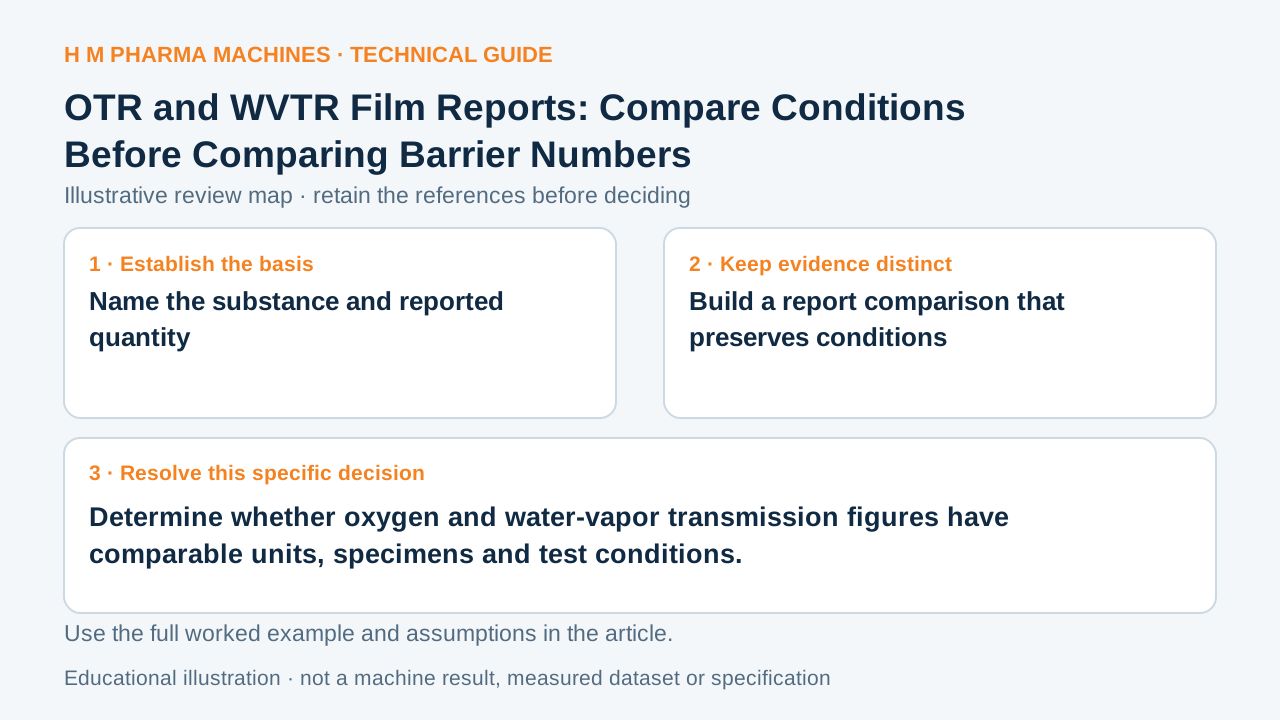
Determine whether oxygen and water-vapor transmission figures have comparable units, specimens and test conditions.
Name the substance and reported quantity
Water-vapor transmission and oxygen transmission are different properties. The public ASTM F1249 abstract identifies water-vapor transmission rate and distinguishes it from permeance or permeability. ASTM D3985 addresses oxygen-gas transmission through film. A low-looking figure for one property does not establish the other. Before choosing between material offers, identify the reported quantity, its units and the test conditions rather than ranking every barrier number in a single column.
ASTM F1249-25: water-vapor transmission rate through plastic film supports the technical principle above.
Build a report comparison that preserves conditions
Create separate OTR and WVTR tables. For each report, capture material structure, specimen thickness, reported units, method, temperature, humidity conditions and any pressure basis that the report states. Preserve whether the value describes a rate for that specimen or a normalized material property. Do not convert a supplier's rate to a universal permeability merely by dividing by thickness without a suitable basis.
Record whether the specimen was a flat film or the finished package being evaluated. Seals, closures and package geometry can create additional questions that a film-only result does not resolve. Keep those application questions separate from the property table so a well-documented laboratory film result is neither dismissed nor overextended.
ASTM D3985-24: oxygen gas transmission rate through plastic film supports the technical principle above.
Hypothetical offer reconciliation
Imagine Film A reports a WVTR of 2 in stated rate units at 38 °C with a specified humidity condition. Film B reports 1 in the same nominal units but at 23 °C with a different humidity condition. The smaller number cannot establish that B is the better barrier under A's conditions. A third fictional offer provides an OTR result only; it does not fill the missing WVTR row. Mark unmatched conditions and missing properties explicitly, then request a comparable basis for the actual packaging requirement. These invented figures demonstrate report interpretation, not product shelf life or a recommended film for HM equipment.
Connect material selection to the real packaging question
The completed worksheet should identify which property matters to the contents and which conditions support that conclusion. Product stability or shelf-life claims need their own application evidence; they cannot be manufactured from one film number. For a packaging-line discussion, share the actual substrate and pack construction so handling and coding trials use representative material. This guide concerns the material evidence supplied to that project. It reproduces no paid ASTM test procedure, declares no packaging compatibility and assigns no installed machine capability.
Customer Questions
Does a good oxygen barrier establish a good water-vapor barrier?
No. They are different transmission properties and need separate evidence.
Can lower numbers under different conditions be ranked directly?
Not reliably. Reconcile the specimen, units, temperature and relevant humidity or pressure conditions.
Does a film result prove finished-pack shelf life?
No. The complete package and product need their own applicable assessment.
Related Equipment References
Review the actual offered equipment and application separately from this educational example.
Primary References
These references support the technical principles discussed in this guide. The worked examples and review questions are educational.
Discuss Your Machine Requirement
Share your product, container, required output and the evidence needed for your technical review.
Request a Technical Review