
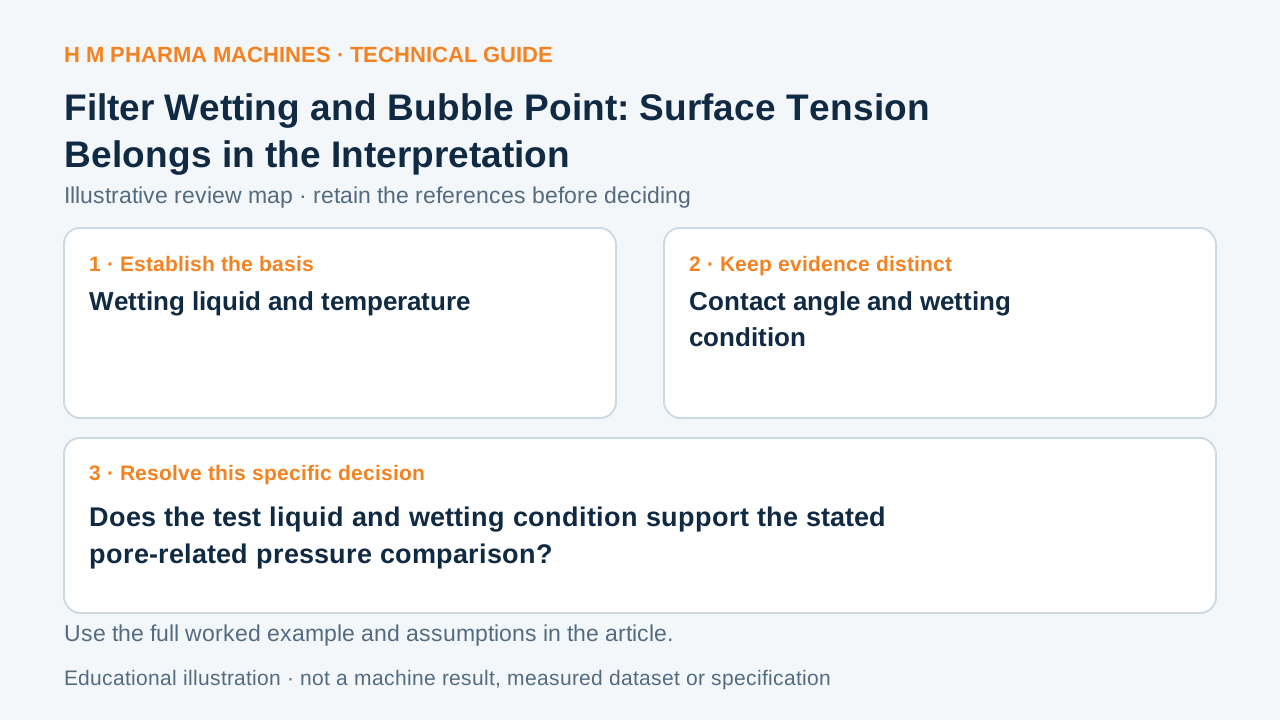
A bubble-point comparison includes the wetting liquid and contact condition, not only a pore-related dimension.
Define the Interface or Transport Basis
Merck's product-specific bubble-point note, printed page 27 figure 1 includes shape factor, liquid surface tension, contact angle and pore diameter in its capillary pressure relation. Under its idealized form, BP=4k·sigma·cos(theta)/d. Changing the wetting state can therefore change the pressure even if the assumed geometry stays fixed.
Review a Hypothetical Comparison
In a fictional sensitivity calculation, keep shape factor, diameter and contact angle fixed while surface tension changes from 0.060 to 0.030 N/m. The predicted pressure halves. That ratio alone does not prove that pores enlarged or that a real filter passed an integrity test. If contact angle also changes, the tension-only ratio no longer describes the full comparison.
Keep the Evidence with the Decision
Retain the wetting-liquid identity, temperature and condition with a pressure result. Check the manufacturer's applicable test definition and confirm that wetting and geometry assumptions belong to the comparison. Distinguish a simplified capillary sensitivity estimate from an actual validated test method and its acceptance criteria.
This article explains a physical dependency; it gives no integrity-test procedure, acceptance limit or sterilizing claim. The fictional tension values are not measurements of any process liquid.
Does the test liquid and wetting condition support the stated pore-related pressure comparison?
This blank worksheet is for your own project. It contains no H M machine trial result.
| Review field | Reference or result | Responsible person |
|---|---|---|
| Wetting liquid and temperature | To complete | To complete |
| Contact angle and wetting condition | To complete | To complete |
| Shape/diameter assumptions of the relation | To complete | To complete |
| Applicable manufacturer test and actual evidence | To complete | To complete |
Customer Questions
Does a lower bubble point uniquely mean larger pores?
No. Wetting-liquid surface tension and contact conditions also belong in the interpretation.
Can a liquid substitution preserve the same pressure criterion automatically?
No. Check the applicable test and wetting-state evidence.
Is the sensitivity example an integrity-test result?
No. It is a deliberately simplified calculation, not an acceptance decision.
Primary References
These references support the technical principles discussed in this guide. The worked examples and review questions are educational.
Discuss Your Machine Requirement
Share your product, container, required output and the evidence needed for your technical review.
Request a Technical Review