
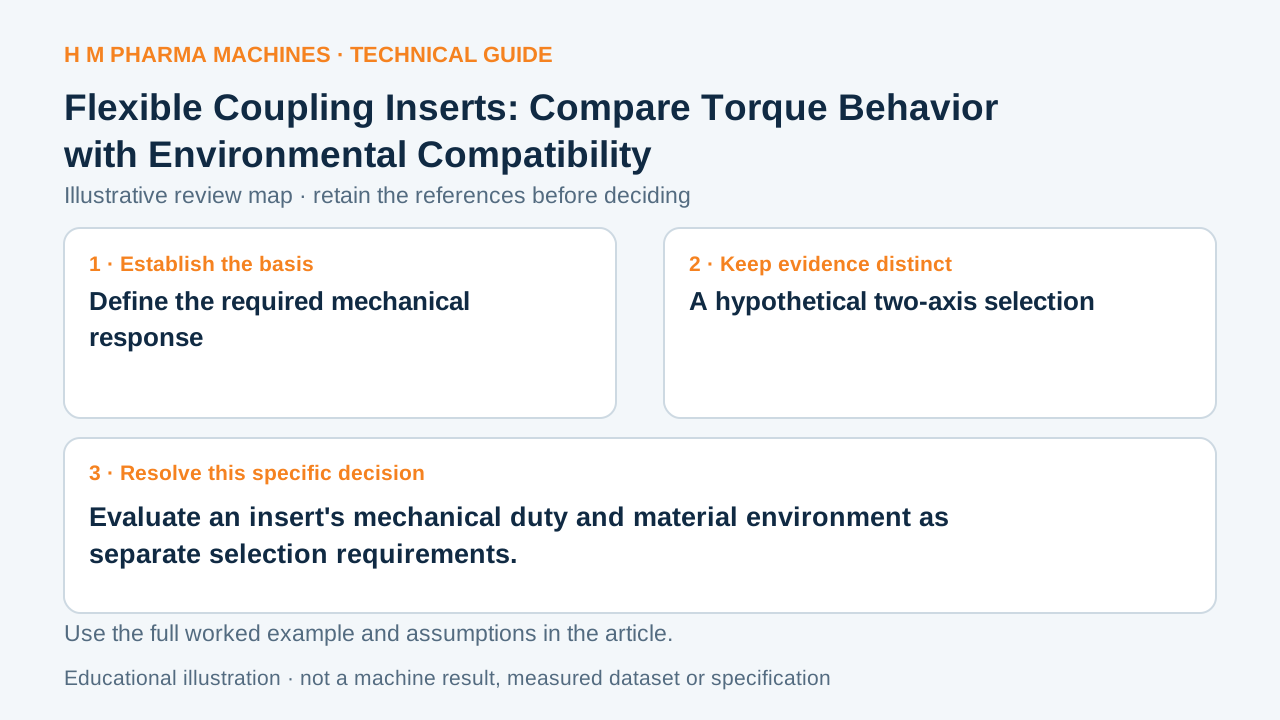
An insert is a mechanical element and a material exposed to an environment. A matching shape answers neither question completely.
Define the required mechanical response
Ruland identifies insert material and hardness as factors affecting coupling stiffness and damping. Those characteristics belong in a motion requirement, separately from environmental compatibility. Primary reference: Ruland flexible coupling characteristics.
Record the exact insert designation, coupling identity, torque duty and required response. A similar colour or matching outside geometry does not establish the same mechanical behavior. Keep the supplier's material and performance definitions intact rather than decoding an unidentified insert by appearance.
A hypothetical two-axis selection
Imagine a fictional comparison in which Insert A has a documented stiffness basis for the planned movement, but its compatibility with the stated external chemical exposure is not supplied. Insert B has an environmental statement but no evidence for the required torque response. The worksheet needs two columns, not one overall better-material verdict.
Add temperature and exposure conditions only where they genuinely apply. The example invents no compound, installed insert or HM performance result. Its output is a matched request for the missing mechanical or material evidence rather than an arbitrary harder-is-better choice.
Preserve the full substitution decision
Once accepted, keep the insert and hub identities with the assessed conditions. If the insert is replaced, confirm that the documented alternative preserves both the coupling's mechanical duty and the environment basis. A component described as a wear part can still have a defined effect on the connected motion system.
Ask how the supplier will identify approved replacements at handover. This prevents an ordering shorthand from silently becoming a different stiffness or damping choice. The review supports component selection without prescribing an insert hardness, making a chemical-resistance guarantee or treating a coupling insert as though it were a static seal.
Customer Questions
Does matching geometry establish equal insert response?
No. Material and the identified mechanical properties also matter.
Is a harder insert universally preferable?
No. Match the required stiffness, damping, duty and environment.
Can environmental compatibility alone approve a replacement?
No. The mechanical duty must also be assessed.
Primary References
These references support the technical principles discussed in this guide. The worked examples and review questions are educational.
Discuss Your Machine Requirement
Share your product, container, required output and the evidence needed for your technical review.
Request a Technical Review