
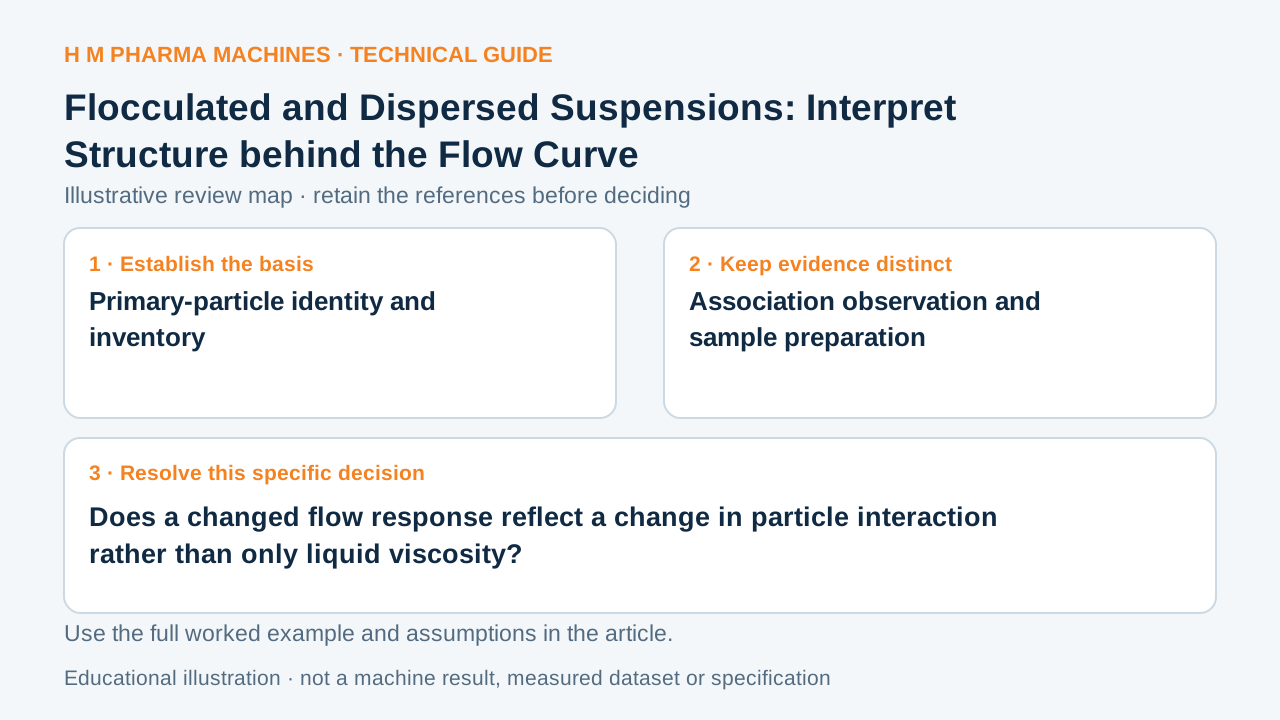
Keep particle association separate from primary-particle size and total solids when interpreting a changed suspension flow curve.
Identify the Deformation and Model
IUPAC defines coagulation or flocculation as aggregate formation in a colloidally unstable sol. That structural description is different from simply adding more solid material. Primary reference: colloidal aggregate formation.
Review a Hypothetical Comparison
Imagine two fictional preparations both contain 10 g of the same primary particles and 90 g liquid. One observation shows mainly separated particles while another shows associated clusters. Their solid mass fractions are both 10 percent. Equal inventory therefore does not establish equal association, and the example does not calculate how either preparation will flow.
Keep the Evidence with the Decision
Retain the primary-particle identity, association evidence and preparation history beside the curve. Ask whether dilution or imaging preparation altered the clusters being investigated. Separate an observed structural difference from a proposed explanation involving interaction chemistry. A viscosity change by itself cannot establish aggregate size, reversibility or which interaction caused association.
The definition supplies no universal floc size, shear response or optimum dispersant dose. Cluster formation, primary-particle breakage and changed liquid viscosity are distinct hypotheses requiring appropriate evidence. No actual HM formulation, dispersion trial or production result is implied by the equal-mass scenario. The practical output is a structure-and-inventory comparison that identifies what remains unmeasured before a formulation change is selected.
Does a changed flow response reflect a change in particle interaction rather than only liquid viscosity?
This blank worksheet is for your own project. It contains no H M machine trial result.
| Review field | Reference or result | Responsible person |
|---|---|---|
| Primary-particle identity and inventory | To complete | To complete |
| Association observation and sample preparation | To complete | To complete |
| Flow curve and handling history | To complete | To complete |
| Competing explanations and missing evidence | To complete | To complete |
Customer Questions
Does equal solid mass imply equal association?
No. The particles can be arranged differently.
Does viscosity alone identify cluster size?
No. Structural evidence is required.
Is aggregation the same as adding solids?
No. It changes association rather than necessarily inventory.
Primary References
These references support the technical principles discussed in this guide. The worked examples and review questions are educational.
Discuss Your Machine Requirement
Share your product, container, required output and the evidence needed for your technical review.
Request a Technical Review