
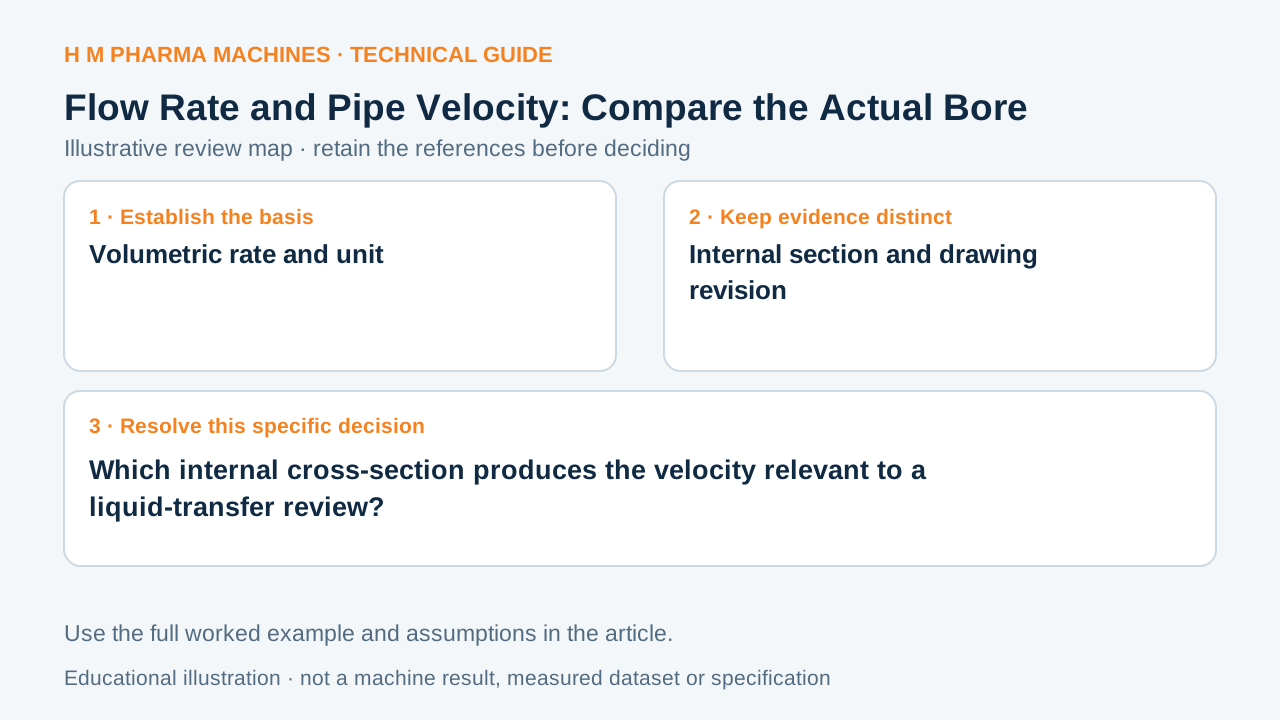
A transfer quantity per minute and a liquid speed inside a pipe describe different properties. Keep the internal bore beside the flow figure.
Separate Rate from Speed
Volumetric flow Q states how much volume crosses a reference section per unit time. Mean velocity v describes that flow relative to its cross-sectional area A: v = Q/A. KSB identifies velocity in a cross-section as a volumetrically averaged quantity, not the speed of every fluid element.
Use compatible units before comparing alternatives. A flow entered in litres per minute must be converted if area is in square metres and velocity is required in metres per second. The outside tube diameter does not supply the internal flow area. KSB primary engineering reference.
Illustrative Bore Comparison
Hypothetical transfer: 12 L/min is 0.0002 m³/s. In a round bore of 20 mm, the area is approximately 0.000314 m² and mean velocity is 0.637 m/s. In a 10 mm bore, mean velocity is approximately 2.55 m/s. These are invented dimensions, not HM connection specifications.
Halving this bore quarters its area, so the same volume rate requires four times the mean velocity. That result alone does not calculate pressure loss, shear exposure or suitability. Those questions require the fluid properties, route and appropriate engineering model.
Identify the Section Being Evaluated
Describe whether the calculation concerns a straight tube, a hose, a port or a restriction. Reducers and local passages can differ from the main line. Keep the drawing revision and actual internal dimension attached to each selected section so the supplier can reproduce the comparison.
For a tank-to-machine transfer enquiry, state the desired flow range and the available bore references together. Ask which sections determine the proposed design. Complete the worksheet with the transfer engineer; a nominal connection name should not silently become a measured internal diameter. Relevant HM context: Pharmaceutical Storage Tank.
Flow Rate and Pipe Velocity: Compare the Actual Bore — blank review record
This blank worksheet is for your own project. It contains no H M machine trial result.
| Question | Reference or result | Owner/status |
|---|---|---|
| Volumetric rate and unit | To complete | To complete |
| Internal section and drawing revision | To complete | To complete |
| Calculated area and mean velocity | To complete | To complete |
| Fluid and route questions still requiring review | To complete | To complete |
Customer Questions
Can I use outside diameter for flow area?
Use the actual internal cross-section for the model; outside size alone does not define it.
Does velocity predict pressure loss by itself?
No. Route, geometry, fluid properties and the selected loss model also matter.
Are these velocities machinery limits?
No. The numerical comparison is hypothetical and supplies no operating criterion.
Related Equipment References
Review the actual offered equipment and application separately from this educational example.
Primary References
These references support the technical principles discussed in this guide. The worked examples and review questions are educational.
Discuss Your Machine Requirement
Share your product, container, required output and the evidence needed for your technical review.
Request a Technical Review