
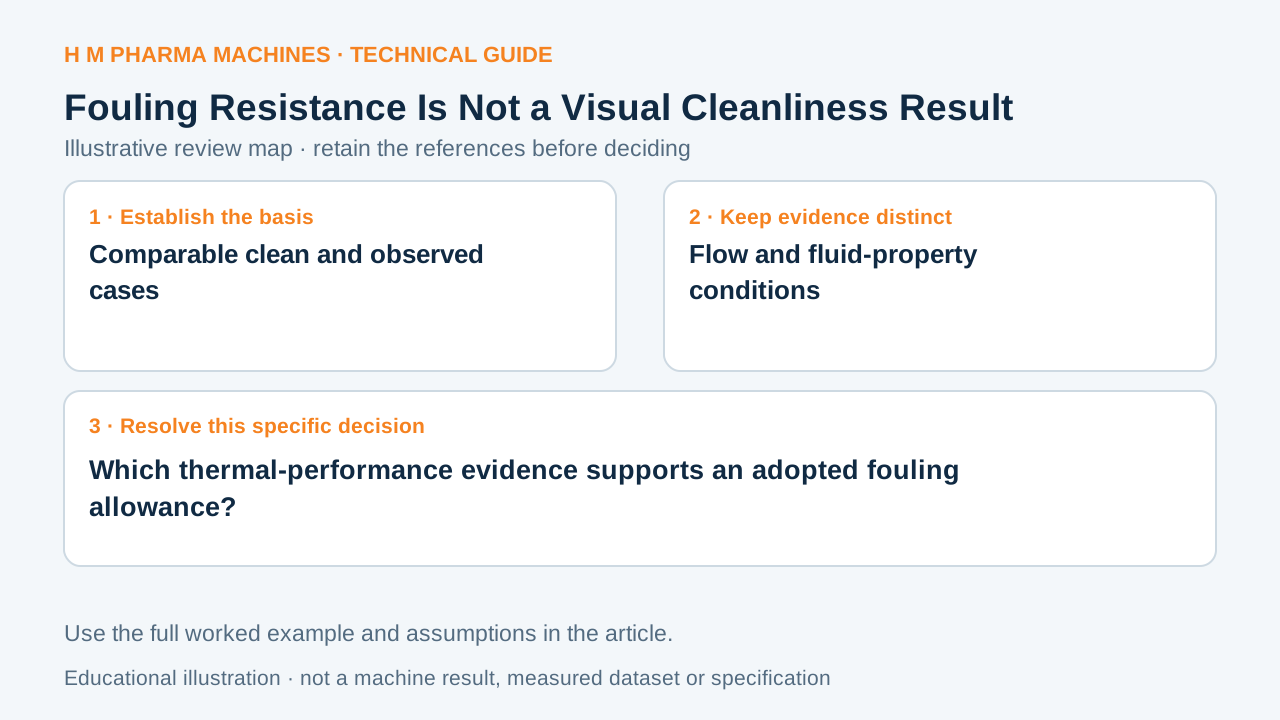
A visually clean surface and a stable thermal resistance are different observations. Compare exchanger performance on matching conditions.
Define the Thermal Model
Fouling resistance can be represented as an added area-based resistance: R_f = 1/U_dirty − 1/U_clean when the other basis is compatible. Alfa Laval’s exchanger-theory brochure includes fouling in the overall coefficient. This thermal allowance does not define chemical cleanliness or a hygienic acceptance criterion.
Compare a Hypothetical Case
Suppose invented comparable calculations give U_clean = 1,000 and U_dirty = 800 W/(m²K). The added resistance is 0.00125 − 0.001 = 0.00025 m²K/W. If the second value was obtained at a different flow or fluid condition, attributing that entire difference to deposits would exceed the evidence.
Complete the Engineering Review
Keep inlet conditions, flow, fluid properties, area and temperature program with each performance record. Compare like operating cases before estimating an added resistance. Record visible inspection and thermal trends separately. Ask what competing explanations could change the overall coefficient, including altered circulation or a changed utility state. Preserve the clean comparison’s operating point rather than calling the largest observed U a universal baseline.
For a processing-tank thermal review, obtain the actual clean-design basis and observed conditions. The example does not assign an HM fouling allowance or cleaning interval. Cleaning validation and material compatibility remain separate decisions from interpreting a heat-transfer trend.
Which thermal-performance evidence supports an adopted fouling allowance?
This blank worksheet is for your own project. It contains no H M machine trial result.
| Review field | Reference or result | Responsible person |
|---|---|---|
| Comparable clean and observed cases | To complete | To complete |
| Flow and fluid-property conditions | To complete | To complete |
| Calculated added thermal resistance | To complete | To complete |
| Separate visual and cleaning evidence | To complete | To complete |
Customer Questions
Does lower U prove fouling?
Other changed conditions may explain it.
Does a clean appearance establish thermal recovery?
Measure or calculate a comparable case.
Is R_f a cleaning acceptance test?
It is a thermal resistance representation.
Related Equipment References
Review the actual offered equipment and application separately from this educational example.
Primary References
These references support the technical principles discussed in this guide. The worked examples and review questions are educational.
Discuss Your Machine Requirement
Share your product, container, required output and the evidence needed for your technical review.
Request a Technical Review