
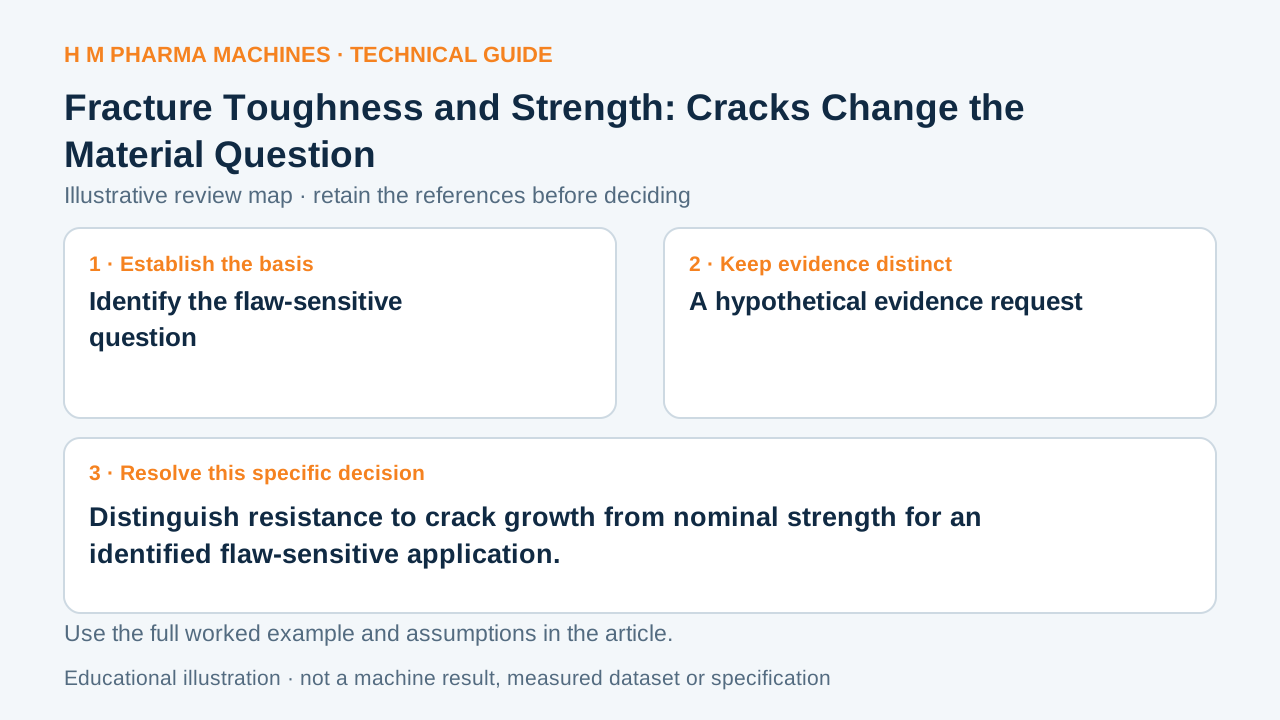
The presence of a crack changes the evidence needed to interpret a component's loading.
Identify the flaw-sensitive question
ASTM E399 describes a defined metallic-material fracture-toughness test using precracked specimens under specified conditions. This is a different property question from a plain tensile-strength result. Primary reference: ASTM E399 public scope.
A crack-sensitive assessment needs the applicable flaw geometry, loading and material evidence. Do not assume that a high nominal strength makes crack information irrelevant. Keep the actual result type and validity basis attached to any toughness figure rather than treating every impact or fracture number as interchangeable.
A hypothetical evidence request
Imagine a fictional technical review that identifies a crack-like indication in a loaded part. The material certificate reports tensile strength but provides no appropriate toughness evidence. Mark the certificate as answering its stated property question and ask the responsible specialist what flaw-sensitive assessment is required. Do not conclude service suitability from the tensile figure alone.
Build a worksheet with indication identity, examination reference, geometry, loading, material condition and requested assessment. This example supplies no crack size, rejection threshold or HM component finding. It does not prescribe continued operation or a repair from a generic educational description.
Preserve the stated validity scope
The final evidence should identify the actual toughness property and method, including limitations important to its use. A figure reported under one test basis should not quietly become a qualified value under another basis.
Keep the specialist conclusion with the examined part and drawing revision. If material condition, geometry or load changes, revisit applicability rather than preserving a previous conclusion automatically. This guide helps a buyer request relevant information without calculating a permitted flaw size, reproducing a standard's procedure or substituting an isolated property number for a complete fracture assessment.
Customer Questions
Does tensile strength make crack geometry irrelevant?
No. A crack-sensitive question requires its appropriate assessment.
Are all toughness or impact figures interchangeable?
No. Preserve the property, method and validity scope.
Does this guide give an acceptable crack size?
No. That requires the actual component and engineering basis.
Primary References
These references support the technical principles discussed in this guide. The worked examples and review questions are educational.
Discuss Your Machine Requirement
Share your product, container, required output and the evidence needed for your technical review.
Request a Technical Review