
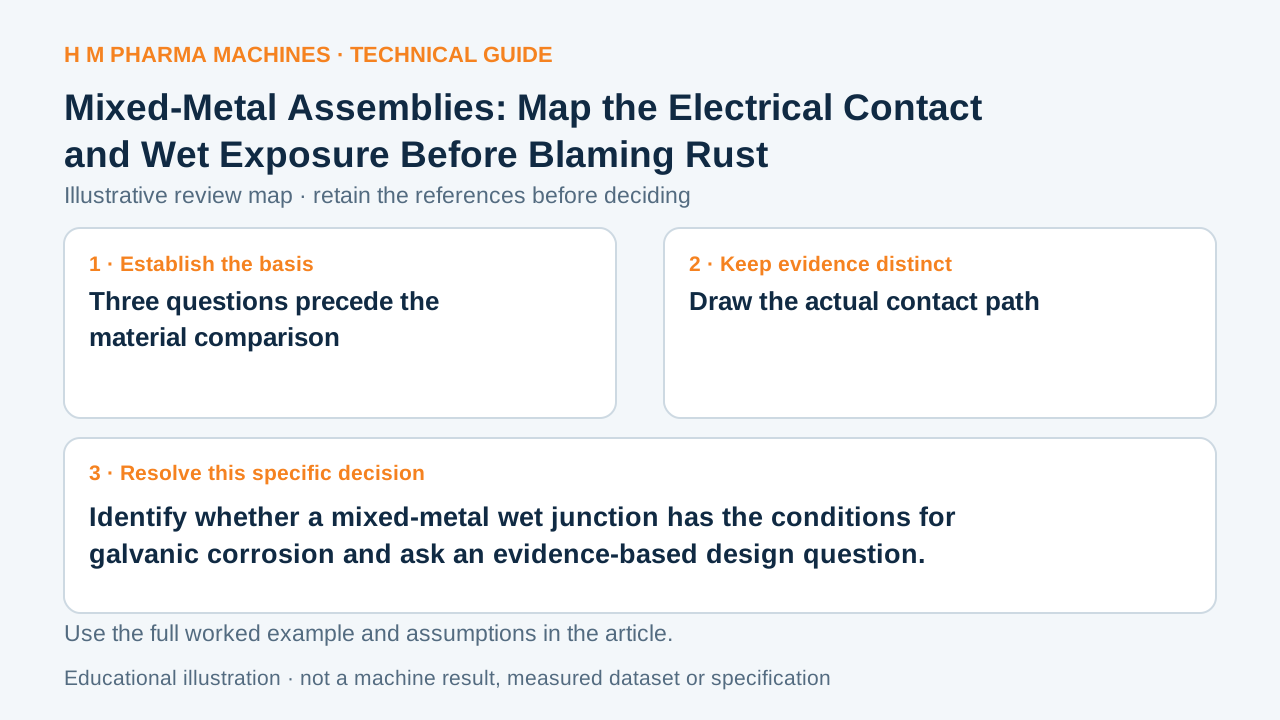
Identify whether a mixed-metal wet junction has the conditions for galvanic corrosion and ask an evidence-based design question.
Three questions precede the material comparison
Galvanic corrosion requires a relevant electrochemical combination, including electrical connection between dissimilar metals and a conductive environment. Outokumpu also highlights the importance of the relative exposed areas. A rust mark near stainless steel therefore needs a junction-level review rather than the assumption that the stainless part itself failed. Identify the materials, the contact path and the wet exposure before proposing a coating, insulating component or replacement metal.
Outokumpu: corrosion resistance of stainless steel supports the technical principle above.
Draw the actual contact path
Sketch the bracket, fastener, panel and any intervening washer or coating. Mark where electrical contact is possible and which surfaces can become wet. A thin painted layer is not reliable evidence of lasting electrical isolation if the fastener can damage it during assembly. Record the source of the liquid and whether the location drains or remains damp. Keep nearby cleaning chemicals and external splash separate from the product-contact material specification.
Add approximate exposed areas for the materials being compared. These estimates support a design discussion; they do not calculate a field corrosion rate. Note any missing metal designation explicitly. A generic silver appearance is not a material identification, and corrosion around a junction may also have causes other than galvanic coupling.
Hypothetical junction review
Imagine a fictional frame detail with a small carbon-steel fastener joining a much larger stainless panel in a location that receives regular wet splash. On the worksheet, list the two materials, conductive contact as present, wet exposure as recurring and the small fastener as the smaller exposed member. Then compare a second imagined detail where the metals have an engineered insulating interface whose continuity is documented. The first has a clear galvanic-review question; the second still needs evidence that the interface performs as designed through assembly and service. Neither sketch establishes a service-life number. The example demonstrates how geometry changes the question without asserting anything about an HM frame.
Make the proposed remedy answer the mechanism
A responsible design response should explain which condition it changes: material pairing, electrical contact, wet exposure or the junction design. Record that explanation with the revised drawing. An arbitrary stronger coating may leave the contact path unresolved, while a change of fastener material can create a different strength or joining issue. Share the mapped environment when discussing external assemblies for a new machine project. The benefit is a precise specification conversation and a traceable design choice, not a universal rule for every mixed-metal connection.
Customer Questions
Does rust next to stainless prove the stainless grade is wrong?
No. Identify the corroding member and examine the junction and exposure before assigning a cause.
Is a painted interface automatically electrically isolated?
No. Its actual continuity and condition after assembly need evidence.
Why record exposed area?
The relative areas influence galvanic behavior and help the designer evaluate the particular junction.
Related Equipment References
Review the actual offered equipment and application separately from this educational example.
Primary References
These references support the technical principles discussed in this guide. The worked examples and review questions are educational.
Discuss Your Machine Requirement
Share your product, container, required output and the evidence needed for your technical review.
Request a Technical Review