
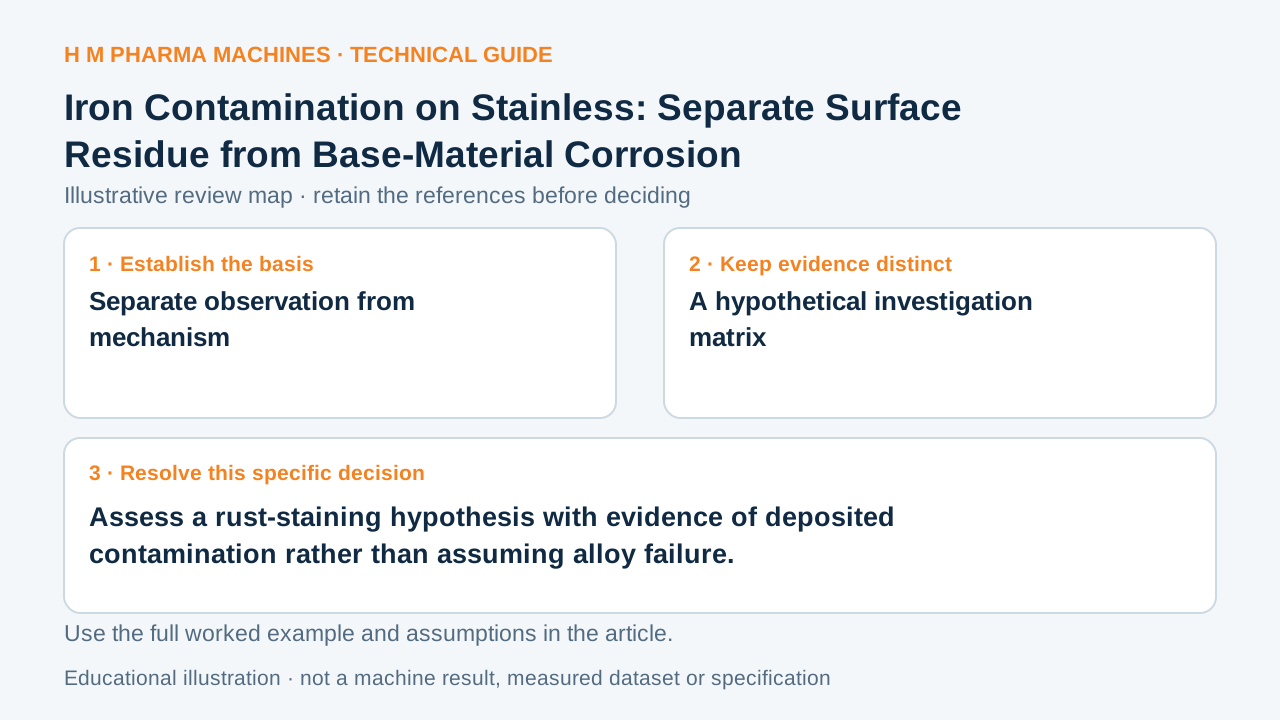
A rust-colored observation needs a mechanism question before it becomes an alloy-failure conclusion.
Separate observation from mechanism
Outokumpu notes that carbon-steel particles on stainless can produce rust staining. A discoloration observation should therefore retain possible contamination as a separate hypothesis. Primary reference: Outokumpu surface contamination.
Identify the actual stained location, material and recent fabrication, handling or exposure history. A photograph can document appearance without proving whether it represents deposited material, corrosion of the substrate or another cause. Keep those explanations distinct while gathering the relevant evidence.
A hypothetical investigation matrix
Imagine a fictional stainless component stored near work on carbon steel. A later stain is observed, but no material examination has yet established its origin. Record the storage context as evidence for a contamination hypothesis, not as proof. Keep actual substrate corrosion and other explanations open until the responsible assessment resolves them.
Build columns for observed location, handling history, examination method, finding and remaining question. The scenario reports no HM contamination result and does not give a chemical-cleaning recipe, accepted stain level or permission to treat an installed product-contact surface.
Close the cause and prevention scope
Ask the responsible supplier which examination and surface-restoration basis applies to the actual part. Preserve the confirmed mechanism with the agreed action so a later record does not rename an unresolved stain as a verified alloy failure.
If contamination is confirmed, keep the identified source and prevention action traceable. If the assessment finds substrate corrosion, retain the relevant exposure and material questions instead. The guide gives a buyer a hypothesis-by-evidence worksheet without declaring stainless immune to corrosion or treating every rust-colored mark as either harmless contamination or proof that the supplied grade is wrong.
Customer Questions
Does every rust-colored mark prove base stainless corrosion?
No. Deposited contamination is one separate hypothesis.
Does nearby carbon-steel work prove contamination caused the stain?
No. It is context requiring suitable examination evidence.
Does this guide prescribe a cleaning chemical?
No. Use the actual component and supplier-approved restoration basis.
Primary References
These references support the technical principles discussed in this guide. The worked examples and review questions are educational.
Discuss Your Machine Requirement
Share your product, container, required output and the evidence needed for your technical review.
Request a Technical Review